Kwara Massacre Leaves Survivor in Agony Over Missing Family
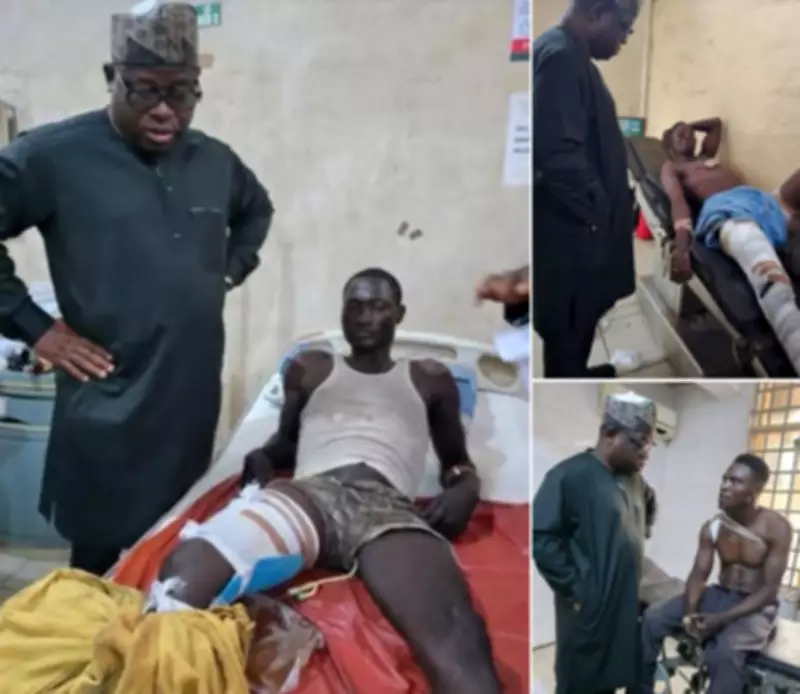
In the aftermath of a devastating terrorist assault on Woro community in Kaiama Local Government Area of Kwara State, survivor Danjuma Bagu faces an unbearable wait for news about his loved ones. The attack, which occurred last Tuesday, has left him hospitalized with a gunshot wound to the thigh at Kwara State University Teaching Hospital (KWASUTH), while his wife and six children remain unaccounted for.
Survivor's Harrowing Account of the Attack
Danjuma Bagu, originally from Jos but farming in Woro, described how approximately 200 attackers on motorcycles invaded the community, firing indiscriminately. "As I speak with you now, I don't know if my wife and six children are alive. I have not heard from them since Tuesday, after the incident. I also lost my phone," he revealed from his hospital bed. Bagu managed to flee during the chaos but has been unable to establish contact with his family since.
The distraught farmer made a heartfelt appeal to government authorities, emphasizing that victims like himself have been left with absolutely nothing. His plea underscores the urgent need for comprehensive assistance and support for those affected by this tragedy.
Rising Death Toll and Ongoing Search Efforts
Community leaders confirmed on Sunday that the death toll from the brutal attack has climbed to 150 victims. The breakdown includes:
- 113 Muslim victims
- 21 Christian victims
- 8 Togolese nationals
- 8 Hausa individuals from Zakirai
Alhaji Salihu Bio Umar, the village head of Woro, reported that additional bodies were discovered throughout the week, with 37 Muslim victims buried on Thursday following the initial interment of 75 bodies. One more body was found on Saturday, contributing to the grim total.
Perhaps most alarmingly, Umar indicated that over 100 persons remain missing and are believed to have been kidnapped. "Nobody has called us to ask for anything so far," he noted, highlighting the mysterious silence from potential captors.
Another Survivor's Miraculous Escape
Joshua Dame, a farmer from Plateau State who was also working in Kaiama, shared his terrifying experience with Daily Trust. He described encountering the attackers while returning from his farm to purchase detergent. "I suddenly saw people wearing army uniforms, numbering about 200, heavily armed and on motorcycles. They filled the whole place," he recalled.
The gunmen opened fire immediately, killing Dame's friend instantly. A bullet struck Dame's stomach, exited through his right side, and broke his right hand. In a desperate bid for survival, he pretended to be dead. "I heard one of them saying it appeared I was not dead and that they should pump more bullets into me, but they later left," he narrated.
Despite his severe injuries, Dame managed to crawl into the forest and hide for eight agonizing hours until soldiers rescued him the following morning. "I crawled inside the forest from when I was shot till the time the army came over, 8 hours in the pool of my blood, and tried to keep my voice low despite the pain," he explained, still marveling at his survival.
Community in Desolation
Dr. Abdul Woro, another resident, reported discovering three additional bodies on Friday—two burnt inside a torched house and another in the forest. He noted the disturbing smell of decomposing bodies in wooded areas, indicating that the search for victims continues.
While security operatives remain present in the area, the community stands largely deserted, a haunting testament to the scale of the violence that unfolded. The recovery of one more body on Saturday brought the officially documented death toll to 150, according to community leaders.
Political Response and Support
In response to the tragedy, Senator Sadiq Suleiman Umar, representing Kwara North Senatorial District, visited survivors receiving treatment at KWASUTH. His presence underscores the growing political attention to this security crisis and the need for coordinated response efforts.
The Woro community massacre represents one of the deadliest attacks in recent Kwara State history, raising serious questions about security preparedness and response mechanisms in vulnerable rural areas. As survivors like Danjuma Bagu await news of their missing families, the broader community grapples with profound loss and uncertainty about what comes next.