Nigeria's Security Crisis Deepens as Multiple Attacks Claim Over 15 Lives
The persistent insecurity plaguing Nigeria has once again come to the forefront, with a series of coordinated attacks across multiple states resulting in the tragic loss of over 15 lives this past weekend. This alarming development underscores the ongoing challenges faced by security forces and raises critical questions about the effectiveness of current military strategies in combating the nation's multifaceted security threats.
A Nation in Mourning: Recent Attacks Across States
While Nigerians were still grieving the loss of four army personnel—two officers and two soldiers—killed in a terrorist assault on a military base in Benisheikh, Borno State last Wednesday, the weekend brought no respite. Suspected bandits and kidnappers unleashed violence in several regions, claiming numerous innocent lives and highlighting the stark reality that security efforts remain insufficient.
In Ondo State, gunmen invaded the Igushin community in the Ala axis of Akure, the state capital, on Thursday night. The assailants, believed to be kidnappers, opened fire indiscriminately, resulting in the deaths of a mother and her daughter. According to local sources, the victims were shot in their residence, with initial confusion among residents who thought they had been abducted. The Ondo State Police Command, through spokesperson Abayomi Jimoh, confirmed the incident, noting that two individuals were rescued during a swift operation. Jimoh urged residents to remain vigilant and cooperate with security agencies by providing timely information.
Meanwhile, in Kwara State, armed bandits attacked Nuku village in Kaiama Local Council early Friday morning, killing five forest guards and destroying properties worth millions of naira. The assailants arrived around 3:00 a.m., operating for hours without resistance. Reports indicate that motorcycles belonging to the forest guards and patrol vehicles used by mobile police were set ablaze. The Kwara State Police Command spokesperson, Adetoun Ejire-Adeyemi, stated she had not yet been briefed on the details but promised updates. This attack follows a deadly assault on Woro and neighboring Nuku communities two months prior, where over 200 people were reportedly killed and 176 abducted. A recent video showing abducted villagers has heightened fears, with victims pleading for government intervention.
In Plateau State, gunmen stormed Mbwelle village in Bokkos Local Council on Thursday night, killing at least eight individuals in a shooting spree that lasted nearly an hour. Most victims were members of the same family, with the attack occurring around 11 p.m. Kefas Mallai, Chairman of the Community Peace Observers in Bokkos, confirmed the incident, expressing concern over the lack of security presence during the assault. Youth Leader Christopher Luka described the event as a devastating blow to the community, noting that some individuals remain unaccounted for.
Military Clarifications and HURIWA's Criticism
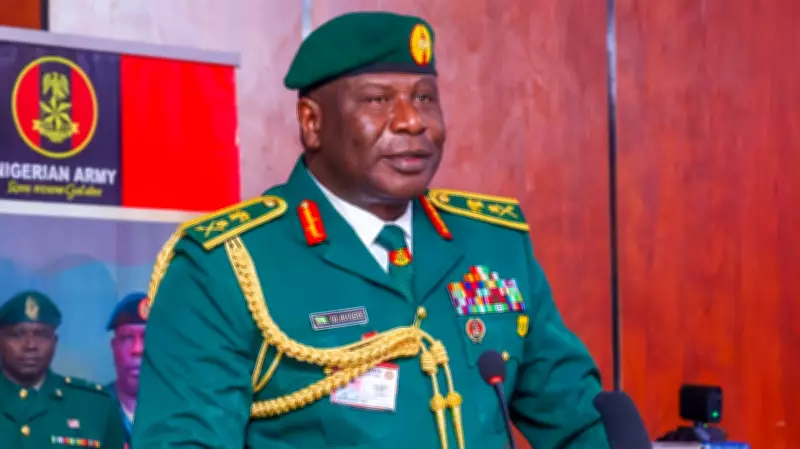
Amid these tragedies, the Nigerian Army has addressed misinformation surrounding the Borno State attack. The Media Information Officer for the North-East Joint Task Force Operation Hadin Kai, Lt. Col. Sanni Uba, refuted claims that Brigadier General Oseni Braimah died due to a faulty vehicle or that 17 soldiers were killed. He clarified that the official casualty figure stands at two officers and two soldiers, emphasizing that General Braimah was in a Mine-Resistant Ambush Protected (MRAP) vehicle that was temporarily immobilized during combat. Uba condemned the circulation of unrelated images and videos, urging the public to disregard such misleading content.
In response to the escalating violence, the Human Rights Writers Association of Nigeria (HURIWA) issued a strong statement on Friday, calling on President Bola Ahmed Tinubu to take decisive action. The group, represented by National Coordinator Emmanuel Onwubiko, described the killing of Brigadier General Braimah and other soldiers as a dangerous escalation that exposes vulnerabilities within Nigeria's military framework. HURIWA criticized the administration for what it termed a catastrophic failure in leadership, urging President Tinubu to consider stepping aside if he cannot secure citizens' lives and property. The association also highlighted concerns about underperforming service chiefs and a lack of transparency in military communications.
Government Responses and Ongoing Challenges
The Kwara State government, through Commissioner for Communications Mrs. Bolanle Olukoju, expressed deep concern over the abduction videos and reaffirmed its commitment to rescuing affected citizens. However, she cautioned against speculation regarding the exact number of abductees, citing conflicting reports that complicate verification efforts.
These incidents collectively paint a grim picture of Nigeria's security landscape, where attacks often occur at night and in remote areas, challenging response capabilities. The repeated assaults, despite some gains by the Tinubu administration, suggest that adversaries remain relentless, necessitating a reevaluation of strategies. As communities grapple with fear and loss, the call for enhanced security measures, better coordination, and transparent communication grows louder, underscoring the urgent need for a comprehensive approach to restore peace and safety across the nation.