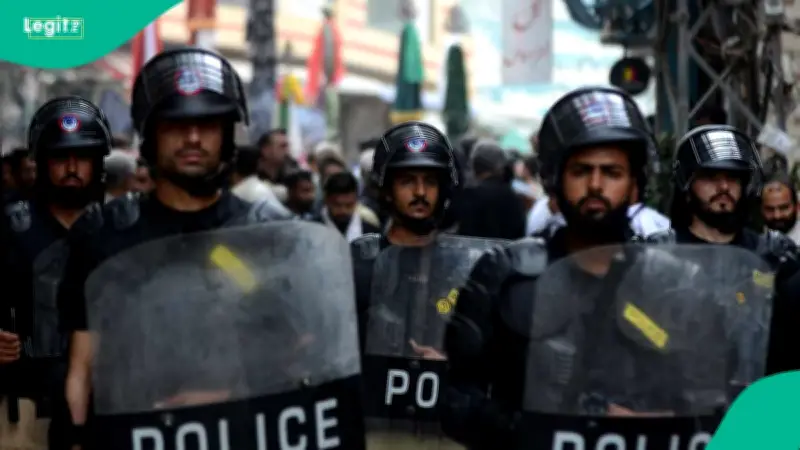
At least nine people were killed on Tuesday, July 14, 2026, in Pakistan-administered Kashmir as tensions escalated during a planned protest march towards the regional capital, Muzaffarabad. Security forces raided a house on the outskirts of Rawalakot town in Poonch district after receiving intelligence about a weapons cache. Officials reported that the raid quickly turned violent when personnel came under fire, resulting in the death of one officer. In a separate incident in Sudhnoti district, protesters blocked a security convoy. Authorities said the convoy was attacked with stones and gunfire, leaving seven protesters and one police officer dead. Police officials stressed that security forces acted in self-defence.
Background of the Unrest
The unrest is linked to the Jammu Kashmir Joint Awami Action Committee (JAAC), which has been leading a major protest campaign. The group was banned under anti-terrorism laws on June 5, intensifying tensions across the region. Protesters under JAAC’s banner had announced a march to Muzaffarabad on Wednesday, July 15, but remained in Rawalakot by evening. Authorities have restricted internet and phone access, making communication with protesters difficult.
Official Statements
Munir Qureshi, deputy commissioner of Muzaffarabad, told Al Jazeera: “Muzaffarabad and its adjoining areas are all clear, and there is no disturbance to public life. Internet access is limited due to the security situation, but otherwise the situation is normal and there is no protest or violence.” Liaqat Ali Malik, inspector general of police for Azad Jammu and Kashmir (AJK), estimated the crowd in Rawalakot at between 3,000 and 4,000 people, adding: “There has been no violence today.”
Political Dispute Over Refugee Seats
The protests stem from a long-running dispute over 12 legislative seats reserved for Kashmiri refugees who migrated to Pakistan after 1947 and now live outside the region. The JAAC argues that these seats allow Pakistan-based political parties to influence the region’s government while diverting funds meant for local development. Last month, the Supreme Court ruled that the seats are constitutionally protected and cannot be abolished without a constitutional amendment, fuelling further anger among protesters.
Casualties and Security Deployment
Since protests began on June 4, at least 28 people have been killed and 79 injured, according to officials. Ahead of the march, about 4,000 police and paramilitary personnel have been deployed across the region. Khan, the commissioner of Poonch, said marchers would not be allowed to pass through Rawalakot and would instead have to use mountain trails to reach Muzaffarabad.
Related Incident in Sokoto
In a separate report, several armed gangs known locally as bandits and two police officers were reportedly killed on Sunday, June 21, following a failed attack on Tureta town in Tureta local government area (LGA) of Sokoto state. As reported by Daily Trust, the armed attackers stormed the community at about 2:00 pm while many residents were observing the Zuhr (early afternoon Islamic prayer) in mosques across the town. Security operatives from the police anti-kidnapping unit, supported by personnel of the Nigerian Security and Civil Defence Corps (NSCDC), successfully repelled the attack, forcing the bandits to retreat, according to reports.