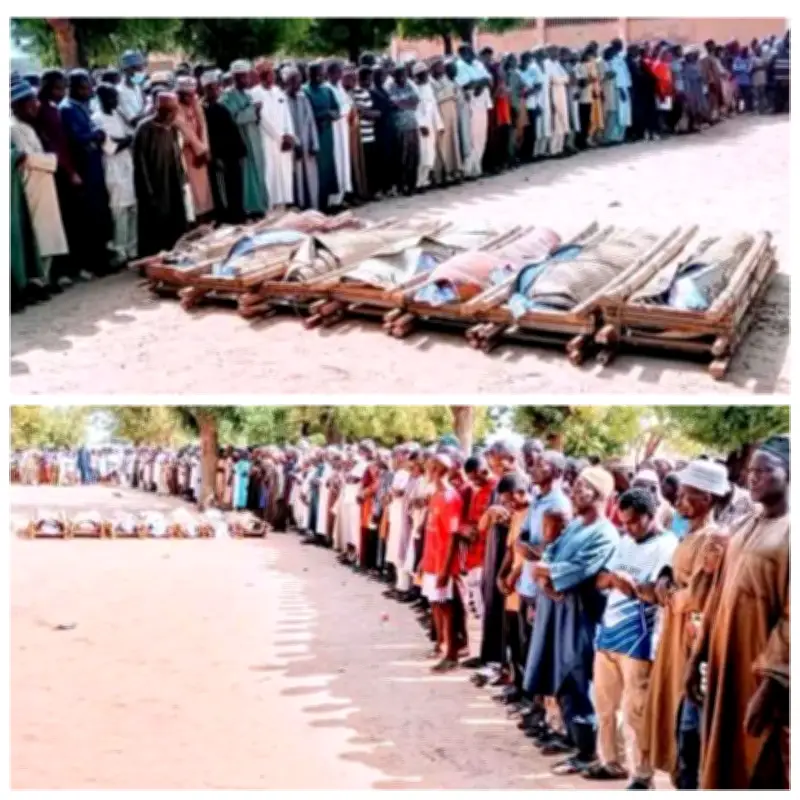
Deadly Bandit Raid in Sayaya Community
A devastating bandit attack in Sayaya community, Matazu Local Government Area of Katsina State, has left seven people dead. Witnesses reported that the attackers, led by notorious bandit leader Kachallah Fulani Muhammad, stormed the community in the early hours of Thursday, June 25, 2026, firing sporadically and causing widespread panic as residents fled their homes.
Residents described the incident as one of the most brutal attacks in recent months, shattering the fragile calm that had begun to return after the deployment of security forces to the area.
Residents Recount the Horror
“We were asleep when we heard heavy gunshots,” a resident who requested anonymity for security reasons told Daily Trust. “People were screaming, children were crying, and everyone was running in different directions. By the time the gunmen left, seven of our people were lying lifeless.”
The victims included farmers and traders who had hoped to resume normal life after weeks of relative peace. Locals alleged that the attackers were led by Kachallah Fulani Muhammad, a feared bandit leader whose name has long been associated with deadly raids and abductions across communities in Matazu and neighbouring areas.
“This is the same man who has terrorised our villages for years. He is the one who abducted Major General Rabe Abubakar Batsari RTD and his wife,” another resident said. “Anytime we hear his name, we know trouble is coming,” added Alaramma Jibrin.
Withdrawal of Troops Blamed
Residents linked the renewed violence to the recent withdrawal of troops attached to Operation Fansan Yamma, alleging that the attackers returned almost immediately after soldiers pulled out. “When the soldiers were here, we could sleep with our eyes closed,” a community elder said. “But once they left, the bandits came back with more anger. It feels like we have been abandoned.”
The fear is no longer limited to Sayaya alone. Residents alleged that the same group recently blocked the Karaduwa–Rimaye road in broad daylight, abducting travellers and assaulting others without resistance. “They stopped vehicles on the road as if it was their territory,” a commuter recounted. “People were beaten, some were taken away, and nobody could help,” said Sulaiman Sale Sayaya.
Mourning and Displacement
In Matazu town, emotions ran high as mourners gathered to bury the victims in accordance with Islamic rites. Tears flowed freely as families struggled to comprehend the scale of the loss. “This is not just a tragedy for Sayaya; it is a tragedy for the entire local government,” a community leader said. “We have lost innocent lives, and this pain will remain with us for a long time.”
As mourning continues, fear has forced many residents to flee. Entire families have reportedly abandoned Sayaya, seeking refuge in Matazu town and other nearby communities, uncertain whether it is safe to return. “We cannot stay and wait to be killed,” a displaced woman said while relocating her children. “At least in town, we can sleep without hearing gunshots.”
Victims Identified
A Daily Trust source identified the victims as Lawal Chiki (Sayaya), Abdullahi Mustapha, Yalili Mai Ruwa, Isau Maharba, Salma Tasi’u, and Ibrahim Uncle, who was said to be mentally ill.
Broader Impact and Calls for Action
For years, communities across Katsina State have endured persistent bandit attacks marked by killings, abductions, cattle rustling and the gradual destruction of livelihoods. Farmers now fear going to their fields, traders avoid highways, and parents worry constantly about the safety of their children. “Our farms are there, but our lives are more important,” a farmer said. “If we go to the bush, we may not return.”
Residents are appealing to both the state and federal governments for urgent and sustained action, warning that temporary deployments and short-term operations will not bring lasting peace. “We don’t want temporary peace,” a community leader stressed. “We want a permanent solution. We want to live without fear. We want our children to sleep at home, not to run for their lives.”