Militants Impose Farming Ban in Northern Borno
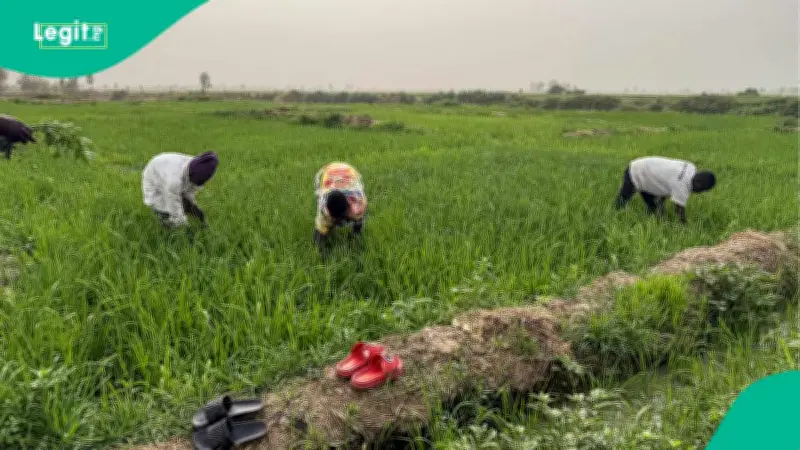
Farmers in northern Borno have been ordered by ISWAP and JAS militants to halt all cultivation this season, with death threats for those who disobey. The warning was first issued in February 2026 at the start of the planting season and spread through word of mouth among farmers and community leaders.
“They approached farmers who had gone to Kartari and told them we must not cultivate this year,” said Musa Abubakar, a farmer from Cross Kauwa, speaking to Humangle. “They also informed community leaders in villages close to them, and those leaders passed the message to us in other towns,” he explained.
Farmers Relocate to Kumalia Amid Threats
Unable to farm in their home communities, about 100 farmers have moved to Kumalia, a town with no state presence or security. There, they have built makeshift shelters from sticks and dry grass, hoping to plant and harvest by November or December. Others have returned to abandoned villages or moved closer to Lake Chad.
According to Humangle, those who wished to farm were told to relocate with their families to terror-controlled territories, locally known as Daula. For years, farmers in northern Borno had been forced to pay levies and “farming permits” to ISWAP, sometimes contributing millions of naira. This season, farmers pooled money, with some paying at least ₦50,000 each, but negotiations failed.
Worsening Food Security Crisis
The farming ban is reshaping survival strategies across Borno. Some families have abandoned cultivation entirely, while others restrict farming to areas near military positions. Many are risking life in abandoned communities, betting on the promise of a harvest despite the dangers.
This disruption is contributing to a wider food security crisis. Agriculture is one of Nigeria’s largest employers, with nearly four in five rural households depending on farming, according to the World Bank. When insecurity forces farmers off their land, harvests decline, supplies tighten, and food prices rise.
Humanitarian Impact and Malnutrition
The Famine Early Warning Systems Network (FEWS NET) estimates that between 21 and 22 million people across northern Nigeria will need humanitarian assistance during the June-to-August lean season. Conflict, reduced household food production, and limited access to food are driving this need.
The Integrated Food Security Phase Classification (IPC) also projects that more than six million children across northern Nigeria will suffer acute malnutrition this year, with displacement and reduced access to food among the main causes.
State Sponsors of Terrorism
Legit.ng earlier reported that the United States Secretary of State determines that certain countries had repeatedly provided support for acts of international terrorism. These countries were designated under three laws: section 1754(c) of the National Defense Authorization Act for Fiscal Year 2019, section 40 of the Arms Export Control Act, and section 620A of the Foreign Assistance Act of 1961.