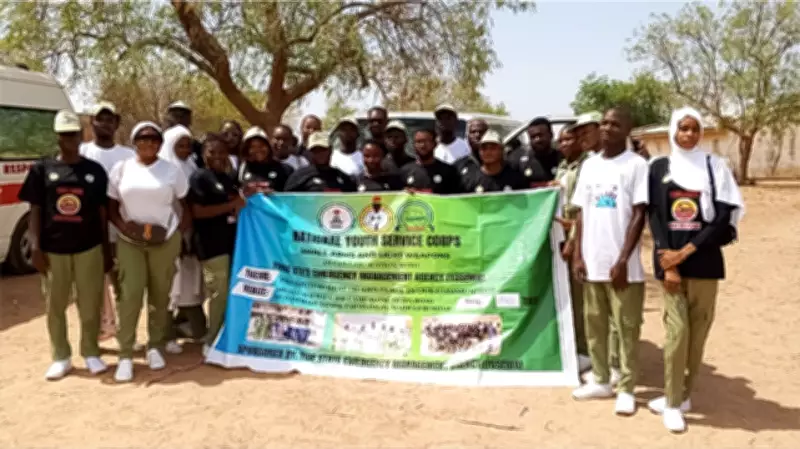
The National Youth Service Corps (NYSC), in partnership with the Small Arms and Light Weapons Community Development Service (SALWCDS) and the Yobe State Emergency Management Agency (SEMA), has initiated a public awareness campaign against the proliferation of small arms and light weapons. The campaign was launched at the Abujan Mai Mala internally displaced persons (IDP) camp and the Mohammad Gombe farming community.
Objectives of the Campaign
This joint effort aims to tackle the spread of illegal weapons, provide hygiene education, and offer food support to IDPs and other vulnerable groups across six states in the Northeast region. The campaign, themed “Promoting Health and Peace in Our Communities,” seeks to enhance safety and reduce the impact of armed violence.
Statements from Officials
The North-East Director of the National Centre for the Control of Small Arms and Light Weapons (NCCSALW), Maj-Gen. Abubakar Adamu (rtd), represented by his Assistant on Strategic Communication and Information, urged IDPs to maintain love, peace, and unity despite the adversities caused by conflict.
Bulus Seth Kazachat, Team Leader of SALWCDS, emphasized that the initiative aims to educate displaced communities on the dangers of small arms, promote tolerance and peaceful coexistence, and provide essential support. He stated: “Our expectation is that after sensitising them on the risks, they are to report any suspicious activity. If they see anyone wielding unlawful weapons, they should notify the military and other security agencies in their respective communities for prompt action.”
Kazachat added: “We are also striving to improve their situation, but we cannot do it alone with state aid. Thankfully, SEMA in Yobe is also supporting our efforts, but we are appealing to the authorities for more assistance. Our aim is to assess how we, alongside other security personnel, can stop the illegal influx of weapons into Nigeria. The harm that guns and light arms have inflicted on the land is clearly evident in most of the conflict-affected communities in Borno, Adamawa, Gombe and Yobe states.”