Cross River Communities Officially Abolish Harmful 'Money Woman' Tradition
The African Centre for Leadership, Strategy and Development has successfully championed the abolition of the harmful old-age culture known as "Money Woman" in the Becheve communities of Obanliku Local Government Area in Cross River State. This significant development marks a major step forward in protecting vulnerable young girls from oppressive traditional practices.
Understanding the 'Money Woman' Practice
The "Money Woman" tradition involved using young girls, often at extremely vulnerable ages, as instruments for settling family debts. According to Dr. Otive Igbuzor, the founding Executive Director of the African Centre for Leadership, these girls were given out in marriage not by choice but as financial obligations, denying them their fundamental rights to education, personal development, and autonomy.
Dr. Igbuzor emphasized that this practice reinforced cycles of poverty, inequality, and gender-based violence. While often defended under the guise of tradition, he described it as a clear violation of fundamental human rights and human dignity that required urgent intervention.
Financial Support and Community Agreement
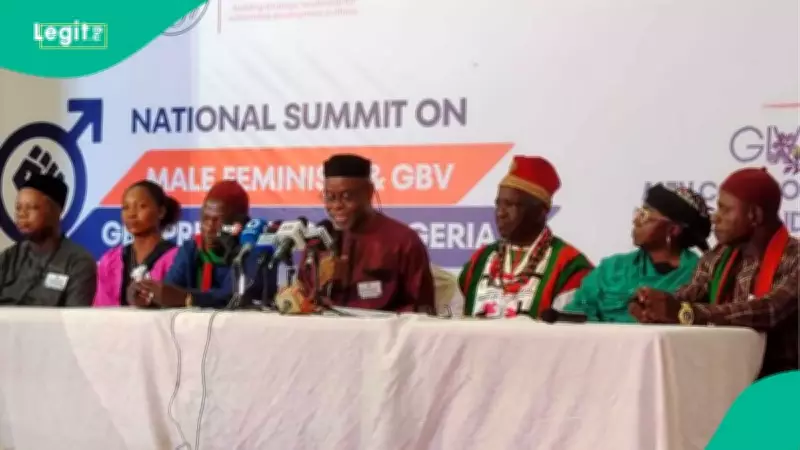
Dr. Igbuzor raised six million, two hundred thousand Naira to set free the first set of 57 women from the oppression of this tradition. The funds were announced during the ongoing national summit on Male Feminism and Gender-Based Violence prevention in Nigeria, held on Tuesday, April 14, 2026, in Abuja.
The conference brought together survivors of the "Money Woman" practice, traditional rulers from affected communities, development partners, and gender-based activists. This diverse gathering created a platform for meaningful dialogue and decisive action against harmful cultural practices.
Traditional Rulers Take Decisive Action
The Paramount Ruler of Obanliku LGA, HRH Amos Uyumulam, confirmed that traditional leaders had agreed and reaffirmed that the "Money Woman" tradition and culture is totally abolished and banished from their communities. This decision represents a significant shift in traditional leadership approaches to harmful practices.
The traditional ruler read a communique from community meetings that outlined specific measures to support affected women. These measures include returning bride prices to husbands to formally release women from "Money Woman" marriage agreements, with the agreed amount set at one hundred thousand Naira (N100,000) regardless of whatever items were originally involved in the marriage arrangements.
Empowerment and Legal Framework
The abolition has led to the enactment of a local by-law prohibiting the practice across all affected communities. This legal framework provides formal protection against the resurgence of such harmful traditions and establishes clear consequences for violations.
For women who are older and cannot leave their marriages, the N100,000 returned bride price will be used to empower them economically, allowing them to stay with their children while gaining financial independence. This thoughtful approach recognizes the complex realities faced by survivors of long-term oppression.
Historical Context and Ongoing Efforts
The journey toward abolition began on August 20, 2020, through the UN Women-funded Spotlight Initiative. The African Centre for Leadership worked collaboratively with the Paramount Ruler of Obanliku LGA, the Becheve Traditional Council of Chiefs, and local government authorities to build consensus around ending this harmful practice.
Participants at the conference stressed that gender justice is essential for national development and requires active involvement from men. In a related development, the African Centre for Leadership, Strategy and Development launched the Male Feminists Network (MFN) to mobilize men in the fight against gender-based violence.
Dr. Igbuzor announced that the MFN will train 1,000 male leaders and build a network of 10,000 certified male feminists to champion equality. Women leaders, including Dr. Margaret Fagboyo, have hailed this initiative as a transformative step toward building a more inclusive society that respects women's rights and dignity.
This landmark achievement in Cross River State serves as a model for other communities grappling with similar harmful traditional practices, demonstrating that cultural evolution is possible when traditional leaders, civil society organizations, and community members work together toward common humanitarian goals.