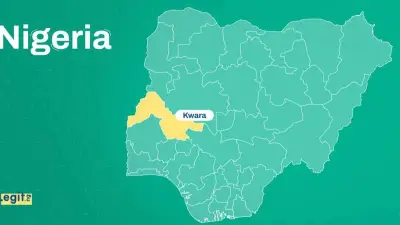
The Muslim community in Plateau State has made a sobering revelation, stating that over 4,700 of its members have been killed in various violent crises that have plagued the state since 2001. This grim figure was disclosed during a commemoration event, highlighting a decades-long cycle of violence with profound human cost.
A Detailed Account of Loss and Mass Graves
Yawale Muhammad, the National President of the Jasawa Community Development Association (JCDA), presented the documented toll during a 17th commemoration prayer held on Friday, November 28, 2025, at the Jos Central Mosque. He detailed specific incidents that contributed to the staggering number.
According to Muhammad, the violence began in 2001 with over 700 Muslim fatalities. This was followed by attacks in 2002 in Eto Baba, Jos, and the 2004 Yelwa-Shendam crisis, which claimed at least 700 more lives. One of the deadliest episodes occurred in 2008 following local government elections, resulting in over 1,000 Muslim deaths.
The JCDA president further stated that multi-location attacks in 2010, covering areas like Dutse Uku, Gero, and Kuru Jenta, led to the deaths of more than 2,000 Muslims. Other violent incidents were recorded in 2011 at the Rukuba Road Eid praying ground and again in 2021 on Rukuba Road, where Muslim travellers were attacked.
The association has identified several mass burial sites where victims were interred. These include the Jos Zaria Road Muslims cemetery, Narkuta Muslims cemetery, Dadin Kowa Muslims cemetery, and the Yelwan Shendam Muslim Cemetery, among others.
The Broader Plateau Tragedy and Official Responses
The claims by the Muslim community come against the backdrop of even larger official casualty figures for the entire state. In a previous disclosure, Plateau State Governor Caleb Mutfwang stated that nearly 12,000 people were killed and more than 420 communities attacked in the state between 2001 and May 2025.
Governor Mutfwang lamented that decades of violence have led to mass displacement, destruction of farmlands, and a severe loss of cultural and economic stability across affected communities. The crisis has often been framed as a cycle of violence between farming and herding communities, a point underscored by Major General MA Etsy-Ndagi, the Chief of Civil-Military Relations of the Nigerian Army.
At a Senate public hearing, federal lawmakers, security experts, and civil society groups discussed the persistent insecurity. A prominent call from the gathering was for decentralised policing and stronger legislative action to address the root causes of the conflict and improve security responses.
A Legacy of Grief and Calls for Resolution
The annual prayer session held every November 28 serves as a poignant reminder of the deep scars left by the violence, particularly following the 2008 elections. The documentation effort by the JCDA aims to provide a formal record of the community's losses, asserting a specific toll within the wider state tragedy.
This revelation underscores the urgent and continuing need for sustainable peacebuilding, justice, and reconciliation in Plateau State. It highlights the human dimension behind the statistics—thousands of men, women, young, and old across various Local Government Areas who have lost their lives over more than two decades of recurring conflict.