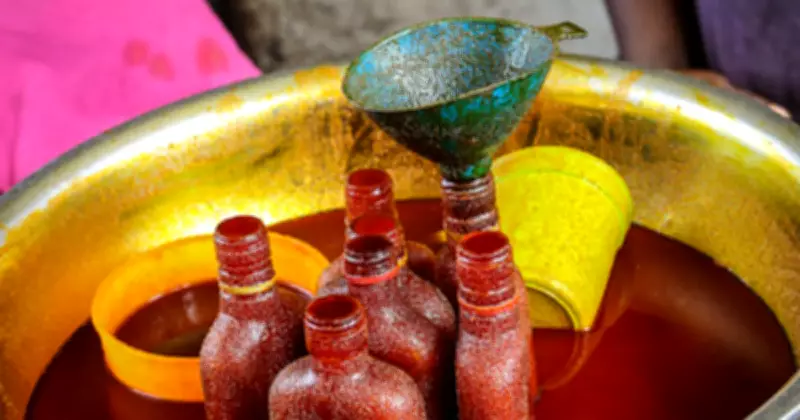
Palm oil is a staple ingredient in many Nigerian kitchens, used in dishes like jollof rice, beans, soups, and stews. However, concerns about adulterated palm oil have raised serious health questions across the country. The Lagos State Consumer Protection Agency (LASCOPA) recently warned about contaminated oil in local markets. LASCOPA's General Manager, Afolabi Solebo Esq., revealed that market surveillance led to the sealing of a shop on Idutafa Lane, Lagos Island, for selling toxic palm oil.
To maximize profits, dishonest traders mix palm oil with harmful substances such as Sudan dyes, industrial chemicals, candle wax, and starch. LASCOPA warns that regular consumption of these additives can cause food poisoning, stomach problems, tissue damage, liver complications, and long-term health risks.
How to Identify Fake Palm Oil
1. Look at the Color
Natural palm oil has a rich reddish-orange to deep earthy red color due to beta-carotene. Fake palm oil often appears too bright, artificially red, or unusually glowing, indicating industrial dyes like Sudan red.
2. Smell the Oil
Pure palm oil has a mild, earthy aroma. Adulterated oil may smell chemical, chalky, or pungent, especially when heated.
3. Taste a Drop
Natural palm oil has a slightly sweet, nutty flavor. Fake oil leaves a bitter, metallic, or chemically sharp aftertaste.
4. Check Texture
Pure oil is smooth and consistent. Watch for sticky, greasy, or slimy textures, sediments, or separation layers, which indicate additives like wax or starch.
5. Observe Heating Behavior
Natural oil heats gradually and releases its aroma. Contaminated oil smokes immediately under low heat, bleaches unusually fast, or separates into watery layers.
6. Water Test
Pour a small amount of oil into a glass of water. Pure oil floats separately. Adulterated oil may dissolve, spread quickly, or make the water cloudy.
Tips to Stay Safe
- Avoid deals that seem too cheap.
- Buy from trusted vendors or local mills.
- Choose NAFDAC-certified packaged brands.
Report suspicious vendors to LASCOPA via social media (@lascopaofficial), website (citizensgate.lagosstate.gov.ng), email (lascopa@lagosstate.gov.ng), or phone (08124993895, 08092509777).