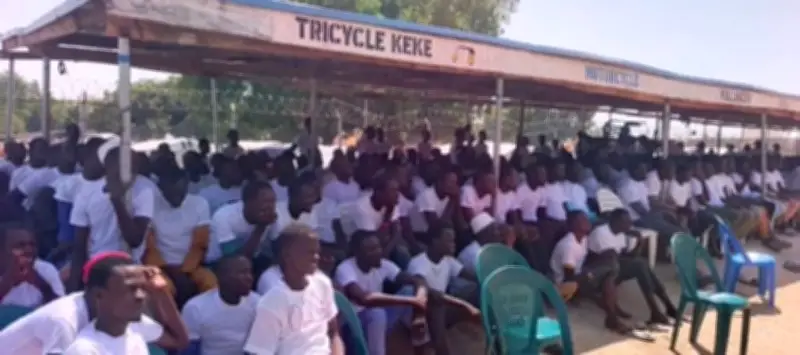
The Borno State Government has successfully reintegrated 720 repentant insurgents into society after they completed a comprehensive deradicalisation, rehabilitation, and reintegration programme. This latest group, classified as low-risk and minor offenders, forms part of Batch 9 under the state's rehabilitation initiative. They were sworn in using the Holy Quran before being released to return to their respective communities across the state.
Announcement by Security Adviser
Brigadier General Ishaq Abdullahi (retd.), the Special Adviser on Security to Governor Babagana Zulum, disclosed this on Friday, June 12, 2026, during an event at the Hajj Camp in Maiduguri marking the completion of their rehabilitation. He described the exercise as another milestone in the state's non-kinetic approach to counter-insurgency in the North-East, calling it one of the most effective peacebuilding models globally.
Success Story Since 2021
Abdullahi noted that the initiative began on July 5, 2021, under Governor Zulum and has seen large-scale participation from former fighters who voluntarily surrendered. He stated, "It has been a success story since 5th July 2021 when the good people of Borno State, under the stewardship of our dynamic leader, Prof Babagana Umara Zulum, agreed to forgive and accept their sons who are willing to drop arms and embrace peace." He added, "Today, the Borno model is adjudged to be one of the most effective non-kinetic programmes in the history of mankind, with over 350,000 persons who willingly exited the bush and surrendered to the military."
Total Reintegration Figures
With the latest 720 beneficiaries, the total number of reintegrated persons under the programme has risen to 9,680 across batches 1 to 9. The reintegration also included 992 spouses and 2,050 children associated with the former insurgents.
Rehabilitation Process
Abdullahi explained that the process began when repentant insurgents voluntarily exited the bush and reported to military locations for initial profiling and disarmament. Participants engaged in structured rehabilitation programmes, including Islamic teachings, counselling, hygiene education, drug abuse awareness, and vocational training. "The camps' administrators kept them busy with various programmes geared towards deradicalisation and preparing them for life after camp. Tuesdays and Thursdays were for Islamic programmes, lectures on hygiene, drug abuse and other fields, while Mondays, Wednesdays and Fridays were for skill acquisition programmes such as metal works, carpentry, tailoring, pot making, brick laying, barbing, cap making, repair of phones, solar installation, vulcanising and repairs of motorcycles," he said.
Support for Reintegration
The state government also provided starter packs to support the beneficiaries' reintegration into civilian life. Community leaders, alongside the Civilian Joint Task Force and hunters, screened the individuals before recommending them for reintegration. The beneficiaries came from various local government areas, including Bama, Kondugua, MMC, Jere, Mafa, Dikwa, Gwoza, Damboa, Marte, Mongunu, Kukawa, Gbambolu Ngala, Kalabarge, and Gubio. Abdullahi urged them to return as law-abiding citizens and contribute positively to peace and development.
Commissioner's Remarks
Earlier, the Commissioner for Women Affairs and Social Development, Hajiya Zuwaira Gambo, represented by Permanent Secretary Babagana Kadai, described the programme as a symbol of hope, reconciliation, and resilience. She commended Governor Zulum for his visionary leadership in peacebuilding, noting that the administration has continued to resettle displaced families and rebuild communities affected by insurgency.