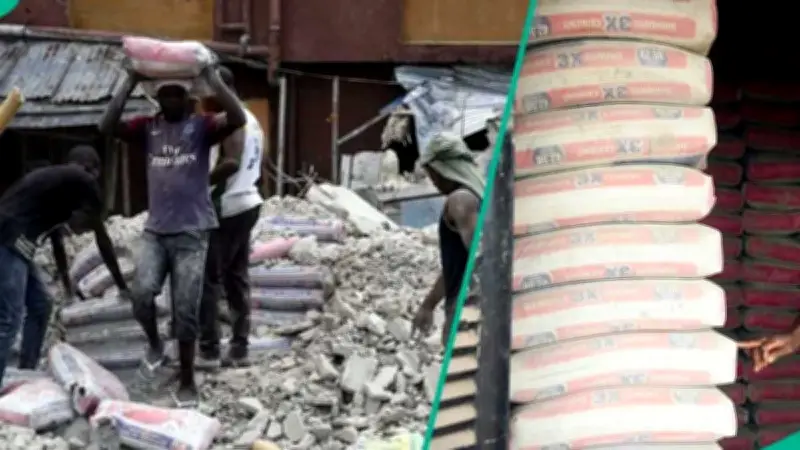
The price of a 50kg bag of cement has risen to as high as N15,000 in some parts of Nigeria, a sharp increase from the N9,300 to N9,700 range recorded at the start of 2026. This surge has prompted the Federal Competition and Consumer Protection Commission (FCCPC) to open a formal investigation into pricing conduct across the cement industry.
Three-Month Study Precedes FCCPC Investigation
The FCCPC said its Anticompetitive Practices Department spent three months conducting an industry-wide and cross-border study before issuing investigation notices and production summonses to key cement manufacturers. Companies were directed to hand over data on pricing methods, production levels, capacity utilisation, export activities and commercial relationships.
Major players in the Nigerian cement market include Dangote Cement, BUA Cement and HBM Nigeria, formerly known as Lafarge Africa. The commission said most manufacturers cooperated by making their records available, though one company did not comply.

Production Capacity vs. Domestic Demand Gap
At the heart of the FCCPC's concern is a large gap between what Nigeria can produce and what it actually consumes. The country has installed production capacity of between 60 million and 65 million metric tonnes per year, while domestic demand sits at an estimated 25 million to 30 million metric tonnes annually. Nigeria also exports cement to neighbouring countries.
The commission said: "Of particular concern to the commission is that this level of production capacity has not resulted in the downward pressure on domestic prices that might ordinarily be expected."
The cross-border element of the investigation revealed further disparities. A 50kg bag of cement sells for roughly $4.80, about N6,528, in Tanzania, a figure well below what Nigerian consumers are currently paying.
Cement manufacturers, however, pointed to naira depreciation, rising energy costs, higher logistics expenses and increased import costs for machinery and spare parts as key drivers of the price increases. The FCCPC said it is now testing those explanations against verified industry data to determine whether they are sufficient to account for the scale of the increases, BusinessDay reports.
What the Investigation Will Determine
The commission is examining whether prices are genuinely explained by higher operating costs or whether there is evidence of coordinated conduct, abuse of market dominance, deliberate supply restrictions or anti-competitive distribution arrangements.
Tunji Bello, executive vice chairman and chief executive officer of the FCCPC, said cement holds strategic importance for the Nigerian economy because its cost flows directly into housing, commercial construction, infrastructure delivery and the general cost of doing business. He added that the commission's intervention is aimed at establishing whether the market is functioning competitively and whether consumers are getting fair value.
The FCCPC stressed that its preliminary findings do not amount to a final ruling against any company, but that the evidence gathered is sufficient to proceed with a full investigation.
Impact on Construction Sector and Future Moves
The price rise has added further pressure on Nigeria's construction sector, where developers already contend with high costs for land, labour, transportation and other building materials, raising fresh concerns about the affordability of new housing.
Earlier, Legit.ng reported that Dangote Industries Limited is weighing a move into maritime shipping after the company found it could not secure vessels to carry cement from Nigeria to neighbouring West African countries, a senior executive said on Tuesday. Sada Ladan-Baki, head of international trade export at Dangote Cement, disclosed the plan at a seminar on non-oil exports, saying the conglomerate has faced persistent difficulties moving its products across the region using existing shipping options.