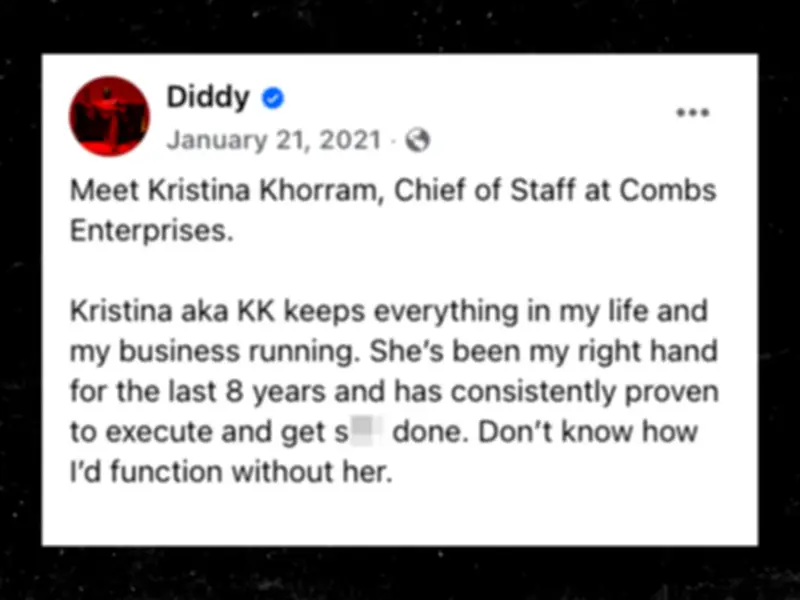
A Los Angeles County Superior Court judge has ruled in favor of Kristina Khorram, the longtime trusted associate of Sean "Diddy" Combs, by dismissing sex trafficking and sexual battery claims brought against her by a former employee. The decision, made during a June hearing, marks a significant legal victory for Khorram.
Court Ruling
The judge determined that Phillip Pines, who worked for Diddy from 2019 to 2021, failed to provide sufficient evidence to hold Khorram liable for the alleged crimes. Specifically, the court found that Pines did not demonstrate that Khorram had knowledge of any alleged sexual battery or that she was aware of or benefited from any alleged sex trafficking activities.
Allegations Against Khorram
Khorram, who has been described by another male accuser as a "Ghislaine Maxwell" figure, has consistently denied all allegations of wrongdoing. The dismissal of these claims is a significant development in the ongoing legal battles surrounding Diddy.
Background of the Lawsuit
Phillip Pines originally sued Diddy and Khorram for sex trafficking, sexual battery, and other charges. In his lawsuit, he claimed that he was responsible for arranging hotel rooms for Diddy's so-called "freak-offs," which involved stocking rooms with baby oil, sex toys, and other items. He also alleged that he was instructed to clean the hotel rooms after Diddy finished using them.
Diddy's Response
Diddy's legal team denied Pines' allegations shortly after the lawsuit was filed. A representative stated, "No matter how many lawsuits are filed, it won't change the fact that Mr. Combs has never sexually assaulted or sex trafficked anyone -- man or woman, adult or minor." The representative added, "We live in a world where anyone can file a lawsuit for any reason. Fortunately, a fair and impartial judicial process exists to find the truth, and Mr. Combs is confident he will prevail in court."
The dismissal of claims against Khorram does not affect the ongoing case against Diddy, who continues to face multiple lawsuits. However, it represents a notable setback for Pines' legal strategy.