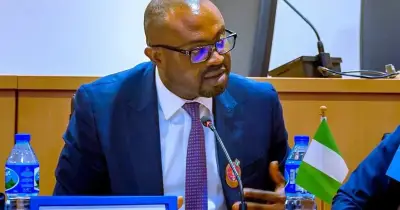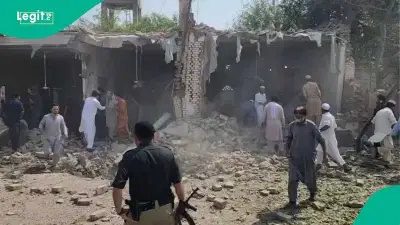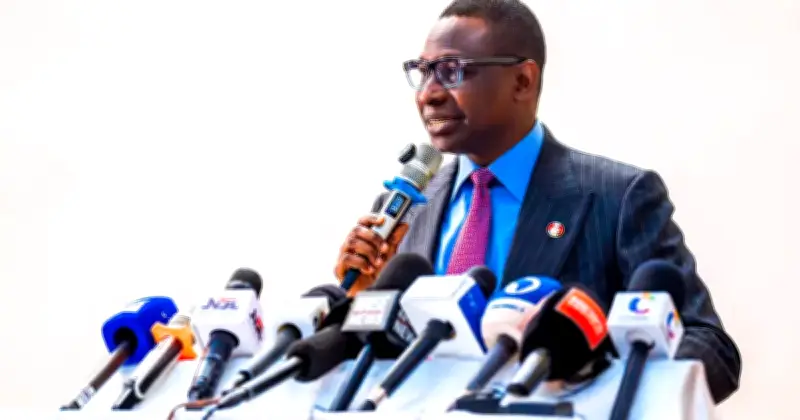
EFCC Chairman Ola Olukoyede has revealed that pastors, imams, bishops and other religious figures feature in the commission’s financial crime case files, with some convicted and imprisoned, yet still addressed by their religious titles even behind bars. He made the disclosure on Wednesday, September 23, 2026, while addressing the Nigeria Inter-Religious Council (NIREC) in Abuja.
Religious titles not a shield against accountability
Olukoyede said a religious title should not shield anyone from scrutiny when money is allegedly misappropriated. “I have my case files full of these titles,” he said, referring to pastors and imams investigated by the commission. He added that some had gone beyond investigation and had been convicted and imprisoned for financial crimes, yet continued to be addressed by their religious titles even in prison.
His remarks come against the backdrop of documented cases involving religious figures. In July 2026, an Enugu State High Court sentenced Godwin Ajuluchukwucheya, popularly known as Prophet Sunday Koboko, to one year in prison after he pleaded guilty to obtaining money by false pretence and stealing ₦136.4 million from church members. The EFCC said he had told members that he had won ₦30 billion in a lottery and persuaded them to contribute money to benefit from it. The court also ordered the forfeiture of his property for restitution to victims.
Cases of convicted clerics and forfeited properties
In another case, a Federal High Court in Lafia ordered the final forfeiture of properties linked to Theophilus Ebonyi, the General Overseer of Faith On The Rock Ministry International, after ruling that the EFCC had established that the assets were proceeds of crime. The properties included a 23-room hotel and event centre, a school, warehouse, water factory and other buildings. EFCC investigations had linked Ebonyi to an alleged scheme in which victims were asked to pay for access to a purported $20 billion Ford Foundation grant.
The issue is not confined to Christian clergy. In 2019, an Islamic cleric, Awojobi Ganiu, was sentenced to two years in prison after being convicted of a ₦71 million oil fraud.
‘Did you misappropriate money or not?’
Olukoyede recalled one particularly striking encounter with a suspect who arrived at the EFCC and introduced himself using several religious titles. “I am Reverend Doctor Bishop,” the man reportedly told him. Olukoyede said he cut through the titles and asked the question he considered relevant: whether the man had misappropriated money. He said the suspect subsequently faced five charges. “So if you think you’re a Christian or you’re a pastor here, and you commit financial crime, I will be your enemy. I won’t be your friend,” he said.
The money churches and mosques accept
The EFCC chairman also challenged religious organisations to question the source of extraordinary donations instead of automatically celebrating wealthy benefactors. He gave an example of someone donating ₦550 million without the religious institution asking where the money came from. “If he says he is giving you ₦550 million and you don’t ask questions, and you say, ‘God bless you,’ you are blessing the proceeds of crime,” Olukoyede said.
He also warned religious leaders not to mix tithes, offerings, zakat and other institutional funds with money belonging to their private businesses. “You’re not supposed to mingle it,” he said, urging churches and mosques to establish clear financial controls.
The 75% pilgrimage allegation
Olukoyede also revisited investigations carried out during his earlier senior roles at the EFCC involving the Christian Pilgrims Board and Muslim Pilgrims Board. He said investigators made “mind-boggling” discoveries and alleged that almost 75% of government money released to sponsor pilgrims in one location had been stolen by officials of the organisations. He did not identify the specific location, period, amount or officials involved in the remarks reported from the NIREC meeting.
For Olukoyede, the larger problem is not simply what the EFCC can prosecute after money disappears. “The EFCC can investigate a person’s conduct. Faith communities can influence that person’s character,” he said. His challenge to religious leaders was therefore broader: if churches and mosques can influence how Nigerians think about right and wrong, they can also help change a culture in which wealth is admired without enough questions about how it was acquired.