Newly released medical documents have revealed startling details about the health of notorious pedophile Jeffrey Epstein, showing he suffered from chronically low testosterone levels and complained about having diminished libido for years before his death.
Chronic Hormonal Deficiencies Revealed
The medical records, included in the latest document dump related to the Epstein case, show the late financier had well-below-normal testosterone levels over an extended period. Various tests conducted over the years consistently showed Epstein's testosterone levels were significantly deficient according to medical standards.
Documented Testosterone Levels
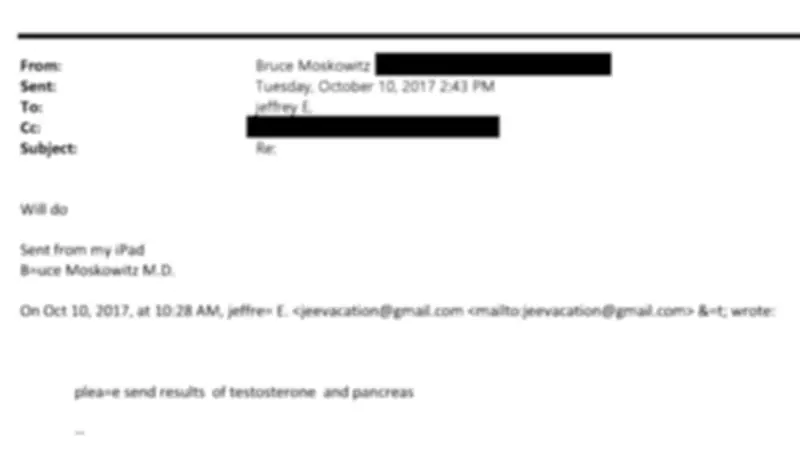
In one email from 2014, Epstein's doctor noted that test results showed "testosterone still low 142." By 2017, another email from the same physician informed Epstein that his lab results had dropped even further to 125. For context, the American Urological Association considers anything below 300 to be a testosterone deficiency, placing Epstein's levels at less than half the minimum threshold.
Epstein himself acknowledged this chronic condition, writing in one communication that his low testosterone had been present "for ten years" and later noting it had persisted for fifteen years in total.
Libido Complaints and Treatment Hesitancy
The documents reveal Epstein repeatedly complained to doctors about his low libido but expressed significant hesitation about pursuing hormonal treatments. In one particularly revealing email sent at 3 a.m. on April 24, 2015, Epstein wrote to a physician about his concerns.
"As you can see from the time stamp my sleep pattern is not wonderful. I am hesitant to start a regimen of hormones. my low testosterone has been there for 15 years. mechanic view is that it has caught up to me?" he questioned in the early morning message.
Failed Treatment Attempts
When one doctor suggested testosterone-related medications like Clomid, Epstein responded negatively in 2016, stating he had stopped taking it and calling it a "giant mistake" to have started the treatment initially.
"Stopped the clomid the water retention and fat around the waist made it as if i was pregnant," Epstein wrote, describing the undesirable side effects he experienced from the medication.
Additional Medical Concerns and Treatments
The released records paint a broader picture of Epstein's health issues beyond just hormonal deficiencies:
- STD History: Epstein had a lengthy history of contracting sexually transmitted diseases, including gonorrhea
- Parasitic Infections: Tests showed evidence of whipworm (a parasitic roundworm) and histolytica parasites
- Urinary Issues: Medical notes indicated blood in urine, history of bladder polyps, and diminished urine stream
- Antibiotic Treatments: Epstein reported taking 1 gram of ceftriaxon and 2 grams of azithromycin to address infections
Penis Enlargement Interest
One particularly notable email from 2012 shows Epstein received correspondence from a "Dr. Maxman" offering "max penis enlarger pills." This interest in enlargement treatments aligns with previous disclosures from one of Epstein's victims, who described the financier as having an "extremely deformed" penis shaped like a lemon or an egg.
Reproductive Considerations
The medical documents also reveal Epstein had sought information about freezing his sperm, indicating concerns or considerations about his reproductive capabilities despite his documented health issues.
In one 2016 email to a New York doctor, Epstein summarized multiple health concerns: "Urine stream diminished, testosterone levels very low. ie. 125 same for ten years. Never smoked or drink, no drugs. Sherlock? how can we work together?"
The comprehensive medical records provide new insights into the physical health of one of the most notorious figures in recent criminal history, revealing a pattern of chronic hormonal deficiencies, repeated infections, and various treatment attempts over more than a decade.