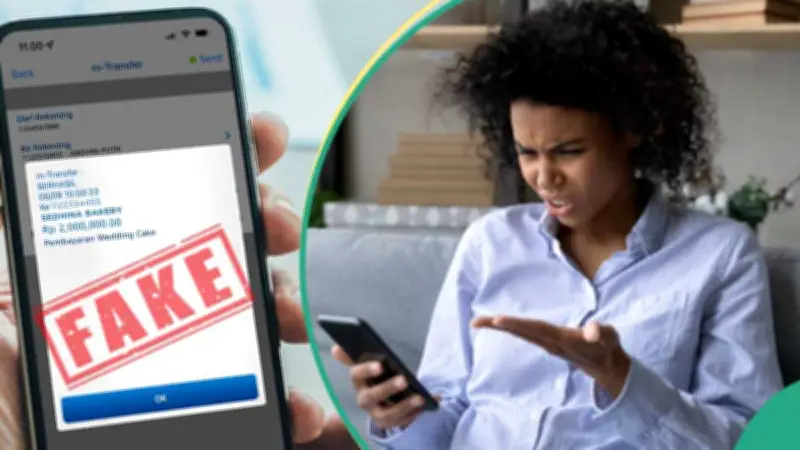
Fake bank alert scams remain a significant threat to Nigerians, particularly traders and Point of Sale (PoS) operators, despite a reported decline in digital payment fraud losses. According to the Nigeria Inter-Bank Settlement System (NIBSS), banks and financial institutions lost N25.85 billion to digital payment fraud in 2025, a 51% drop from N52.26 billion in 2024. However, social engineering remains the most common fraud technique, with threats like insider abuse, SIM-swap fraud, account compromise, and phishing evolving continuously.
How Fake Bank Alerts Work
Fraudsters use applications to generate fabricated transaction notifications, complete with sender names, account numbers, amounts, and reference numbers. They may also display fake receipts, screenshots, or payment-success pages that mimic legitimate bank interfaces. The scammer pressures the merchant to release goods or services, often exploiting urgency or technical excuses like network delays or bank maintenance.
For small businesses and PoS operators, the danger is acute because victims may only realize the fraud after the customer leaves. Criminals also employ social engineering, impersonating bank officials or trusted individuals to extract sensitive information, as warned by the Central Bank of Nigeria (CBN).
The Most Reliable Detection Method
The most reliable way to identify a fake payment is to check the actual account. A text message, screenshot, or receipt should never be treated as proof of payment. Merchants must log into their banking app or use a trusted channel to confirm the credit. If the amount isn't reflected in the available balance or transaction history, withhold goods until payment is confirmed.
This is critical when customers claim delays due to network issues, bank maintenance, or weekends. Even genuine transfers may take time, but merchants should not release valuable goods based solely on explanations or screenshots.
Seven Ways to Detect and Prevent Fake Bank Alerts
1. Check Your Account Yourself
Never rely solely on SMS notifications. Open your official banking app, check your balance, and review transaction history. The rule: No credit in your account, no release of goods.
2. Do Not Trust Screenshots or Receipts
Fraudsters can manipulate screenshots and create convincing fake receipts. A receipt on the customer's phone does not prove payment. Always verify independently through your own banking channel.
3. Be Careful with Links and Messages
Fraudsters may send links pretending to be from banks. The CBN advises not to click suspicious links and to verify the identity of anyone requesting sensitive financial information. Never provide PINs, passwords, OTPs, or card details in response to unsolicited messages.
4. Do Not Release Goods Under Pressure
Scammers create urgency, claiming they're in a hurry or that the transfer is complete. Merchants should not let pressure override verification. If the money hasn't appeared, wait.
5. Confirm Suspicious Transactions Independently
Contact the bank through official customer-service channels, not numbers or links supplied by the suspected scammer. The CBN advises immediate contact if banking information is compromised or fraud is suspected.
6. Protect Your Banking Information
Never disclose PINs, passwords, OTPs, or other credentials. Fraudsters may start with a harmless conversation about a failed transfer to extract information. The CBN recommends strong passwords, regular account monitoring, and two-factor authentication where available.
7. Report Suspected Fraud Immediately
Anyone suspecting fraud should contact their bank immediately and report the incident. The CBN emphasizes the duty to promptly report suspected fraud or errors. Secure compromised accounts and report to relevant authorities.