The Independent Corrupt Practices and Other Related Offences Commission (ICPC) and the Attorney-General of the Federation (AGF) have both filed counter-affidavits asking the Federal High Court in Abuja to dismiss a N1 billion fundamental rights enforcement suit brought by former Kaduna State Governor Nasir El-Rufai. El-Rufai, who has been in ICPC custody since February 2026, filed the suit marked FHC/ABJ/CS/1852/2026 on August 13 through his lawyer, Ubong Akpan, against the ICPC, its Chairman Musa Aliyu, and the AGF.
ICPC's Counter-Affidavit: Hospital Visit Turned Political
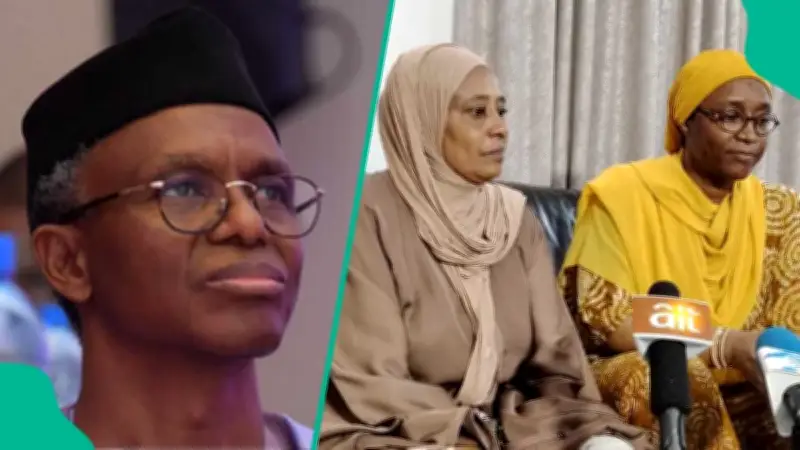
In a joint counter-affidavit sworn by John Uche, a chief anti-corruption assistant in the commission's Internal Security Support Unit, the ICPC described several claims in El-Rufai's supporting affidavit as false. Uche stated that El-Rufai is being held under a lawful court order issued in a criminal case marked FHC/KD/73C/2025 at the Federal High Court in Kaduna. He explained that on July 7, the commission arranged a medical visit for El-Rufai's personal physician, accompanied by ICPC officers and his wife, Asabe, in compliance with an earlier court order.
Shortly after that visit, however, the commission received reports that the outing had turned into a political meeting, breaching its security protocols. In response, the ICPC introduced temporary access restrictions to prevent further security risks while it reviewed existing arrangements. Uche added that on the same day, Abba El-Rufai arrived at the commission's offices requesting to see his father. After contacting his superior, Henry Hwande, Uche was directed to ask the purpose of the visit and then ask Abba to wait. While Abba was in the waiting area, Asabe met him and began demanding access, raising her voice in the process. When Abba attempted to walk into the building, Uche said he physically blocked both him and his mother from entering.
Security Breaches and Access Restrictions
The ICPC officer further said that during a subsequent security review, another breach involving Asabe was uncovered. Based on what the commission described as her repeated disregard for access control protocols, it determined that her continued access posed a specific security risk. Uche also noted that other family members, including Abba, had visited El-Rufai on multiple occasions after July 7, bringing meals, medication, and other supplies.
El-Rufai's suit, assigned to Judge Chigozie Onah, seeks N1 billion in damages over what the former governor described as a denial of access to his wife, Aichatou Asabe, and son, Abba El-Rufai, in July. It contains nine prayers in total, including a declaration that his fundamental human rights under Part IV of the Nigerian Constitution remain enforceable during his detention.
AGF's Position: No Role in Denying Access
In a separate counter-affidavit sworn on September 11 by Oni Michael, an administrative officer at the Federal Ministry of Justice, the AGF denied responsibility for any of the events El-Rufai cited. Michael said the AGF does not operate a detention facility and had no involvement in the July 7 incident. He added that the court order from Judge R.M. Aikawa of the Federal High Court in Kaduna directed only the ICPC and its chairman to provide El-Rufai with access to his lawyer and personal physician. Michael submitted that maintaining strict security protocols at the ICPC's facility is a matter of national security.
El-Rufai has been in ICPC custody for more than seven months as part of an ongoing corruption proceeding. He is also pursuing a separate N1 billion suit at the Federal High Court in Abuja over an alleged invasion of his Abuja home by ICPC operatives in February. The court has yet to rule on the counter-affidavits, and the outcome will determine whether the suit proceeds to a full hearing.