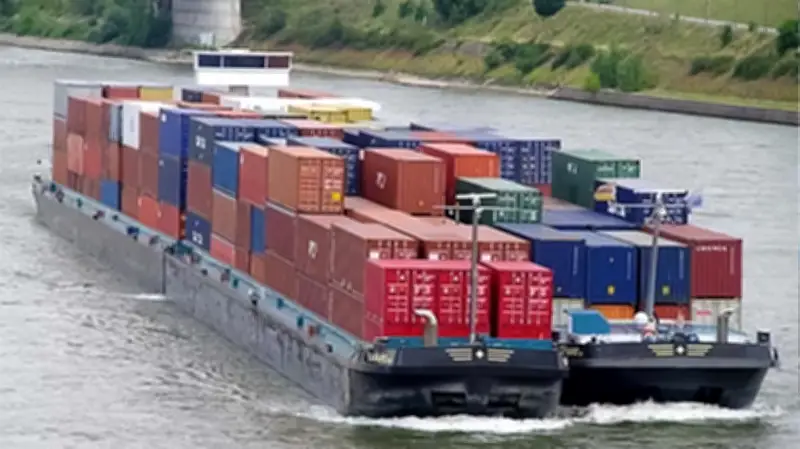
There are growing concerns over operational deficiencies and safety risks associated with barge operations in the country. The concern follows a recent accident where import-laden containers carrying goods worth millions of naira fell from a barge into the water at Kirikiri Phase 2, Lagos.
Stakeholders Lament Safety Gaps
Stakeholders lamented safety gaps and operational deficiencies, including the use of unseaworthy barges, container overloading, and poor adherence to standard operating procedures (SOPs), which they warned expose importers to significant financial losses and endanger lives.
Findings revealed operational deficiencies among some barge operators, especially the routine deployment of vessels that are not seaworthy, with workers allegedly resorting to temporary measures, such as using pieces of cloth to block sections of barges that were taking in water. There have been cases of non-adherence to standard operating procedures, including cases where a tugboat was used to pull a barge, resulting in the death of workers.
Expert Calls for Stronger Oversight
Head of Research at Sea Empowerment and Research Centre (SEREC), Eugene Nweke, said leaking barges, overloading, poor vessel maintenance and unsafe operational practices should be treated with utmost seriousness by relevant authorities, especially as barge transportation remains an indispensable component of Nigeria's maritime logistics ecosystem and a critical enabler of indigenous participation in the Blue Economy.
He said there can be no sustainable growth in barge operations without strict adherence to operational, safety, environmental and seaworthiness standards. Nweke noted that the deployment of unseaworthy barges, excessive cargo loading beyond approved capacities, and makeshift repairs while vessels are in operation underscore the urgent need for stronger regulatory oversight, routine inspections, vessel certification, and effective enforcement mechanisms.
Nweke called for the establishment of a dedicated Directorate of Barge Operations and Logistics Services within the Federal Ministry of Marine and Blue Economy to coordinate policy, safety compliance, vessel standards, operator certification, environmental protection, and sectoral development. He stated that Nigeria's barge industry has enormous potential for trade facilitation, cargo evacuation, job creation, road decongestion, and investment attraction.
Importer Risks and Insurance Concerns
Former President of the Shippers' Association of Lagos State (SALS), Jonathan Nicol, described the consequences of containers falling into the water as a "tragedy" for importers, noting that containers are not designed to be waterproof, as the cargo suffers extensive damage if submerged for any length of time. Nicol warned that such practices pose serious risks to importers whose cargoes are transported by water between terminals.
He questioned why importers would expose themselves to such risks when alternative cargo-handling options exist, stressing that using barges in unsafe conditions amounts to a gamble. Nicol maintained that goods that arrive safely in Nigeria aboard ocean-going vessels should not be exposed to avoidable risks during inter-terminal transfers. He stressed the importance of insurance coverage for all cargo moved by barge, noting that shipping companies' liability typically ends upon discharge at the port.
Regulatory Challenges
The Lagos Area Manager, National Inland Waterways Authority (NIWA), Sarat Braimah, said the agency has faced a major safety enforcement challenge with cargo barge operations, particularly along busy commercial channels such as the Lagos inland waterways.