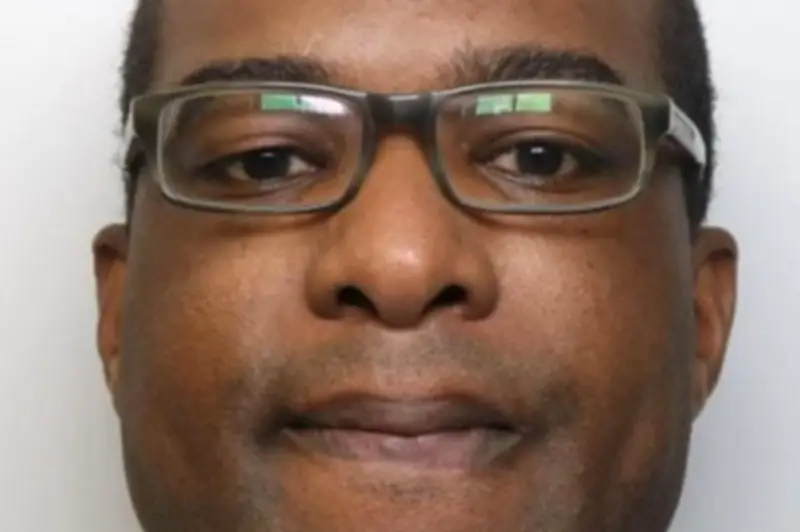
Obinwa Obichukwu, a 45-year-old Nigerian man, has been sentenced to two years in prison in the United Kingdom for sexually assaulting a woman twice at Euston Station in London, following her rejection of his advances. The assault occurred on the evening of August 20, 2023, and Obichukwu was found guilty on two counts of sexual assault in January 2026. He was sentenced at Inner London Crown Court on July 21, 2026, as confirmed by British Transport Police (BTP).
Details of the Assault
The incident began when Obichukwu approached the lone woman as she walked toward the busy interchange and attempted to strike up a conversation about the music she was listening to. After she did not respond positively, he grabbed her hand and declared his “love” for her. He then put his arm around the victim’s shoulder, asked her to come back to his house, and pursued her down Euston Road.
Despite her clear disinterest, Obichukwu continued his pursuit. He sexually assaulted the woman at the station entrance and again near the ticket barriers after following her down the escalator to the Tube. The victim managed to push him off and escape, leaving Obichukwu at the station. The assaults occurred within a short span, highlighting the predatory nature of his actions.
Arrest and Legal Proceedings
Officers from the British Transport Police tracked Obichukwu to his home address in Armstrong Close, Hertfordshire, and arrested him for sexual assault. During the trial, Obichukwu claimed that the encounter was consensual, but the jury rejected his defense. He was found guilty on both counts in January 2026.
In addition to the two-year prison sentence, Obichukwu was issued a 10-year Sexual Harm Prevention Order (SHPO) and will be placed on the sex offenders register for a decade. This means he will be subject to strict monitoring and restrictions upon his release.
Police Statement
Detective Constable Daniel Burke of the British Transport Police commented on the case, stating: “Obinwa Obichukwu is a sexual predator who targeted a lone woman and attacked her at a busy London station. He claimed his assault was consensual and took his case to trial, but fortunately, the jury saw straight through his lies, and he’s now behind bars where he belongs.”
He added, “Tackling violence and intimidation against women and girls is a priority for us as a force, and we’re tireless in our efforts to bring offenders like Obichukwu to justice. If you experience or witness these crimes on the railway, please report it to us by texting 61016. We will always take action.”
Broader Context and Impact
The case underscores ongoing concerns about the safety of women and girls in public spaces, particularly on public transport. According to British Transport Police statistics, reports of sexual offences on the railway have been increasing, and the force has made tackling such crimes a top priority. The conviction of Obichukwu sends a clear message that perpetrators will be pursued and prosecuted.
The victim, who has not been named, showed considerable bravery in coming forward and supporting the prosecution. Her testimony was crucial in securing the conviction. The sentence, while seen by some as relatively short for repeated sexual assault, includes preventive measures through the SHPO and registration.
This case also highlights the role of the judicial system in adjudicating claims of consent, especially when such claims are made by defendants. The jury’s rejection of Obichukwu’s defense demonstrates that the legal system is capable of distinguishing between genuine consent and predatory behavior.
Reactions and Community Response
Following the sentencing, women’s safety groups have welcomed the conviction but called for longer sentences for sexual offenders. They argue that the two-year term, combined with the SHPO, may not be sufficient to deter other potential offenders. However, they praised the victim’s courage and the police’s swift response.
The Nigerian community in the UK has also expressed concern, noting that such incidents reflect poorly on the community and emphasizing the importance of upholding the law regardless of nationality. Obichukwu’s conviction serves as a reminder that no one is above the law in the UK.