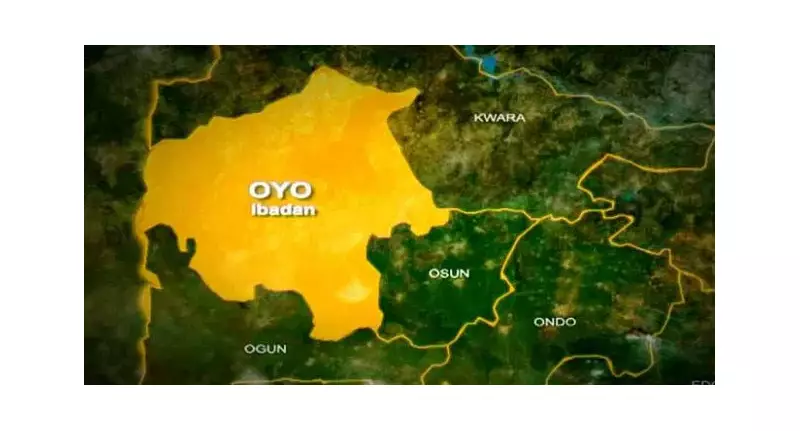
Domestic Violence Tragedy in Oyo State Ends in Acid Murder-Suicide
A harrowing case of domestic violence has culminated in a murder-suicide in Akufo, located within the Ido Local Government Area of Oyo State. The incident involved a 49-year-old man who allegedly attacked his 44-year-old wife with a corrosive acid substance before ingesting it himself, resulting in the tragic deaths of both individuals.
Decades of Marital Strife and Genetic Challenges
The deceased couple, identified as Mr Lekan Adedeji and Mrs Zainab Adedeji, had been married for over twenty-five years. Family members have disclosed that their union was persistently marred by domestic abuse. Compounding this difficult situation was the fact that both partners were unknowingly carriers of the sickle cell trait, a genetic condition that severely impacted the health of their children.
Morufat Ashake, the younger sister of the deceased woman who has now taken custody of the three surviving children, provided a detailed account. She explained that the couple only became aware of their genetic compatibility after the birth of their first three children, who fell ill repeatedly. Medical tests eventually revealed the children had sickle cell disease (SS genotype).
"They did not realise their genotype status until their first three children were born, who kept falling ill repeatedly. One of the children became critically ill and was taken to the hospital, where tests revealed that the children were SS. That was when they understood the full extent of their situation," Ashake stated.
The Surviving Children and a History of Violence
The woman gave birth to six children in total, but tragically, three succumbed to complications associated with sickle cell disorder. The three surviving children are Rashida (20, SS genotype), Folawe (17, AS genotype), and Folahanmi (6, SS genotype). Both Rashida and Folahanmi suffer from regular sickle cell crises and require constant medical attention.
Ashake revealed that domestic violence was a recurring and severe problem in the marriage. "The man kept insisting that she should continue giving birth, knowing the risks. He frequently beat her. The level of violence was extreme," she said. Due to this abuse, Mrs Adedeji had left the matrimonial home approximately three months prior to the fatal incident.
The Fatal Weekend Unfolds
The tragedy began in December of last year when the husband contacted his wife, allegedly under the pretext of providing funds for their second daughter's West African Senior School Certificate Examination fees. He asked her to come and collect the money, and she arrived with their second daughter and youngest son.
Upon reaching the house, Ashake claims the man instructed the daughter to take the youngest child outside. While the daughter was sweeping the compound, she reportedly heard her mother screaming. "When she tried to open the door, he pushed it back, locked it, and chased her away. My sister was in danger," Ashake explained.
She alleges the husband then poured acid on his wife's body and attempted to force her to drink it. "When he could not make her drink it, he poured it all over her. He then drank the acid himself. Prior to consuming the acid, the husband handed over his mobile phone and money intended for the children’s school fees to another person," Ashake detailed.
Aftermath and Pleas for Assistance
Despite immediate medical intervention, Mrs Adedeji succumbed to her injuries on January 23. The family reportedly spent over four million naira on treatment efforts before her passing. The couple had lived in a four-bedroom flat built by the husband in Akufo.
The mother of the deceased, 62-year-old Titilayo Ayoola, corroborated the account of persistent abuse. "Everything Morufat has said is true. My daughter suffered greatly in that marriage," she said. She lamented the new responsibility of caring for the orphaned children, who have profound medical and educational needs.
"These children need medication and constant care. I am already old. I do not know how we will manage without help," Ayoola added.
The children themselves expressed their profound grief. The eldest, Rashida, said, "We lost our mum and our dad. We are in so much pain, and now there is nobody to take care of us." Folawe described the events as traumatic, stating, "Everything happened so fast. We need help to continue our education and to look after our health."
Family members are now making a desperate public appeal for urgent assistance to support the medical care, education, and overall welfare of the three surviving children and their aged grandmother.