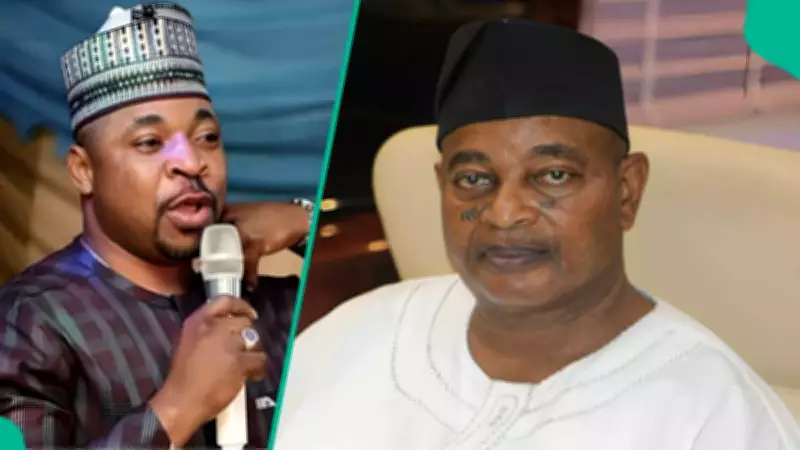
Police Detain NURTW Presidential Contender Following Peaceful Secretariat Reclamation
In a dramatic development within Nigeria's transport sector, Tajudeen Baruwa, a key contender for the leadership of the National Union of Road Transport Workers (NURTW), has been apprehended by police authorities. This arrest occurred shortly after Baruwa spearheaded a faction to assume control of the union's National Secretariat located in Abuja, effectively displacing the faction led by Musiliu Akinsanya, widely recognized as MC Oluomo.
Court Mandates Precede Takeover Action
The strategic move to reclaim the secretariat was executed in direct compliance with a judicial directive issued by the National Industrial Court. This court ruling, delivered on March 12, explicitly commanded MC Oluomo to vacate the office of NURTW President and formally acknowledged Baruwa as the union's legitimate leader. Addressing journalists at the secretariat premises, Baruwa articulated the rationale behind their actions, emphasizing their commitment to lawful conduct.
"Their body language has not been encouraging despite repeated assurance that we are not going back to foment any trouble as we are a law-abiding union whose only mission is to get back what belonged to us," Baruwa stated. "But today, as you can see, we are taking over in a peaceful manner, and it is not a forceful takeover but just carrying out the court’s orders."
Judicial Affirmations Solidify Baruwa's Leadership Claim
The leadership impasse within NURTW stems from protracted legal confrontations spanning several years. The National Industrial Court, in suit No. NICN/ABJ/263/2023 presided over by Hon. O.O. Oyewumi, had previously affirmed Baruwa as the duly elected President of NURTW. This judgment was further reinforced by the Court of Appeal in a ruling delivered on November 8, 2024, under appeal CA/ABJ/CV/293/2024.
A three-member appellate panel, consisting of Justices Hamma Akawu Barka, Nnamdi Dimgba, and Asmau Ojuolape Akanbi, dismissed the appeal filed by loyalists of MC Oluomo. The panel concluded that the appeal lacked substantive merit and imposed a cost of N100,000 against the appellants.
Baruwa elaborated on the necessity of their intervention, noting, "Again, please be aware that our coming here after two years is to occupy our office, having obtained judgments at both the lower court and the Appeal Court, but they refused to obey court orders after waiting for about two years. We decided to resume back at the office today without causing any violence, and here we are. Although the other faction attacked one of our members, who is now in the hospital, the situation is under control. We are still open to reconciliation as we are a lawful organisation and not a troublemaker. No one is above the law."
Union Officials Emphasize Lawful Compliance
Suleiman Musa, the General Secretary of NURTW, highlighted the union's adherence to legal protocols despite facing resistance. He confirmed that the union had resumed office in strict alignment with court directives, even in the face of opposition from the rival faction.
"We have notified the police that, on the order of the court, we are coming back to our office today, and we are glad that journalists are here to witness it so that the world will know what is going on here," Musa remarked.
Baruwa, who had consistently opposed Oluomo's inauguration as union president, reiterated that the takeover constituted a lawful exercise aimed at implementing judicial orders, rather than an act of aggression.
Historical Context of the NURTW Leadership Crisis
The ongoing crisis has been characterized by years of disputes over NURTW leadership, with judicial bodies consistently upholding Baruwa's legitimacy. The lower court's ruling on March 11, 2024, recognized him as the union's president, a decision subsequently bolstered by the appellate court.
Appellants involved in the legal proceedings included Yasin, Alhaji Tajudeen Agbede, Alhaji Aliyu Ore, Kayode Agbeyangi, Alhaji Alhassan Haruna 313, Aliyu Tanimu, and Alhaji Hakeem Adeosun. Respondents comprised Baruwa, Bello Adamu, Eugene Job, Danjuma Saidu, Prince Isah Usman, Suleiman Adamu, and Odion Olaye JP.
These recent events underscore a significant chapter in the NURTW leadership dispute, highlighting the complexities associated with enforcing court rulings within Nigeria's influential transport unions. The arrest of Baruwa adds a new dimension to the conflict, raising questions about the interplay between legal authority and on-ground enforcement in union governance.