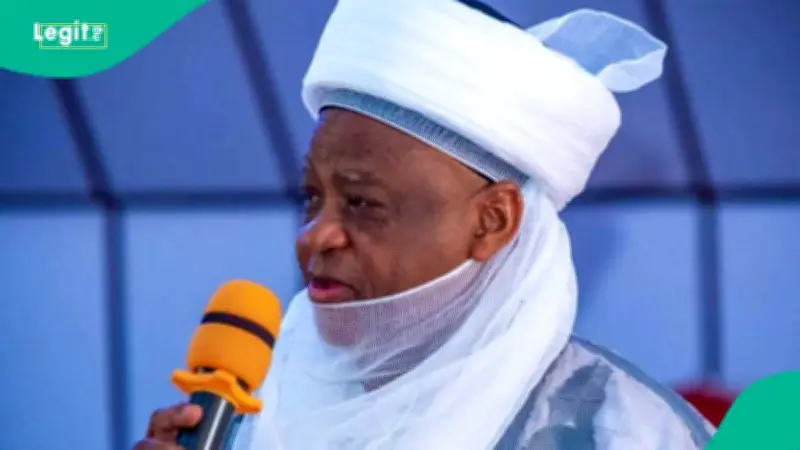
At the 2026 National Conference of the Miyetti Allah Cattle Breeders Association of Nigeria (MACBAN) in Abuja, Sultan Muhammadu Sa'ad Abubakar III delivered a forceful message: Nigerians must cease using the term 'Fulani herdsmen' to describe criminals involved in kidnapping, banditry, and terrorism. The Sultan, speaking on Wednesday, July 29, 2026, insisted that criminal behavior is not defined by ethnicity and that the entire Fulani community should not be stigmatized for the actions of a few.
Sultan distances Fulani from criminal actors
The Sultan explicitly rejected collective profiling, stating, 'Call them criminals who are abducting people, engaging in kidnapping, terrorism and whatever. In every family, you have bad people, and you have good people. I happen to belong to the family of good people.' He emphasized that peaceful Fulani communities should not be equated with violent offenders who share their ethnic background. According to the Nigerian Tribune, the monarch called for deeper mutual understanding and tolerance, noting that tolerance alone is insufficient. 'We want everybody to understand who we are. If you understand somebody, you can work better with him,' he said.
He also warned against attributing criminal acts to an entire ethnic group, urging Nigerians to direct their criticism at individual perpetrators. The Sultan assured the nation that the Fulani mean no harm: 'I want to assure all Nigerians that we mean well for everybody in Nigeria. We mean no harm to anybody.'
Fulani communities to help flush out criminals
Beyond rhetoric, the Sultan made a concrete commitment on behalf of Fulani settlements. He declared that Fulani communities are fully prepared to collaborate with the Federal Government and security agencies to remove criminal elements from their enclaves. 'We assure the President and all other stakeholders that we are 100 per cent ready to work with him and other security agencies to flush out criminals from our enclaves.' This pledge came as part of his address at the MACBAN conference, which also featured praise for President Bola Tinubu's creation of the Federal Ministry of Livestock Development—a move the Sultan described as transformative for Nigeria's livestock sector. He expressed support for the Presidential Livestock Reforms Committee, led by Professor Attahiru Jega, and vowed that traditional institutions would back the ministry's work.
Deadly attacks in Benue
The Sultan's call for ethnic non-profiling comes against a backdrop of recurring violence. Days before the conference, armed invaders struck two communities in Otukpo Local Government Area of Benue State. In Efeyi-Ugboju, an attack lasting over four hours from 5am on Tuesday left at least 15 people dead, according to Otukpo LGA Chairman Maxwell Ogiri, who confirmed 14 bodies recovered and warned the death toll could rise. Separately, suspected armed herders stormed the Nobi community in the same LGA, killing at least 16 residents in an early morning assault. Angry youths and women protested by blocking the Enugu–Otukpo and Makurdi–Otukpo roads. Governor Hyacinth Alia condemned the attacks as barbaric and directed security agencies to intensify surveillance across affected communities.
The juxtaposition of the Sultan's plea and the Benue killings highlights the deep-rooted tensions between farmers and herders in Nigeria. However, the Sultan's position is clear: labeling all Fulani as criminals only worsens the conflict. By pledging community cooperation with security forces, he aims to root out bad actors while protecting the reputation of the majority law-abiding Fulani. The MACBAN conference concluded with a renewed call for national unity and a commitment to peace.