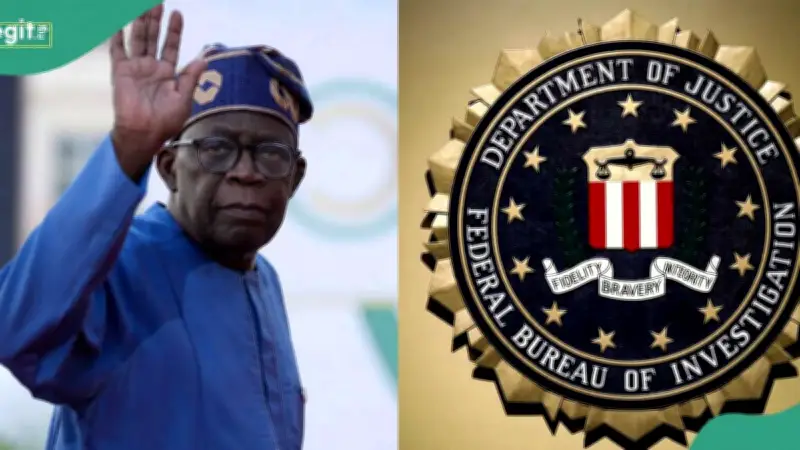
Fact-checking investigations have confirmed that letters circulating on social media, purportedly written by Nigerian President Bola Tinubu to United Nations Secretary-General Antonio Guterres and US President Donald Trump, are fake. The documents, which allegedly urged both leaders to block the release of American law enforcement files tied to historical drug investigations, were dismissed by the Nigerian presidency and digital forensic analysis.
Background of the Claims
The letters emerged amid a civil Freedom of Information Act (FOIA) lawsuit filed in the United States District Court for the District of Columbia. Aaron Greenspan, a US transparency activist and founder of PlainSite, initiated the case, seeking records from six federal agencies including the CIA, FBI, IRS, DEA, the US Department of State, and the Executive Office of United States Attorneys. The records in question date from the late 1980s and early 1990s and reference President Tinubu.
Social media users shared two documents, one addressed to the UN Secretary-General and another to President Trump, with the latter titled 'The Release of My FBI Case Must Be Handled with Caution.' The letter to the UN read in part: "In view of the strong and enduring partnership between Nigeria, the United Nations and the United States, I respectfully appeal to you, Your Excellency, to kindly use your good offices to engage with the Government of the United States, and in particular, President Donald J. Trump, to consider intervening in the matter and facilitating the cancellation or closure of the said case."
Digital Forensics and Official Response
Fact-checking organisation Dubawa investigated the letters and found no credible news outlet had reported that President Tinubu sent any such correspondence to foreign governments. A review of the Nigerian presidency's verified social media accounts and national news archives returned no supporting evidence.
On closer inspection, the documents showed design inconsistencies. They featured an unofficial emblem combining Tinubu's portrait, the national coat of arms, and heavy typography that does not appear on standard State House stationery. The signature on both letters also did not match the president's official signature as seen on authenticated presidential communications.
Digital forensic analysis using the InVID-WeVerify tool found the letter to the UN Secretary-General to be 88 per cent AI-generated. The result for the letter addressed to Trump was inconclusive under that tool, but a separate platform, isFake.ai, flagged it as probably AI-generated.
Furthermore, Abdulaziz Abdulaziz, the Senior Special Assistant to the President on Media and Public Enlightenment, dismissed the documents outright. "These are fake; the first wrong indicator is the letterhead," Abdulaziz said, urging members of the public to disregard the posts entirely.
Legal Proceedings and Public Interest
The claim is false. Court records show that Tinubu’s legal team has addressed the matter through formal legal proceedings. The case has been handled through statutory arguments, not personal letters to foreign heads of state or international organisations.
Earlier, Legit.ng reported that the presidential candidate of the African Democratic Congress (ADC) in the 2027 election, Atiku Abubakar, urged the FBI to release, where legally permissible, records relating to President Tinubu. Atiku explained that Nigerians have a democratic right to information about the history and character of the man seeking to retain the country’s highest elective office.