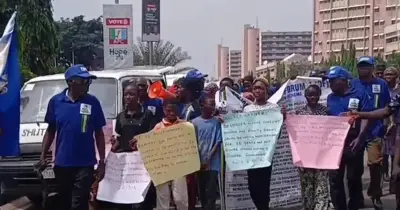
A Niger Delta advocacy group has challenged claims that pipeline surveillance operations by Tantita Security Services have significantly improved security in the region. The group said oil theft, environmental concerns, and community grievances remain unresolved despite ongoing efforts to protect oil infrastructure. It called on President Bola Tinubu to review the contract and consider a more decentralised surveillance framework involving local stakeholders.
Group Questions Security Gains
The Niger Delta Monitoring Group (NDMG) issued a statement on Wednesday, June 11, signed by its coordinator, Thompson Tom. The group disputed recent reports suggesting that the Niger Delta had witnessed major security improvements under Tantita's pipeline surveillance operations. The NDMG said its assessment did not support claims that insecurity in the South-South region had significantly declined because of the contract.
"Our comprehensive assessment, involving site visits to pipeline corridors, community engagements, security reports, and environmental data, reveals persistent challenges that have not delivered genuine security or development for the people of the Niger Delta," the statement said. According to the group, illegal crude oil activities continue in some communities despite efforts by security agencies and private contractors to protect oil assets.
Community Concerns
For many residents of the Niger Delta, oil infrastructure security is closely linked to livelihoods, environmental protection, and economic opportunities. The group said community members interviewed during its fact-finding exercise raised concerns about continued oil spills, pollution, and the pace of environmental remediation in some affected areas. The NDMG also argued that some local residents feel excluded from the benefits associated with surveillance operations, a situation it said could undermine community cooperation in tackling criminal activities.
Call for Transparency
The group called for greater transparency in the management and evaluation of pipeline surveillance contracts, saying stronger oversight would help build public confidence. The NDMG did not provide independent data to substantiate all its findings, while Tantita had not publicly responded to the latest claims at the time of reporting.
Contract Review Urged
The NDMG urged the federal government to consider a more decentralised approach to pipeline surveillance by involving additional community-based organisations, state-level operators, and private firms. According to the group, a broader participation framework could improve intelligence gathering, create more jobs, and strengthen accountability across the region.
"We urge Mr President to carefully examine all available evidence before making decisions on the future of pipeline surveillance in the Niger Delta," Tom said. The group maintained that long-term stability in the oil-producing region would require greater community participation, environmental protection, and equitable distribution of opportunities linked to oil asset protection.
Political Debate
Meanwhile, Legit.ng previously reported that the deputy spokesperson of the House of Representatives, Philip Agbese, warned that fresh calls to break up pipeline surveillance contracts in the Niger Delta could weaken coordination and threaten recent progress in protecting oil infrastructure. He said the growing political tone around the debate risks undermining national security priorities. Speaking in Abuja, Agbese reacted to pressure from groups seeking to decentralise pipeline surveillance operations currently managed by private firms such as Tantita Security Services Nigeria Limited. He acknowledged long-standing concerns around inclusion in the region but said pipeline protection cannot be treated as a political concession.