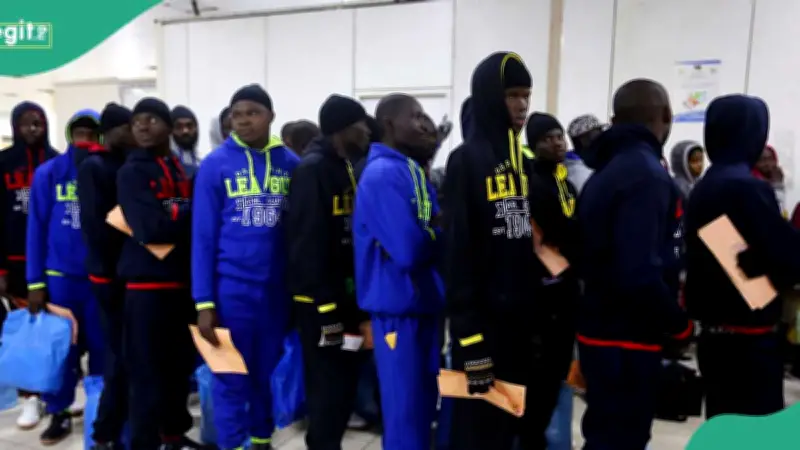
Twenty deportees arrived in Liberia on Thursday after the United States sent them as the first batch under a new bilateral agreement that will see the West African country receive up to 1,200 migrants in total. The group landed at Roberts International Airport outside the capital, Monrovia. The deal is among the largest third-country deportation arrangements pursued by the Trump administration as part of its broader immigration crackdown.
Details of the US-Liberia deportation agreement
Liberian Information Minister Jerolinmek Piah said the 1,200 deportees would not be limited to African nationals. The group will also include people from North America, South America and the Caribbean, according to the Associated Press. The US-Liberia arrangement is part of a wider pattern in which the Trump administration has struck deals, many of them confidential, with nearly two dozen countries to accept deportees who are not their own nationals. About ten of those agreements involve African nations, according to immigration advocates.
Liberia's position on the deportees
At a briefing on Tuesday, Liberian Justice Minister Natu Oswald Tweh said most of the deportees had committed migration-related violations. She added that those sent to Liberia could apply for asylum in the country if they chose to do so. The statement from the Liberian government indicates that the deportees are not necessarily being forced to remain in the country permanently, but are being given the option to seek protection there.
Concerns raised by immigration lawyers
Immigration lawyers have described the use of third-country deportations as a legal workaround that effectively pushes asylum-seekers back towards the home countries they originally fled. In many of these cases, migrants are sent to countries they have no ties to or where they face security risks, leaving them with little practical option but to return to the places they were trying to escape. The practice has drawn criticism from human rights advocates who argue that it undermines the protections available to asylum-seekers under international law.
Earlier, Legit.ng reported that the United States Department of Homeland Security (DHS) had released the names and photographs of 32 Ghanaian nationals identified for deportation under its "Worst of the Worst" criminal aliens programme. The list forms part of a broader immigration enforcement campaign targeting foreign nationals with criminal records.