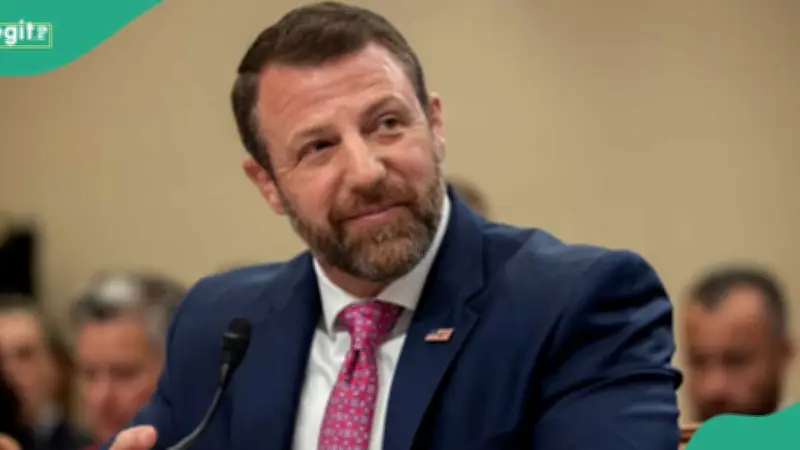
United States Homeland Security Secretary Markwayne Mullin has advised migrants living in the country under Temporary Protected Status (TPS) to either obtain permanent legal residency or prepare to return to their countries of origin. His comments followed a recent US Supreme Court ruling that allows President Donald Trump's administration to end humanitarian protections for hundreds of thousands of Haitian and Syrian nationals. The decision could pave the way for deportations despite ongoing instability in both countries.
What Does the US TPS Ruling Mean?
Speaking during CNN's State of the Union, Mullin said those benefiting from the programme should take steps to regularise their immigration status if they wish to remain in the United States. "Either try to fill out the paperwork and be here underneath a permanent status or we'll help you get back to your country," Mullin said. "We'll actually give you a plane ticket, plus roughly $2,100 to help you re-establish when you get there, but temporary protective status, according to the courts and in its name itself, is not permanent status," he added.
Temporary Protected Status allows people from countries affected by war, natural disasters or other humanitarian crises to live and work legally in the United States for a limited period. Haiti received the designation after the devastating 2010 earthquake, while Syria was added in 2012 following the outbreak of civil war.
Why Are Critics Opposing Deportations?
The Supreme Court ruling is expected to affect about 350,000 Haitians and 6,000 Syrians whose legal protections may now be withdrawn. The move has attracted criticism from immigration advocates and some Republican politicians who argue that conditions in Haiti remain too dangerous for large scale returns. Ohio Governor Mike DeWine was among those expressing concern. He warned that removing Haitian workers would damage key sectors of the state's economy, particularly healthcare.
"It's Haitians who many times are taking care of your mom or your dad who has Alzheimer's, taking care of family members who might be in a nursing home," said DeWine. "And to say we're going to pull all those out, it's just not in our own self-interest." The US State Department continues to advise against travel to Haiti and Syria because of violence, crime, terrorism and kidnappings. Immigration advocates also fear the ruling could encourage further efforts to end Temporary Protected Status for migrants from other countries currently covered by the programme.