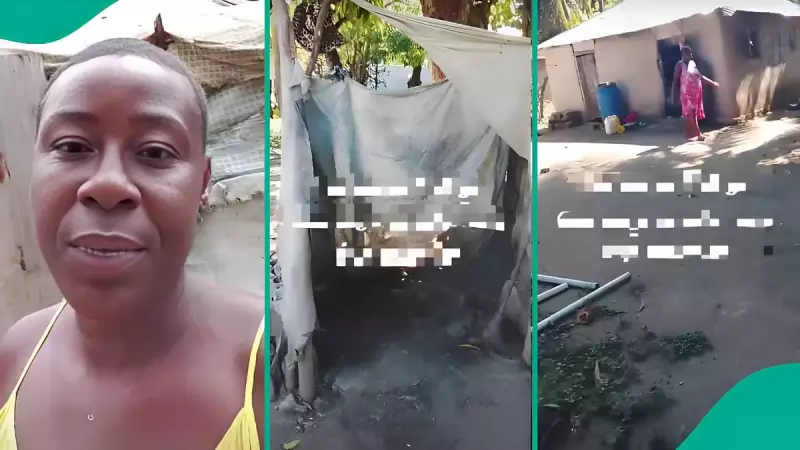
Woman Deported After 42 Years in US Shares Harsh Reality of Life in Haiti
A 47-year-old woman identified as Juan has captured widespread attention on social media after sharing her emotional story of being deported from the United States, where she had lived for 42 years, and now facing severe hardships in Haiti. Her viral video posts detail the stark contrast between her life in America and her current unstable living conditions, sparking a mix of sympathy and debate among online viewers.
From US Stability to Haitian Uncertainty
In a heartfelt video shared on TikTok under the username @hatainempress, Juan explained that she was last in Haiti at the age of five before moving to the US, where she spent the majority of her life. She stated, "Good morning, my name is Juan, I'm 47 years old. At 5 years old was the last time I was in Haiti. I've lived in the US all my life. I was forced to live back in Haiti due to deportation. My life here is unstable, it's uncivilized." This abrupt transition has left her struggling to adapt to a country she barely knows, highlighting the profound impact of deportation on long-term residents.
Revealing Harsh Living Conditions
Juan did not hold back in showcasing the reality of her situation in Haiti. She shared footage of her living quarters, including:
- A basic kitchen with limited amenities
- A shared bathroom facility used by multiple individuals
- A communal sleeping arrangement where she and others share a single bed
She noted that a local woman has allowed her to stay temporarily while she tries to get back on her feet, but the conditions are far from ideal. The video also depicted the outdoor areas where people must defecate, underscoring the lack of proper sanitation and infrastructure.
Emotional Plea for Support and Relocation
In a detailed description accompanying her video, Juan expressed gratitude for being alive but described the difficulties she has faced since arriving in Haiti. She wrote, "I lost everything. I have experienced some horrific, life-changing difficulties since being in Haiti. There is no rest. No security. No jobs, especially for a deported person who is foreign to the culture and traditions." She appealed to the community for help, hoping to relocate, find work, and eventually contribute to Haiti's economy, emphasizing her desire to rebuild her life despite the setbacks.
Mixed Reactions from Social Media Users
The video has sparked a range of responses from viewers, with many expressing empathy while others questioned her choices. Some notable comments include:
- prettyblueeyes questioned why she did not apply for citizenship during her 42 years in the US.
- janiegarzagriffith offered words of encouragement, suggesting that everything happens for a purpose.
- Ibrayik highlighted the lesson of never becoming too comfortable in a foreign country without securing one's status.
- Henry Yufanyi urged people to help her, noting that anyone can make mistakes.
- Casa su asked pointed questions about her efforts to obtain proper immigration status over the decades.
- Brother G, a Haitian living in the US, expressed pride in his homeland but acknowledged the challenges she faces.
Broader Context of Deportation Stories
Juan's story is not isolated, as similar cases have emerged involving individuals deported to other countries. For instance, a Nigerian man deported from the US to Ghana reported being stranded in Togo after being transferred across the border without support. Additionally, a white streamer in Nigeria recently expressed concerns about being forced to leave the country after police took his passport, illustrating the complexities of immigration and residency issues globally. These narratives underscore the human toll of deportation policies and the struggles faced by those uprooted from their long-term homes.
Juan's viral account serves as a poignant reminder of the challenges immigrants can face, even after decades in a host country, and has ignited conversations about immigration reform, community support, and the resilience of individuals in the face of adversity.