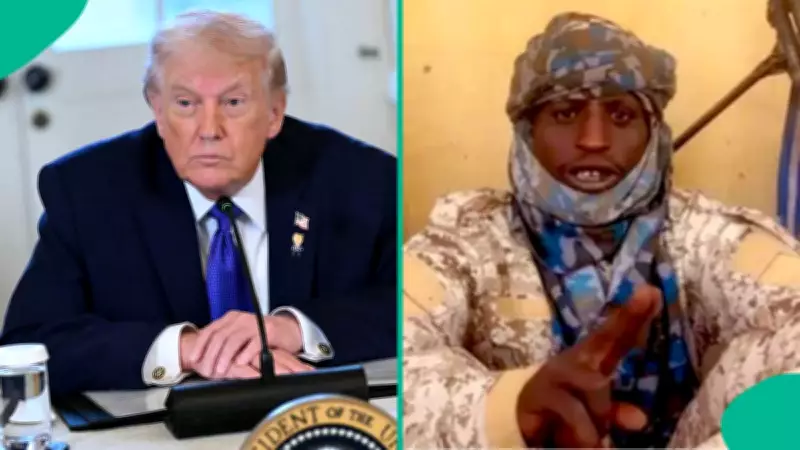
Security Expert Questions Authenticity of Viral ISWAP Video Threatening Trump
A video claiming to show Islamic State West Africa Province (ISWAP) terrorists threatening US President Donald Trump following recent air strikes has circulated widely online, sparking alarm and intense speculation among security observers and the general public. The footage, which gained rapid traction across social media platforms, prompted serious concerns about its origin and credibility, leading to expert scrutiny of its contents.
Security Analyst Raises Doubts About Video's Origins
Prominent security analyst Malik Samuel addressed the controversial video directly on social media platform X on February 3, 2025, casting significant doubt on its authenticity. Samuel reported that the footage was unlikely to have been produced by the terrorist organization ISWAP and suggested it had been substantially edited or fabricated entirely. His professional assessment emphasized the importance of careful verification when encountering such potentially inflammatory content online.
"Someone shared this purported ISWAP video threatening the U.S. president with me," Samuel explained. "I don't believe the footage originated from ISWAP, and was likely edited."
Inconsistencies With Established ISWAP Media Practices
Samuel highlighted several critical inconsistencies between the viral video and verified ISWAP media productions. He noted that authentic ISWAP videos typically begin with a specific jihadi nasheed followed by a prayer or supplication, elements conspicuously absent from the questionable footage. Additionally, the viral clip featured two simultaneous translations in Arabic and English, which Samuel identified as inconsistent with ISWAP's established media style.
The security expert elaborated that ISWAP typically uses only one translation at a time, depending on the primary language spoken by the speaker. For instance, if the speaker delivers a message in English, an Arabic translation might be provided separately. Conversely, if Arabic is the primary language, translations might appear in English, Hausa, or other languages depending on the intended audience and strategic communication goals.
Questionable Content and Visual Elements
Samuel further identified problematic content within the video, noting that ISWAP would be highly unlikely to explicitly state the source of its weapons, such as specifically mentioning Ukraine as claimed in the footage. He also observed that the use of a white text box for Arabic translation did not match ISWAP's known visual style and presentation methods.
Perhaps most significantly, Samuel stressed that authentic ISWAP videos consistently display the ISIS logo in the top-right corner of the frame as a standard identifying feature. The complete absence of this crucial element in the viral video provided another clear indication that the footage did not originate from the terrorist organization.
Context of Recent Security Developments
This analysis comes amid ongoing security concerns in Nigeria, where tensions have been heightened following the reported arrest of two suspected ISWAP members in Lagos on December 21. According to security sources, the suspects were apprehended by State Security Service operatives in the Apapa area and have been detained for questioning. These developments underscore the complex security landscape in which such viral content emerges and circulates.
The viral video alleging that ISWAP terrorists threatened US President Donald Trump after air strikes has been strongly questioned by security experts. Malik Samuel's detailed analysis suggests the footage lacks the hallmarks of genuine ISWAP media production and was likely fabricated, highlighting the critical need for careful verification of terrorism-related content before drawing conclusions or spreading alarm.