Nigerian Legal Expert Issues Critical Warning About Wi-Fi Sharing Risks
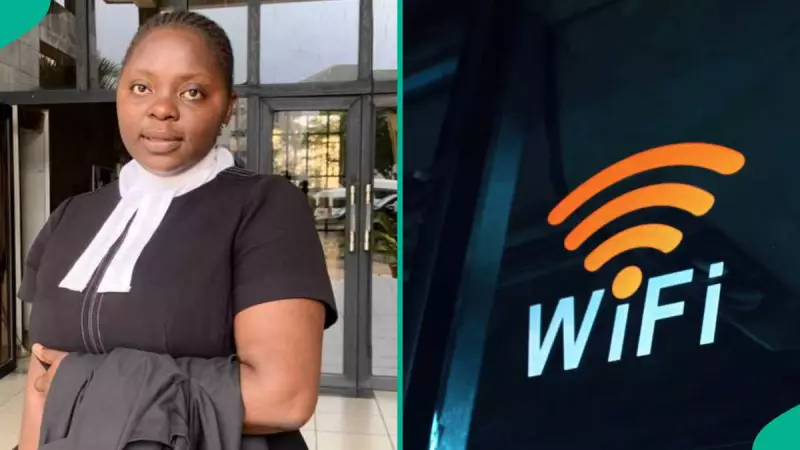
A Nigerian lawyer has delivered a crucial warning that could change how many people approach internet sharing in their homes and businesses. The legal professional has explained in detail how the seemingly generous act of sharing your Wi-Fi password with neighbors, friends, tenants, or visitors could potentially land you in serious legal trouble, even when you haven't personally touched any device connected to your network.
The Legal Reality of Wi-Fi Responsibility
"Your Wi-Fi Can Commit a Crime and the Law may Knock on Your Door," the lawyer emphasized in a detailed Facebook post that has sparked important conversations about digital responsibility. "That Wi-Fi you share freely can drag you into serious trouble even when you didn't touch the phone or laptop used."
This statement challenges the common misconception that internet service providers bear sole responsibility for what happens on their networks. The legal expert explains that when illegal activities occur online—including fraud, threats, impersonation, hacking, or financial scams—investigations typically begin with tracing IP addresses. These digital footprints lead investigators directly to the registered owner of the Wi-Fi network, regardless of who actually committed the offense.
Why Innocence Doesn't Guarantee Protection
The lawyer highlights a crucial legal principle that many Nigerians may not fully understand: responsibility follows control. If you maintain control over a network but fail to properly secure it, the law may consider you negligent. This negligence can have serious consequences, even if you had no direct involvement in any illegal activity.
Imagine trying to explain to law enforcement authorities:
- "I gave the password to many people."
- "I don't know who was using it at the time."
- "It's a shared network that multiple people access."
These explanations, while potentially truthful, do not automatically clear you of responsibility under Nigerian law. The legal system increasingly recognizes that network owners have a duty to maintain reasonable security measures.
Practical Implications and Business Parallels
The legal expert draws important parallels with how businesses handle network access:
- Businesses typically maintain user logs for accountability
- Internet cafes use captive portals that require identification
- Serious organizations implement strict access controls
These practices exist precisely because of the legal responsibility that comes with providing internet access. The lawyer emphasizes that "sharing Wi-Fi casually is not generosity—it's risk."
Actions That Could Worsen Your Situation
The warning extends to post-incident behavior as well. The lawyer cautions that deleting router logs or resetting devices after suspicious activity could actually make your legal position worse. Such actions often raise more questions than they answer and can be interpreted as attempts to destroy evidence.
"The law understands technology more than people think," the legal expert notes, emphasizing that Nigerian authorities have become increasingly sophisticated in digital investigations.
A New Mindset for the Digital Age
The lawyer concludes with a powerful analogy that reframes how Nigerians should think about their internet connections: "In the digital age, your Wi-Fi is your signature, and signatures are not jokes in law."
This means that before you casually say "Take my Wi-Fi, it's free," you should ask yourself a critical question: Are you prepared to take responsibility for everything that travels through your network?
This warning comes at a time when internet penetration continues to grow across Nigeria, making digital literacy and legal awareness increasingly important for all citizens. The legal expert's insights serve as a timely reminder that technological convenience must be balanced with legal responsibility in our interconnected world.