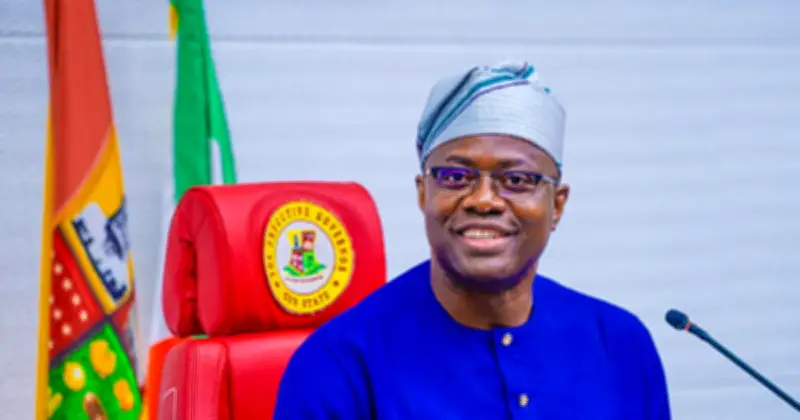
Oyo State Governor Seyi Makinde has forcefully declared that the state will not suffer a repeat of the infamous 2014 Chibok schoolgirl tragedy. He pledged that his administration will "bend backwards" to secure the safe return of dozens of schoolchildren and teachers abducted in Oriire Local Government Area.
Governor's Firm Proclamation
The governor made the emotional but firm proclamation while addressing a crowd of demonstrators at his private residence in Ikolaba, Ibadan. The protest, demanding urgent state action over the prolonged captivity of the victims, was led by prominent social media activist Martins Vincent Otse, popularly known as VeryDarkMan.
What Happened in Oriire LGA?
The crisis began on May 15, 2026, when armed men attacked multiple schools in communities within Oriire LGA, including Yawota and Ahoro-Esinle. According to official briefings, the terrorists breached three schools: Community Secondary/Grammar School, Esiele (7 students abducted); First Baptist Nursery and Primary School, Yawota (18 young children abducted); and L.A. Primary School, Esiele (co-targeted). In total, 25 students and 7 teachers were forcefully marched into the forest. Tragically, one schoolteacher, mathematics teacher Michael Oyedokun, was killed by the terrorists during the initial raid.
Where the Victims Are Believed to Be Held
Governor Makinde later disclosed that intelligence reports suggest the abducted pupils and teachers are being held inside the Old Oyo National Park, a vast forest reserve spanning thousands of square kilometres across several local government areas. He explained that the terrain is extremely difficult for security operations, the forest provides cover for armed groups, and ongoing operations are focused on locating and safely extracting the victims.
"Oyo Is Not Chibok"
Governor Makinde pointed out that this is the first time in Nigeria's history that bandits have intentionally targeted and captured large numbers of nursery and primary school children. "This is the first time anywhere in Nigeria that people have kidnapped nursery and primary school children," Makinde stated during his address to protesters. "These are children that cannot even run or do anything for themselves. So the operation to rescue them is a special type of operation if we do not want to lose any of those children." Evoking memories of the 2014 Chibok incident, where over 270 schoolgirls were taken in Borno State, many of whom never returned, Makinde was clear: "Let me make it very, very clear: Oyo State is not Chibok, and we will not be Chibok. Our children will never be in the same situation as Chibok children."
Casualties, Constraints, and Strategic Negotiations
The rescue operations have already yielded severe costs for Nigeria's security systems. Makinde confirmed that a lieutenant in the Nigerian Army was killed during a fierce rescue skirmish in the forest. The governor expressed deep personal distress, noting that the children had spent over a month in captivity, but reassured families that verified intelligence confirms all 25 children and the remaining 6 teachers are still alive. To ensure their survival, the Oyo State government has signalled a rare willingness to open lines of communication with the captors, a shift from standard anti-negotiation policies. "They are talking to us," Makinde admitted. "If government starts negotiating with bandits, it means we are surrendering sovereignty... but in this special situation, if we want those children alive, we have to bend backwards." The governor also addressed systemic bottlenecks, expressing frustration over Nigeria's constitutional limitations regarding state governors. He noted that, while he is the Chief Security Officer of Oyo State, he does not exercise direct operational command over federal security bodies such as the Nigeria Police Force or the military. He also lamented that the state's Western Nigeria Security Network (Amotekun) had suffered from prolonged constraints regarding adequate weaponry.
Growing Public Pressure and Protests
The perceived silence surrounding the operation catalysed the civilian protest led by VeryDarkMan. Protesters travelled from Abuja to the epicentre in Ibadan to demand accountability under the banner of #BringBackOurChildren. The demonstration was met with tension when suspected political thugs attempted to disrupt the procession, forcing protesters to defend themselves before Governor Makinde ultimately defused the situation by inviting the leaders into his private residence. Activists expressed profound concern over food security and psychological trauma, citing that local farmers have abandoned their tracts and schools in Oriire have completely shut down due to fear.
Countermeasures: Tech and Border Surveillance
Amidst federal engagements, Oyo State is scaling up its long-term defensive infrastructure. The state recently took delivery of specialised surveillance aircraft manufactured in China. Currently being assembled at the Nigerian Air Force hangar in Lagos, these aircraft are expected to be fully operational to monitor the expansive borderlines separating Oyo from Kwara State, alongside the international border cutting into the Republic of Benin. Additionally, the state government has demolished local properties identified as covert arms depots utilised by criminal elements operating within the capital. Governor Makinde concluded his address with a heavy promise: "If you ask me, can I sacrifice myself for those children to come out? I will do it. Once the children are out, I assure you that it will not occur again in Oyo State."