Governor Dauda Lawal Refuses to Pay Ransom for Kidnapped Brothers
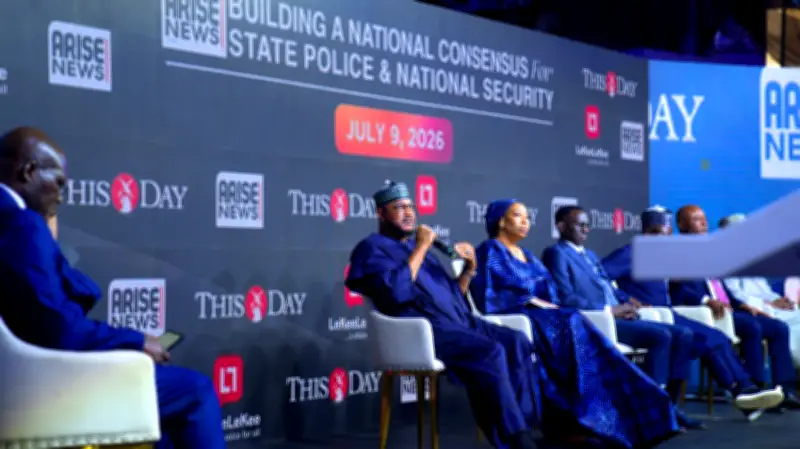
Zamfara State Governor Dauda Lawal disclosed on Thursday that he rejected a N300 million ransom demand from bandits who abducted his brothers seven years ago. Speaking at the National Town Hall Meeting organized by ARISE TV in Abuja, themed "Building National Consensus for State Police and Security," Lawal emphasized that paying ransom would embolden criminals. He stated, "I will not negotiate from the place of weakness, and I will not pay ransom to any criminal, no matter what happens. By the time we continue to pay ransom to these people, we are encouraging them to be kidnapping people more and more." Lawal recounted that his brothers were kidnapped in 2019, and the criminals demanded about N300 million. He said, "I said, 'Look, I’m not going to pay a dime.' If you like, go and kill them." He believes that if ransom payments stop, criminals will think twice before abducting people.
Advocacy for State Police
Lawal argued for the creation of state police, asserting that governors must have operational control over security in their domains to be held accountable for protecting citizens. He noted his frustration as chief security officer of Zamfara State without real command over security apparatus. "It is important to know that Zamfara State has been facing insecurity in the last 13 years. And we are being called the chief security officers of our respective states. However, the command and control structure is not under the governors," he said. He expressed support for the state police initiative, stating it would allow governors to bear responsibility properly. Lawal dismissed fears of abuse, noting that his administration created the Community Protection Guard (CPG) in 2023 and has not used it against opponents. "I don’t think there is any reason to fear that governors will abuse the process," he added.
Parliamentary Perspectives on State Police
Deputy Speaker of the House of Representatives, Ben Kalu, underscored the need for state police, saying centralized policing has failed Nigerians. He mentioned that public hearings revealed a general consensus on the issue. "We must retool what we have currently as a structure that protects lives and property," he said. Kalu, who chairs the House Committee on Constitution Review, stated that safeguards have been put in place to prevent abuse, comparing it to state high courts that are not commonly used by governors to jail opponents. Senate Leader Opeyemi Bamidele highlighted funding as key to sustaining state police, warning that without adequate funding, it could be a "highway to nowhere." He stressed the need for fiscal independence for the police chief and service commission to avoid being subject to a governor's whims. Lucky Irabor, former Chief of Defence Staff, called for addressing root causes of issues affecting the federal police before establishing state police, including training institutions and uniform protocols.
Concerns and Support from Other Panelists
Former Edo State Governor Adams Oshiomhole lamented that governors are called chief security officers but lack control over the police, calling it an "inherent contradiction." He noted that he spent more on procuring vehicles and gadgets for security than the federal government but could not enforce discipline. On funding, he said, "Nobody will be able to fund anything you do not believe in." Former House of Representatives member Nnenna Elendu-Ukeje argued that the process of creating state police has not been well thought out, citing issues like terrorism, banditry, illegal mining, and proliferation of arms. She said, "I think that the little nitty-gritty issues must be dealt with." Security expert Bukar Usman emphasized the human factor, stating that money can be misappropriated and that proper reporting and accountability are crucial. Governor Charles Soludo of Anambra State, who joined virtually, supported state police but called for comprehensive restructuring, including fiscal reforms. He noted that the federal government retains about 53% of national revenue while states share 26%, and advocated for a leaner federal government with a maximum of 40% share. He also called for state Courts of Appeal and Supreme Courts to align the judiciary with federalism.
Caution Against Misuse
Senator Natasha Akpoti-Uduaghan of Kogi Central cautioned against potential misuse of state police by state governments, calling for robust safeguards to prevent political interference. She stated, "State police should never become an instrument of political oppression or executive intimidation." She stressed the need for adequate and sustainable financing and competency to react without political interference. The event also featured governors Peter Mbah (Enugu), Caleb Mutfwang (Plateau), Dapo Abiodun (Ogun), Minister of Defence Christopher Musa, former Ogun governor Segun Osoba, and former Israeli Prime Minister Ehud Barak as guest speaker. It was moderated by Arise TV’s Charles Aniagolu and Reuben Abati.