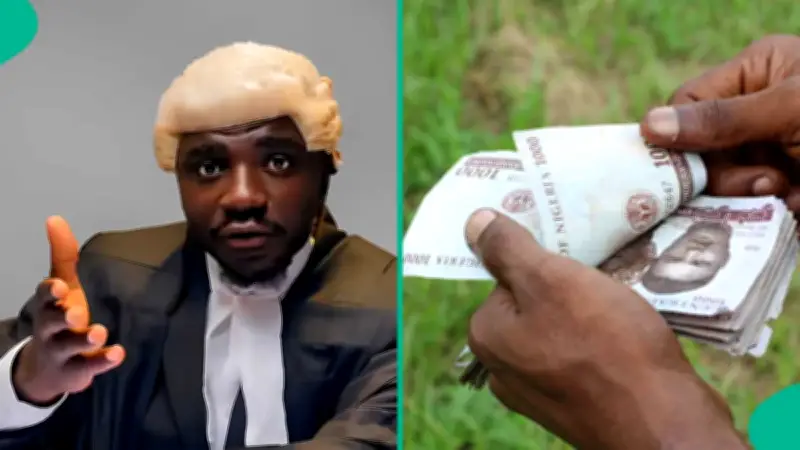
A Nigerian legal practitioner, known on TikTok as @thelawtivist, has shared practical legal steps creditors can take to handle debtors and recover money. In a video posted on July 4, the lawyer explained that the law provides mechanisms for debt recovery that do not require the debtor's presence in court.
Small Claims Court as First Step
The lawyer stated that the first step he would take is to sue the debtor in a small claims court. He noted that this court is fast and can issue a judgment even if the debtor does not appear. "First, I will sue you at a small claims court, which is fast, and get judgment against you whether you come to court or not," he said.
Garnishee Proceeding to Seize Funds
After obtaining a judgment, the lawyer explained that he would commence a garnishee proceeding. This legal method allows the judgment creditor to recover a debt by seizing funds held by a third party, such as a bank. "I will commence a garnishee proceeding, asking the court to make an order directing all banks to reveal whether you have accounts with them and how much you have in them," he said. The court can then order the bank to pay the creditor from the debtor's account.
The lawyer emphasized that the law allows creditors to pursue the debtor's money rather than the debtor themselves. "In simple terms, instead of chasing the debtor, the law allows you to chase the debtor's money wherever it is being held, usually in a bank account. At this time, you cannot withdraw. You got that for free," he added.
Public Reactions and Clarifications
The video sparked reactions from viewers. One user, Future_Stacks, asked if debtors can be penalized for delays with extra interest. Engineer Olatunji O.F questioned whether a court would still give judgment if the debtor requests an extension. Franklyn noted that courts consider affordability, stating, "No court will force anyone to pay a debt as long as they can’t meet the affordability threshold."
NWOLU & ATTORNEYS™️ pointed out that garnishee proceedings require specificity about the bank, not all banks. Shynn Technologies highlighted that evidence, such as a signed agreement, is crucial: "Without any form of signed agreement between both parties.. It's a whole different ball game."
In a related story, Legit.ng reported on a lawyer explaining consequences of chronic debt. Another article addressed loan app users' fears of travel bans, noting that loan apps cannot unilaterally impose such bans.