Nigerian Army and Taraba Government Forge Unbreakable Alliance Against Insecurity
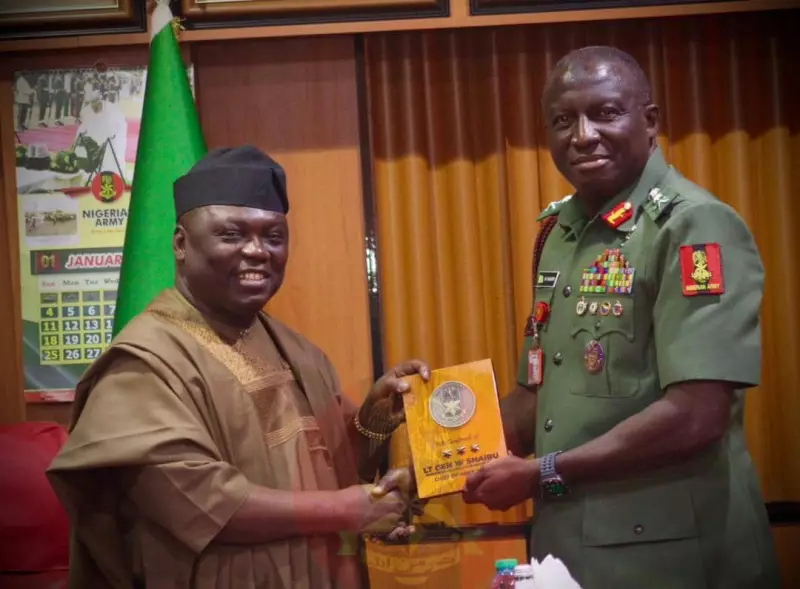
The Chief of Army Staff (COAS), Lt.-Gen. Waidi Shaibu, has announced a reinforced and unbreakable alliance between the Nigerian Army and the Taraba State Government in a comprehensive effort to combat terrorism and various forms of insecurity. This declaration was made during a high-level meeting at the Army Headquarters in Abuja, where Governor Col. Agbu Kefas (rtd) of Taraba State, alongside federal lawmakers and members of the Executive Council of the International Institute for African Ispense Security and Governance, were received.
Strategic Partnership for Peace and Security
In a statement issued by the Acting Director of Army Public Relations, Col. Appolonia Anele, Lt.-Gen. Shaibu emphasized the Nigerian Army's unwavering commitment to its constitutional mandate of supporting civil authorities in maintaining peace and security. He highlighted Taraba State's strategic importance within the nation's security framework, citing its unique terrain and dynamic security challenges as key factors necessitating this collaboration.
The army chief praised Governor Kefas for his decisive leadership and effective coordination with security agencies, noting that the state government's support has been instrumental in enhancing military operations. Specifically, he commended the donation of land and provision of operational equipment, describing these contributions as critical force multipliers that have significantly improved the tempo, reach, and effectiveness of security efforts in the region.
Key Areas for Enhanced Collaboration
Lt.-Gen. Shaibu underscored that sustainable peace can only be achieved through robust civil-military collaboration. He appealed for continued partnership and made specific requests to bolster operational capabilities:
- Stable Electricity Supply: The COAS called for support in providing reliable power to the 20 Model Battalion in Sarti and the 23 Battalion, noting that improved electricity would directly enhance operational efficiency, combat readiness, and troop welfare.
- Public Sensitization: He urged for intensified awareness campaigns across Taraba State, encouraging citizens to actively support security operations by providing timely and credible intelligence. "Community cooperation remains a decisive weapon in defeating terrorists and other criminal elements," he emphasized.
Governor Kefas Reaffirms Solidarity and Support
Earlier in the meeting, Governor Kefas described the visit as a demonstration of Taraba State's relentless solidarity with the Nigerian Army. He congratulated Lt.-Gen. Shaibu on his appointment as Chief of Army Staff and commended the professionalism, resilience, and sacrifices of Nigerian Army personnel. The governor noted that their sustained presence has led to visible and measurable improvements in the state's security environment.
Kefas also applauded the strong inter-agency cooperation among security agencies operating in Taraba State and highlighted areas requiring reinforced military presence. He reaffirmed the state government's commitment to deepening support for the Nigerian Army, including assistance with accommodation for deployed troops. Both parties resolved to sustain a united and steel-hard front against insecurity, reinforcing their shared determination to protect lives and property.
Additional Development: Jalingo Abattoir Modernization
In related news, Governor Kefas has entered into a strategic partnership with the World Bank through the Livestock Productivity and Resilience Support (L-PRES) Project to upgrade the Jalingo Ultra-Modern Abattoir to full automation. According to the state government and the National Coordinator of L-PRES, Dr. Sanusi Abubakar, upon completion, this facility will become the first fully automated abattoir in Nigeria's North-East region.
This project marks a significant milestone in the modernization of the livestock and meat processing sector, with several expected benefits:
- Improvement of hygiene standards to ensure food safety.
- Expansion of processing capacity to meet growing demands.
- Enhancement of efficiency along the livestock value chain.
- Creation of employment opportunities for local residents.
- Attraction of private sector investment to boost economic growth.
The initiative is poised to position Taraba State as a regional hub for livestock production and meat processing, contributing to both economic development and food security in the area.