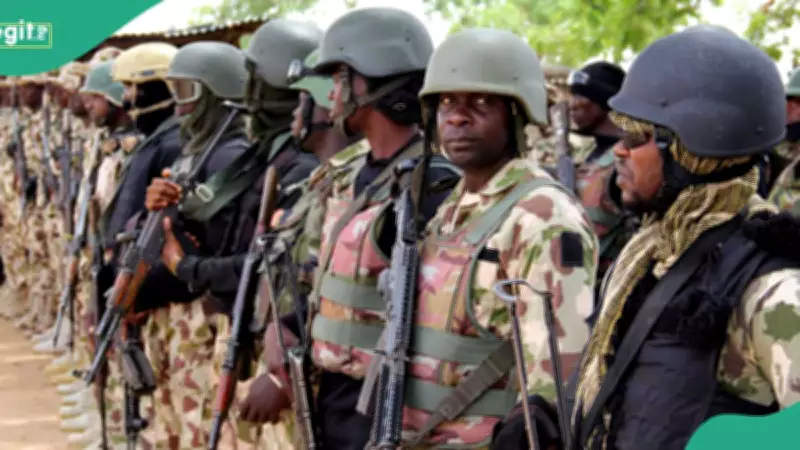
Nigerian Army Base in Borno Suffers Drone-Assisted Terrorist Attack
In a significant escalation of insurgent tactics, suspected Islamic State West Africa Province (ISWAP) fighters launched a coordinated assault on a Nigerian Army base in Borno State, resulting in multiple military casualties. The attack, which occurred in the early hours of Thursday, January 29, targeted the Sabon Gari military base in the northeastern region of the state.
Drone Warfare Marks New Threat Level
Military authorities confirmed that the terrorists deployed armed drones alongside ground forces to raid the facility, marking what officials described as a dangerous evolution in insurgent capabilities. According to Lieutenant-Colonel Sani Uba, the military spokesperson, the attackers stormed the base perimeter before dawn and briefly breached part of the installation.
The drone bombardment reportedly destroyed several critical military assets during the assault, including an excavator and a low-bed trailer. This represents one of the most sophisticated attacks witnessed in the long-running conflict, demonstrating ISWAP's increasing technological adaptation.
Casualties and Response
While the military confirmed that soldiers and members of the Civilian Joint Task Force were killed during the encounter, they did not disclose exact casualty figures. However, security sources speaking to Reuters indicated that at least nine soldiers and two task force members lost their lives, with approximately sixteen others sustaining injuries.
Troops, supported by reinforcements, eventually repelled the attackers and regained full control of the base, according to military statements. Following the restoration of control, soldiers were reportedly pursuing the fleeing militants through the surrounding area.
Broader Security Context
This incident represents the second reported attack on military formations in Borno State within the same week, highlighting the persistent security challenges in the region. Despite intensified military operations against insurgent groups in the northeast as part of a renewed offensive, Boko Haram and its splinter faction ISWAP have continued to execute large-scale attacks.
The terrorist groups have capitalized on several factors to maintain their operational capacity:
- Difficult terrain that complicates military movements
- Porous borders that facilitate cross-border activities
- Weak state presence in remote parts of the region
Related Security Developments
In a separate but related incident, Boko Haram terrorists ambushed soldiers in Borno State, resulting in seven fatalities and thirteen captives, including a commanding officer. The troops engaged the terrorists in a fierce battle while on patrol in Damasak, struggling against overwhelming enemy forces.
Meanwhile, in what military officials view as a positive development, troops of the Joint Task Force North-East, Operation Hadin Kai, have uncovered mass graves containing the bodies of approximately twenty terrorists killed during recent encounters in the Timbuktu Triangle area of Borno State. This discovery occurred as troops sustained offensive operations across the volatile axis, further exposing the scale of casualties suffered by terrorist groups operating in the region.
Borno State remains the epicenter of Nigeria's seventeen-year-long insurgency, with frequent attacks targeting both military installations and civilian populations. The drone-assisted assault on Sabon Gari base represents a concerning advancement in terrorist capabilities that security analysts warn could signal a new phase in the conflict.