Former Chief of Defence Staff, General Martin Luther Agwai (rtd.), has issued a stark warning that relying solely on military might is insufficient for guaranteeing Nigeria's national security.
A Holistic Approach to Security
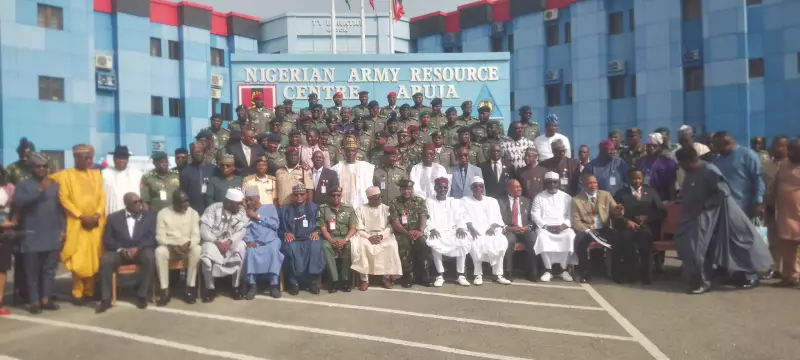
Speaking at a lecture to mark the 10th anniversary of the Nigerian Army Resource Centre (NARC) on Wednesday, the retired general asserted that military power must be complemented by economic strength, technological advancement, diplomatic efforts, and good leadership.
"Projecting power, military is one of the areas we can project our power. But there are so many other ways we can," Agwai stated. He first emphasized the need to properly equip, train, and provide necessary weapons to the military itself.
He then pivoted to the broader national context, stressing that Nigeria must strengthen its economic power. "We need to diversify our economy and create jobs and train people to be job creators, not job seekers every now and then," he advised.
Tackling Root Causes: Poverty and Population
Delivering his lecture titled 'Knowledge, Power and National Security in the 21st Century: Nigeria in Perspective,' Gen. Agwai identified poverty and unchecked population growth as critical factors fueling the nation's security woes.
He declared that concerted efforts must be made to reduce poverty in the country and to check population growth. "If you overpopulate the system and you do not know how to absorb them, we will continue to grapple with insecurity," he cautioned.
The former military chief expressed profound dismay over the security incidents of the preceding two weeks, specifically mentioning bandit attacks on schools in Kebbi and Niger states, where pupils were kidnapped, as well as the abductions and killings in Kwara State.
"Why must we go to threaten, kill, slaughter others? I'm so taken aback... We didn't need to make somebody in America tell us that you have problems in Nigeria, and the problems of Nigeria are big for Nigeria," he lamented.
A Call for Unity and Self-Belief
Despite the challenges, Gen. Agwai expressed strong conviction in Nigeria's inherent capacity to overcome its issues. "I am so sure that we are capable of solving our national issues if we take them and know that the survival of Nigeria collectively is important."
He urged all Nigerians to tolerate one another, live peacefully, and desist from misinformation and disinformation. For the nation to move forward, he emphasized the need for citizens to trust in themselves and in the political leadership.
Army Chief Challenges NARC on Future Research
The Special Guest of Honour and Chief of Army Staff, Lieutenant-General Waidi Shaibu, acknowledged the centre's role over the past decade. Represented by the Chief of Administration (Army), Shaibu described NARC as a beacon of knowledge, research, and strategic thought that has contributed immensely to strengthening Nigeria's security architecture.
He noted that the centre's consistent output of research studies, policy briefs, publications, and training had significantly expanded the capacity to address evolving threats.
"Our country continues to grapple with complex and multidimensional security challenges that threaten national stability and socio-economic progress across various geopolitical zones," the Army Chief stated. He added that these threats demand adaptive, innovative, and knowledge-driven strategies from security forces.
Shaibu challenged the centre's management and staff to build on current achievements, deepen research, and expand innovative drive as it begins its next decade. He also encouraged strengthening collaborations with local and international partners to enhance the centre's relevance and effectiveness.
In his welcome address, the Director-General of NARC, Major-General James Nyam (rtd.), said the centre has remained a steadfast intellectual hub for the Nigerian Army and the nation since its establishment. He reiterated its dedication to knowledge advancement, research, innovation, and the development of evidence-based solutions to national defence and security challenges.