Germany Introduces Mandatory Travel Authorization for Young Men
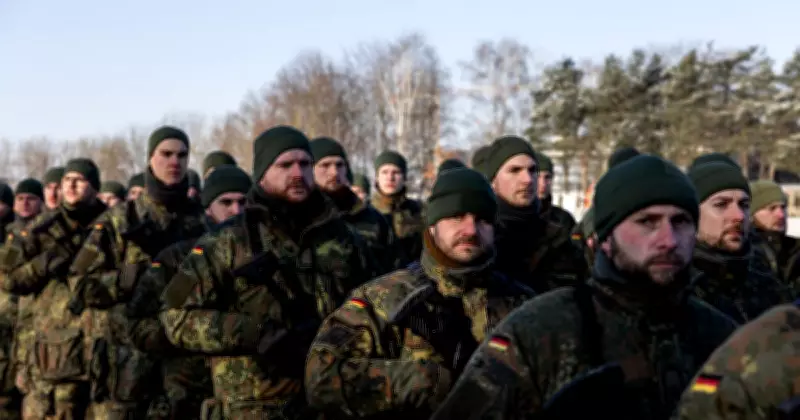
Germany has implemented a significant new regulation that requires all men between the ages of 17 and 45 to obtain official permission before leaving the country for extended periods. This policy, which took effect on January 1, 2026, applies to any German male citizen planning to stay outside national borders for more than three months, regardless of whether the purpose is for education, employment, or long-term travel.
Permanent Legal Requirement with Military Implications
The travel authorization requirement has become a permanent fixture of German law under the Military Service Modernization Act. Unlike previous regulations that only applied during times of heightened external danger or declared states of defense, this new rule remains in effect during peacetime and normal conditions. Anyone affected must secure approval from a Bundeswehr Career Center before departing Germany for extended international stays.
A spokesperson for the German Federal Ministry of Defense confirmed the policy implementation, stating: "The basis and leading idea of this rule is a reliable and credible accounting of those liable for military service in case of need." The change was reportedly enacted with minimal public discussion, raising questions about transparency in national security policymaking.
Part of Broader Bundeswehr Expansion Strategy
This travel permit system represents one component of a comprehensive federal government initiative to strengthen Germany's military capabilities. The country plans to substantially increase the size of the Bundeswehr from approximately 184,000 troops currently to between 255,000 and 270,000 soldiers by 2035. As part of this military buildup, all young men born in 2008 or later must complete questionnaires regarding their interest in military service.
While the regulation specifically targets men, women retain the option to participate voluntarily in military service programs. The policy applies uniformly to all forms of extended international absence, whether for academic pursuits, professional assignments, or prolonged tourism.
Geopolitical Context and Security Concerns
The new restrictions on young German travelers have sparked concerns about the nation's evolving geopolitical posture and its potential willingness to limit citizen freedoms in the name of national security. This represents a notable departure from Germany's traditionally pacifist foreign policy approach that has characterized its international relations since World War II.
Security expert Erkki Koort, who leads the Internal Security Institute at the Estonian Academy of Security Sciences, has analyzed Germany's strategic position within NATO. He argues that Germany presents a more logical and accessible target for potential Russian aggression than Baltic states, given its central role as Europe's logistical and strategic hub. Koort identifies several vulnerability factors, including Germany's strategic positioning and substantial Russian-speaking population.
The expert concluded that neutralizing Germany would provide significant propaganda victories for the Kremlin and effectively halt NATO's eastern defensive capabilities. This assessment underscores the complex security calculations influencing Germany's military modernization and corresponding travel restrictions.
Broader Implications for Civil Liberties and National Security
The implementation of mandatory travel permits for nearly three decades of German men raises important questions about the balance between individual freedoms and state security priorities. While the government emphasizes the necessity of maintaining accurate military service registries, critics question whether such measures represent appropriate responses to contemporary security challenges.
The policy's introduction during peacetime conditions marks a significant shift in Germany's approach to military preparedness and citizen mobilization. As the Bundeswehr expansion continues through 2035, observers will monitor how these travel restrictions evolve and what additional measures might accompany Germany's changing security posture within the European and global context.