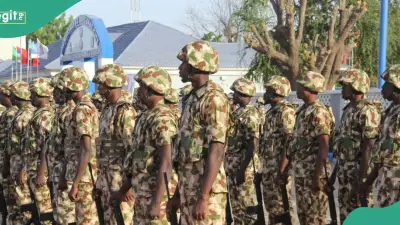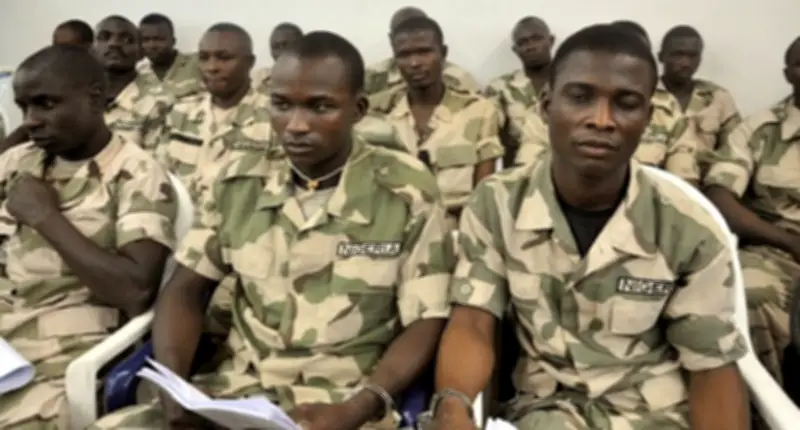
The National Industrial Court of Nigeria in Lagos has ordered the reinstatement of 70 soldiers dismissed from the Nigerian Army, following a presidential pardon granted by former President Muhammadu Buhari in 2022. In a judgment delivered on 20 July, Judge Sanda Yelwa directed the Chief of Army Staff to reinstate the personnel with effect from 18 July 2022, the date of the pardon, and to pay all salaries, emoluments, and allowances from that date until official reinstatement.
The Court Order
Judge Yelwa declared that the presidential pardon “has wiped out their conviction, sentence, and dismissal from the Nigerian Army,” and that “the legal basis for their dismissal having been completely obliterated.” He ruled that the 70 soldiers are entitled to reinstatement and full financial remuneration from the date of the pardon. The Chief of Army Staff, who was named as a defendant along with the Attorney General of the Federation, did not file any process or appear in court, which the judge described as “an administrative omission which this Court as a court of law and court of equity has the power to correct.”
The Pardon and Its Legal Effect
The soldiers were convicted of mutiny by courts-martial between 2013 and 2014 after they refused to fight Boko Haram insurgents, arguing that they lacked proper equipment. In 2015, military authorities commuted their death sentences to 10 years’ imprisonment. Human rights lawyer Femi Falana, a Senior Advocate of Nigeria, represented 58 of the soldiers. He wrote to President Buhari in September 2021, arguing that their dismissal was ill-advised and their demand for weapons was legitimate. In July 2022, Buhari granted the pardon. The soldiers, after serving their time, had written to the Chief of Army Staff requesting reinstatement but received no response, prompting their suit.
The Background of the Mutiny Conviction
At the time of their mutiny trial, the soldiers maintained that they were not provided with appropriate equipment to confront Boko Haram fighters who were better equipped and motivated. Falana stated, “Unlike many soldiers who deserted the army, the convicts were ready to defend the territorial integrity of the country. They only made a legitimate demand for equipment to fight the insurgents.” The judge noted that the pardon returned the soldiers to “the position of a ‘new man’ (novus homo),” making the legal barrier to their employment “completely swept away by the constitutional grace of the pardon.”
The Government’s Position
The Attorney General of the Federation, through its lawyer Omobolanle Aina, argued that a pardon does not nullify the historical fact of conviction and does not automatically revive an employment relationship that was lawfully terminated. She maintained that reinstatement depends on specific regulations such as the Public Service Rules or the Nigerian Armed Forces Rules of Engagement, and that a pardon does not retroactively create financial entitlements. However, Judge Yelwa disagreed, holding that the pardon was absolute and unconditional, and that the plaintiffs have a clear, enforceable right to be reinstated.
The Ruling on Reinstatement and Pay
The judge clarified that the pardon does not back-pay for services rendered before the presidential pardon, and there is no clause in the Instrument of Grant of Pardon for payment of salary arrears prior to that date. Therefore, the soldiers’ entitlement to emoluments commences only from 18 July 2022. The court ordered the Chief of Army Staff to ensure reinstatement and payment of all due salaries, emoluments, and allowances from the date of the pardon. The 70 soldiers, represented by lawyers Funmi Falana, SAN, and C.H. Onwuemene, are now expected to be formally reintegrated into the Nigerian Army.