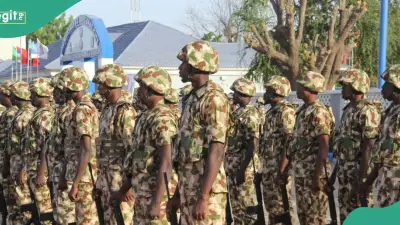
The Nigerian Army has spent over 15 years at the forefront of one of Africa's longest and most demanding counter-terrorism campaigns. Since Boko Haram's insurgency escalated in 2009 and later evolved with the emergence of the Islamic State West Africa Province (ISWAP), Nigerian troops have fought thousands of operations across some of the continent's toughest terrains, from the dense Sambisa Forest to the marshlands of the Lake Chad Basin and the rugged Mandara Mountains.
A War Unlike Any Other in Africa
Unlike conventional wars fought over months or a few years, Nigeria's campaign against Boko Haram and ISWAP has stretched across a decade and a half. The insurgency, which began in the late 2000s, intensified dramatically in 2009 after clashes between Boko Haram and Nigerian security forces. Over the years, the conflict spread across Nigeria's North-East and into neighbouring countries around the Lake Chad Basin. The emergence of ISWAP in 2016 added another layer of complexity, forcing Nigerian forces to adapt to new tactics, better-organised cells and increasingly sophisticated attacks. Few African militaries have faced such a sustained campaign while simultaneously confronting other internal security challenges, including armed banditry, kidnapping and communal violence.
Why the Nigerian Army is Regarded as a Counter-Terrorism Leader
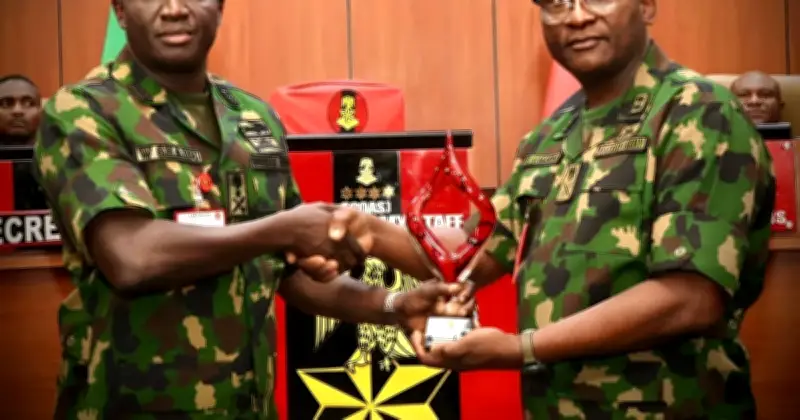
Traditional military rankings, such as Global Firepower, measure overall military strength based on factors including manpower, defence spending, equipment and logistics. Counter-terrorism capability, however, is judged differently. Security analysts often focus on factors such as years of active combat experience, operational tempo and frequency of missions, success in dismantling terrorist infrastructure, intelligence-led operations, adaptation to asymmetric warfare, and ability to work with regional and international partners. It is in these areas that the Nigerian Army has built its reputation. Pan-African security organisations, including the Security Watch Africa (SWA) Initiative, have repeatedly recognised the Nigerian Army, its formations and senior commanders for achievements in counter-terrorism and counter-insurgency operations. Nigeria has also hosted major African and international counter-terrorism engagements in partnership with the United Nations Office of Counter-Terrorism (UNOCT), where its operational experience has been highlighted as an important reference point for regional security cooperation.
Operation HADIN KAI: The Centrepiece of Nigeria's Campaign
The Army's primary counter-insurgency operation in the Northeast is Operation HADIN KAI, launched to coordinate joint military efforts against Boko Haram and ISWAP across Borno, Yobe and Adamawa states. The operation combines personnel from the Nigerian Army, Air Force and other security agencies to conduct coordinated land and air offensives. Over the years, troops have reclaimed numerous territories once controlled by insurgents, including parts of Sambisa Forest, the Timbuktu Triangle, the Mandara Mountains and Lake Chad enclaves. Military offensives have disrupted terrorist supply routes, destroyed camps and weakened command structures, forcing many fighters to flee or surrender. According to Operation HADIN KAI, sustained military pressure has contributed to more than 152,000 insurgents and family members surrendering since 2021, including over 20,000 active fighters. The trend has continued in 2026, with the military announcing the surrender of senior ISWAP commanders following coordinated operations targeting the group's leadership.
Fighting Beyond Nigeria's Borders
Nigeria's counter-terrorism effort is not confined to its own territory. The country plays a leading role in the Multinational Joint Task Force (MNJTF), a regional military coalition involving Nigeria, Chad, Cameroon, and Niger. The force was established to prevent Boko Haram and ISWAP fighters from exploiting porous international borders around Lake Chad. Nigeria serves as the largest troop contributor and has played a central role in coordinating regional operations against terrorist hideouts. The United Nations has described the MNJTF as one of the most significant regional responses to the ISWAP threat in the Lake Chad Basin.
Intelligence and Rehabilitation: Fighting Beyond the Battlefield
Military officials increasingly acknowledge that defeating terrorism requires more than battlefield victories. Nigeria has therefore combined kinetic operations with non-kinetic initiatives. The National Counter Terrorism Centre (NCTC), operating under the Office of the National Security Adviser, serves as the country's central coordination hub for intelligence sharing, strategic planning and inter-agency collaboration. The centre also works on countering violent extremist narratives and strengthening national preparedness against terrorism. One of Nigeria's most distinctive initiatives is Operation Safe Corridor, a de-radicalisation, rehabilitation and reintegration programme designed for low-risk former insurgents who voluntarily surrender. Participants undergo psychological counselling, vocational training, civic education and other rehabilitation activities before being considered for reintegration into society. The United Nations has previously highlighted the programme as part of Nigeria's broader non-kinetic response to violent extremism, although it has also generated debate within affected communities over issues of justice, accountability and reintegration.
Special Forces and Modern Warfare
Years of conflict have pushed the Nigerian Army to develop specialised capabilities for asymmetric warfare. Elite formations have expanded training in jungle warfare, night operations, counter-IED operations, intelligence-driven raids, urban combat, and hostage rescue. Military operations today increasingly combine special forces with surveillance, air power and intelligence gathered from multiple agencies.
Bottom Line
The Nigerian Army's reputation as one of Africa's leading counter-terrorism forces has been forged through more than 15 years of continuous combat against Boko Haram and ISWAP. Its experience spans large-scale offensives, multinational operations, intelligence-driven missions and rehabilitation initiatives that extend beyond the battlefield. While the conflict has not been fully resolved and security challenges remain, the Army's sustained operational experience, adaptation to asymmetric warfare and leadership within regional security partnerships have made it one of the continent's most battle-tested military forces in counter-terrorism.