Putin Closes Moscow Airspace Over Assassination Fears
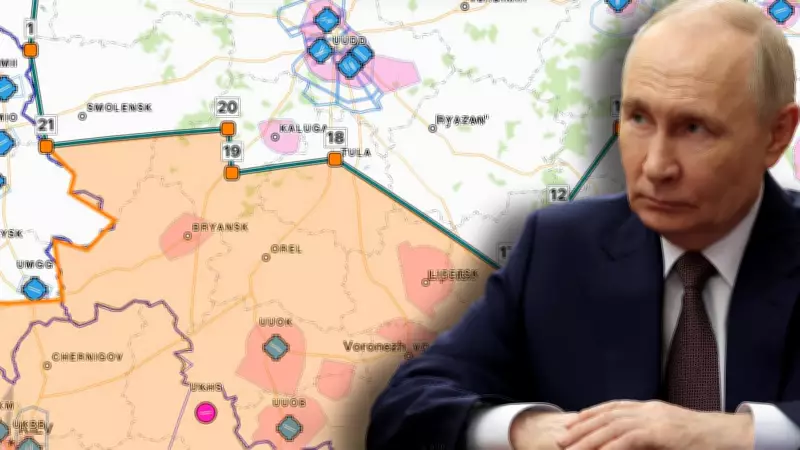
Russian President Vladimir Putin has imposed a sweeping restriction on Moscow's airspace, prohibiting private planes and helicopters in a move widely linked to mounting security concerns and fears of possible assassination attempts. The no-fly zone, which extends up to 16,700 feet in altitude, covers an area roughly four times the size of the United Kingdom. It spans a vast central region of Russia, stretching from the Belarus border through areas near St. Petersburg and toward the Urals, connecting with already restricted southern airspace close to the conflict zone.
Heightened Security Amid Drone Activity
According to reports, the tightening of airspace control comes amid increasing concern over Ukrainian drone activity and long-range strike capabilities near Moscow. Russian authorities are reportedly updating air defense systems around the capital and high-security zones, including areas near President Putin's residence. Officials are expected to issue formal aviation notices shortly, with private aircraft movements in the region to be heavily restricted. Flight training and civilian pilot schools will also be banned within the zone, though private jets used by approved individuals may still be permitted.
Political Tensions and Internal Instability
The restrictions coincide with heightened political tension inside Russia, with reports of underground anti-government groups and ongoing fears within the Kremlin about internal instability and external attacks. Russian authorities have not publicly confirmed that the move is specifically linked to assassination threats, but security sources quoted in reports describe it as a precautionary measure driven by risk assessments involving drones and unauthorized aircraft activity. The measures reflect a broader effort to secure the capital and protect key government figures amid a volatile security environment.