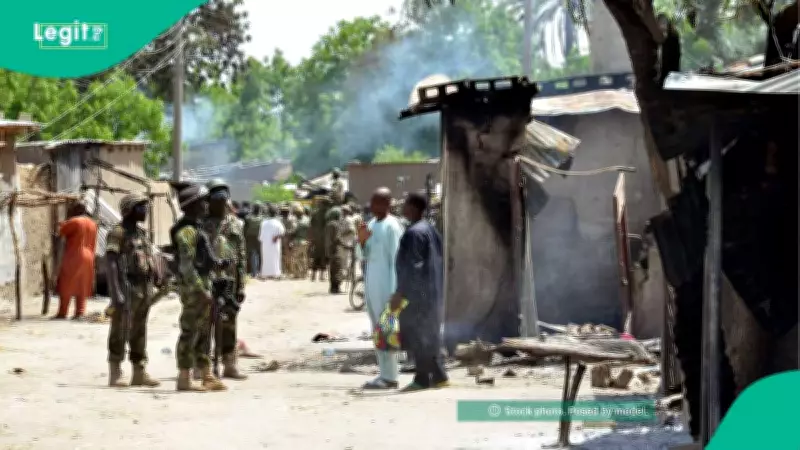
Decoding the Strategic Pattern of Clustered Attacks in Borno State
Recent headlines have raised alarms about Maiduguri being "besieged," but the true significance lies in the strategic pattern of clustered attacks across Borno State. According to peace and conflict analyst Lekan Olayiwola, these incidents are not random acts of violence but calculated maneuvers by militants to challenge state authority. Understanding the interplay of seasonality, terrain, and operational signaling is crucial for shifting Nigeria's counter-insurgency approach from reactive to anticipatory strategies.
Beyond Random Violence: The Strategic Framework
Public discourse often attributes such violence to factors like inadequate equipment, corruption, or insurgent resurgence. While these elements hold some truth, they fail to explain the precise timing, methods, and locations of attacks. A more rigorous analysis must integrate environmental realities, operational patterns, and insurgent strategic behavior to decode the signals embedded in these assaults.
The Transformed Geography of Lake Chad
Central to the conflict in Borno is Lake Chad, which has undergone dramatic environmental changes. In the early 1960s, the lake covered approximately 25,000 square kilometers. Decades of drought and water extraction have reduced it to about 1,350 to 2,500 square kilometers today, representing a loss of roughly 90% of its historic extent. This shrinkage has not merely revealed land but created a complex mosaic of fragile wetlands, reed beds, marshes, isolated islands, and seasonally fluctuating channels.
This fragmented terrain now serves as a natural frontier zone that favors small, mobile insurgent units over conventional military formations. The dynamic environment complicates air surveillance and bombardment efforts, as dense vegetation and variable water levels hinder precision targeting, allowing fighters to disperse and regroup effectively.
Theatre Over Territory: Perception Warfare
A common misconception is that every attack aims to seize and hold territory, a strategy seen in earlier phases of the conflict around 2013-2015. Today, insurgent assaults often reflect theatre rather than territory, designed to puncture public confidence in the state's authority. By striking rapidly across multiple locations, militants create a perception of omnipresence, increasing public anxiety and deepening narratives of state vulnerability even after they withdraw.
Seasonal Timing as a Tactical Advantage
Patterns of violence in the Lake Chad basin show a correlation with seasonal cycles, particularly from February to May during the late dry season into the onset of rains. This period offers favorable conditions for insurgent movement, with passable rural tracks, increased vegetation for concealment, and optimal water levels. Historical data from 2018, 2020, and 2022 indicate similar spikes in activity during these windows, suggesting militants exploit temporal opportunities when terrain and climate amplify their mobility and concealment advantages.
Probing Operations and Institutional Stress Testing
Clustered attacks serve as operational probes to test defensive responses. By targeting multiple towns in quick succession, insurgent commanders can observe response times, logistic bottlenecks, and weaknesses in communication and command integration. The use of commercial armed drones by groups like ISWAP adds a new dimension, enabling real-time observation and adjustment of assaults, thereby amplifying psychological impact and gathering intelligence for future planning.
Morale Asymmetry and Strategic Implications
Beyond terrain and timing, morale asymmetry plays a critical role. Insurgent fighters often operate in small, cohesive units with flexible command structures and deep local knowledge, while state forces face challenges like long deployments, dispersed formations, and bureaucratic systems. Superior weaponry alone cannot compensate for gaps in institutional cohesion, ground intelligence integration, and sustained troop morale, necessitating investments in leadership, logistics, and welfare.
Towards a Multi-Dimensional Response
For policymakers and military planners, the challenge is to decode these strategic signals rather than react to individual attacks. Effective countermeasures require coordinated efforts by the Lake Chad Basin Commission and the Multinational Joint Task Force, integrating security, development, and environmental initiatives to restrict insurgent mobility and safe havens. This includes combining airborne intelligence, surveillance, and reconnaissance with grassroots intelligence, while anchoring security in economic opportunities and governance to establish a resilient, permanent presence in previously ungoverned spaces.
The recent attacks highlight the adaptive dynamics of the conflict, where insurgents exploit environmental conditions, seasonal patterns, and psychological narratives. By recognizing these deeper currents and reshaping Nigeria's approach to align tactical operations with structural resilience, durable stability in the north-east can be achieved.