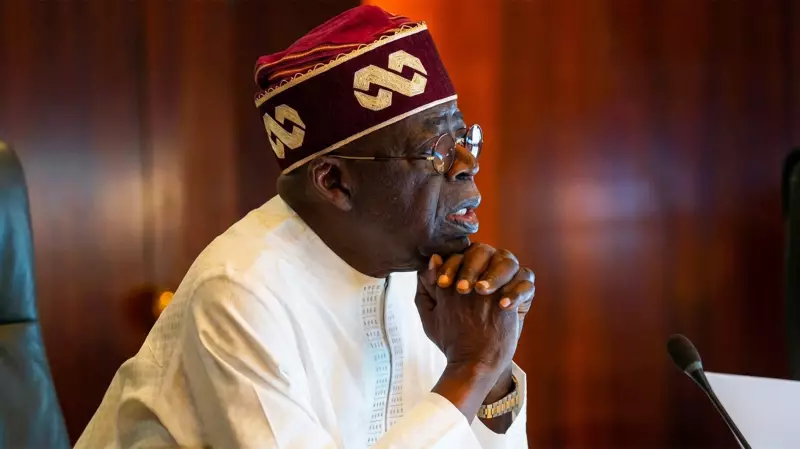
President Bola Ahmed Tinubu has reportedly suspended a controversial plan to grant an extraordinary promotion to his Aide-de-Camp (ADC), Colonel Nurudeen Yusuf. This decision followed significant pushback from senior retired military officers, including two former Chiefs of Army Staff, according to military sources who spoke to The Guardian on Tuesday night.
Plan Shelved at the Last Minute
The proposed elevation of Colonel Yusuf to the rank of brigadier-general was said to be scheduled for a quiet ceremony on Monday evening, December 15, 2025. This promotion would have come barely one year after his rise to colonel in December 2024. However, the plan was shelved at the last minute after senior figures raised serious concerns about its implications for military discipline, seniority, and overall morale within the ranks.
Under established Nigerian Army procedures, promotion to the rank of brigadier-general is one of the most competitive stages in an officer's career. The standard requirements include:
- A minimum of four years in the rank of colonel.
- Completion of mandatory senior military education, often at institutions like the National Defence College (NDC) or the National Institute for Policy and Strategic Studies (NIPSS) in Kuru.
- Successfully passing through rigorous promotion boards that assess service records, command experience, discipline, and the availability of vacancies.
The reported plan to fast-track Yusuf's promotion was therefore viewed within military circles as a sharp and troubling departure from these long-standing norms.
High-Level Interventions and a Leaked Letter
The controversy deepened with the emergence of a leaked letter dated December 12, 2025, from the Office of the National Security Adviser (NSA). The letter, signed by NSA Nuhu Ribadu, indicated that Yusuf would continue to serve as the President's ADC despite the proposed elevation to brigadier-general.
Military sources also highlighted that no brigadier-general has ever served as ADC to a sitting Nigerian president, a fact that added to the unease within the Army's hierarchy. In a telling move, Defence Minister General Christopher Musa (retd.) and the Chief of Army Staff, Lt. Gen. Waidi Shaibu, cut short an official trip to Lagos and returned to Abuja ahead of the planned ceremony.
Ultimately, it was the intervention of two widely respected former Army Chiefs that proved decisive. Their counsel persuaded President Tinubu to suspend the promotion. A presidency source confirmed that the elevation "would not happen anytime soon."
Broader Security Context and Implications
This development coincided with a closed-door meeting President Tinubu held on Monday with Nigeria's Service Chiefs at the Presidential Villa in Abuja. The meeting took place amid mounting internal and regional security concerns, including the continued captivity of 115 students abducted from a Catholic boarding school in November.
The meeting, which followed Tinubu's declaration of a national security emergency on November 26, was also set against the backdrop of Nigeria's expanding regional obligations. This includes the recent Senate approval for the deployment of Nigerian troops to the Republic of Benin following an attempted coup.
While the Presidency has declined to comment on the ADC promotion controversy, the episode has reopened a sensitive debate within Nigeria's security establishment: where the line should be drawn between presidential prerogative and entrenched military procedure.
"Military morale rests on the belief that everyone plays by the same rules," a retired infantry officer commented. "Once officers feel that access to power outweighs merit, cohesion suffers."
For many observers, this incident underscores a broader challenge for the Tinubu administration: exercising presidential authority in security matters without weakening institutional confidence and professionalism. In a military already stretched by insurgency, banditry, and extensive internal deployments, perception can be as consequential as command itself.