Africa's Military Aviation Landscape: Top 10 Countries with Largest Aircraft Fleets in 2026
Air power has rapidly emerged as the cornerstone of military strength across Africa, with nations making substantial investments in aircraft fleets to protect extensive borders, deter potential threats, and project regional influence. According to the latest Global Firepower rankings for 2026, Egypt, Algeria, and Angola dominate the continent's military aviation sector, demonstrating how control of the skies has become a crucial measure of defense capability throughout Africa.
Strategic Importance of Air Superiority in Modern African Defense
Security analysts emphasize that in contemporary African conflicts, air power is no longer an optional component but rather central to surveillance operations, deterrence strategies, and rapid response capabilities. One expert told reporters that "air superiority has transformed from a luxury to an absolute necessity for African nations seeking to maintain territorial integrity and regional stability." This shift reflects broader trends where countries are prioritizing aviation assets to address complex security challenges.
Detailed Analysis of Africa's Top Military Aviation Powers
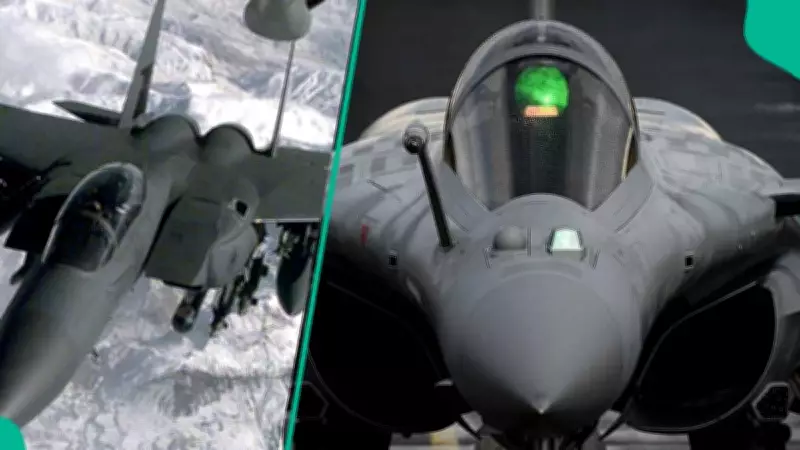
Egypt maintains its position as Africa's undisputed leader in military aviation with an overwhelming fleet of 1,088 aircraft, ranking ninth globally. The Egyptian Air Force serves as the backbone of national defense, benefiting from decades of sustained investment and strong partnerships with major powers including the United States, France, and Russia. Their advanced arsenal includes F-16s, Rafales, and MiG-29 fighter jets alongside attack helicopters and transport aircraft. Analysts note that Egypt's strategic location bridging North Africa, the Middle East, and the Red Sea makes air superiority absolutely essential for national security.
Algeria ranks second in Africa and 16th worldwide with 620 military aircraft. The Algerian Air Force relies heavily on Russian-made Sukhoi and MiG fighter jets, reflecting deep defense ties with Moscow. Reports indicate that between 2018 and 2022, approximately 73 percent of Algeria's military imports originated from Russia. This substantial air capability plays a vital role in securing Algeria's vast territory, protecting critical energy infrastructure, and managing extensive borders with neighboring countries including Mali, Niger, and Libya.
Angola places third on the continent with 278 military aircraft, ranking 35th globally. Much of Angola's aviation capability stems from Cold War-era acquisitions from Russia and former Soviet allies. The fleet, which includes fighter jets, helicopters, and transport aircraft, serves primarily for territorial defense and internal security operations. Military observers suggest that Angola's sizable air force reflects strategic lessons learned during its prolonged civil war, where air power proved decisive in various engagements.
Middle Tier African Aviation Powers
Morocco ranks fourth in Africa with 271 military aircraft, placing 37th globally. The Royal Moroccan Air Force stands among the continent's most modernized aviation forces, benefiting from close defense cooperation with the United States and European partners. Equipped with F-16 fighter jets, transport aircraft, and sophisticated surveillance platforms, Morocco's air power plays a crucial role amid ongoing tensions over Western Sahara and broader regional strategic ambitions.
Sudan maintains 183 military aircraft, ranking 47th worldwide. The Sudanese fleet includes fighter jets, attack helicopters, and transport aircraft largely sourced from Russia and China. While air power has been central to internal conflicts and border disputes, prolonged political instability, international sanctions, and ongoing fighting have severely impacted maintenance capabilities and operational readiness, limiting the effectiveness of what remains a substantial aviation force.
South Africa ranks sixth in Africa with 181 military aircraft, placing 48th globally. Once home to one of the continent's most formidable air forces, South Africa's current fleet includes Gripen fighter jets, helicopters, and transport aircraft. Despite significant budget constraints that have reduced capacity, South Africa remains a key contributor to peacekeeping missions and disaster response efforts under both the African Union and United Nations frameworks.
West and East African Aviation Capabilities
Nigeria places seventh with 159 military aircraft, ranking 54th globally. The Nigerian Air Force has expanded substantially in recent years to counter Boko Haram and other security threats across the nation. The fleet includes fighter jets, attack helicopters, drones, and transport aircraft sourced from the United States, China, and European nations. A military source emphasized that air power has become "central to Nigeria's internal security and counter-terrorism strategy," particularly in the northeast region where insurgency remains a persistent challenge.
Tunisia ranks eighth in Africa with 155 military aircraft, placing 56th worldwide. Though relatively modest in size, the Tunisian Air Force maintains strategic focus on border security and counterterrorism operations. The fleet consists primarily of light aircraft and helicopters, supported by strong partnerships with the United States and NATO allies, particularly for surveillance missions along the volatile Libyan border where extremist groups remain active.
Kenya holds 154 military aircraft, ranking 57th globally. The Kenya Air Force plays a crucial role in regional security, especially in operations against militant groups in neighboring Somalia. With fighter jets, helicopters, and surveillance aircraft, Kenya relies heavily on air power for rapid troop deployment, intelligence gathering, and maritime patrols along the strategically important Indian Ocean coastline.
Ethiopia rounds out the top ten with 104 military aircraft, ranking 70th worldwide. The Ethiopian Air Force, shaped by decades of regional conflict experience, stands as one of the most battle-tested aviation forces in the Horn of Africa. Though smaller in numerical terms, the fleet of fighter jets, transport aircraft, and helicopters remains critically important for internal security operations and border defense in a region marked by complex geopolitical tensions.
Regional Implications and Future Trends
The concentration of military aviation assets among these ten nations highlights significant disparities in defense capabilities across Africa. As countries continue to modernize their armed forces through equipment upgrades, enhanced training programs, and strategic partnerships, air power will likely play an increasingly decisive role in regional security dynamics. The substantial investments in aircraft fleets reflect a broader recognition among African governments that controlling the skies has become essential for national sovereignty, border protection, and the ability to project influence in an increasingly complex security environment.