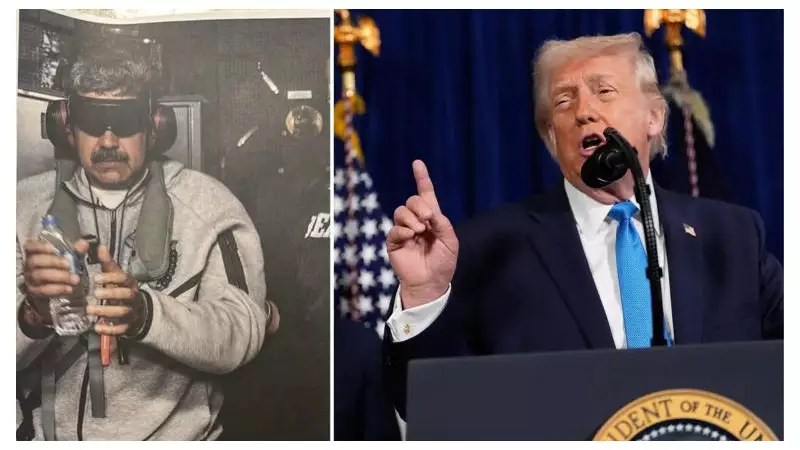
In a recent interview that has sparked international intrigue, former United States President Donald Trump has made startling claims about the military operation that led to the capture of Venezuelan President Nicolás Maduro earlier this month. Trump asserted that American forces utilized a secret weapon he dubbed the "discombobulator" during the mission, though he provided limited details due to classification concerns.
Trump's Controversial Weapon Claim
Speaking exclusively with the New York Post, Trump revealed that this mysterious device played a crucial role in the operation by rendering enemy equipment completely inoperable. "The discombobulator, I'm not allowed to talk about it," Trump stated, adding cryptically that it "made [enemy] equipment not work." This revelation has raised eyebrows among military analysts and government officials alike, prompting questions about the weapon's actual existence and capabilities.
Official Skepticism and Alternative Explanations
A senior US official, speaking on condition of anonymity, has expressed serious doubts about Trump's claims regarding a single secret weapon. According to this official, the former president may have been conflating multiple established military tools and capabilities rather than referring to a specific, previously unknown device. The official emphasized that US forces employed sophisticated cyber capabilities during the operation to disable Venezuelan early-warning systems and other critical defense infrastructure.
Additionally, acoustic systems were reportedly deployed to disorient personnel on the ground, creating confusion among Venezuelan forces. This multi-faceted approach aligns with modern military strategy but differs significantly from Trump's description of a singular "discombobulator" weapon.
Existing Non-Lethal Military Technology
The US military has long possessed advanced non-lethal directed-energy weapons, most notably the Active Denial System (ADS), sometimes informally called a "heat ray." While it remains unclear whether ADS was actually deployed during the Venezuela operation, this system represents the type of technology that might have inspired Trump's comments.
The ADS uses millimeter-wave electromagnetic energy to create an intense heating sensation on human skin, compelling individuals to move away from the beam without causing permanent injury. Reports indicate this system can effectively reach targets more than half a mile away and was originally designed for crowd dispersal purposes.
Eyewitness Accounts and Physical Effects
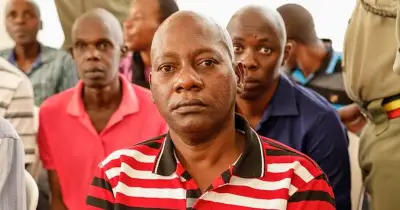
Days following Maduro's capture, White House Press Secretary Karoline Leavitt reposted comments allegedly made by a Venezuelan security guard who witnessed the operation. This guard claimed US forces "launched something" resembling a powerful sound wave during the mission.
The eyewitness described severe physical effects experienced by himself and others, including intense head pain, nosebleeds, and even vomiting blood. These symptoms reportedly left personnel immobilized and unable to respond effectively to the American incursion.
Operation Details and Military Deployment
The January 3 operation began with coordinated strikes across Venezuela that systematically disabled radar systems, communications networks, and air-defense installations. This strategic disabling paved the way for US helicopters to enter Venezuelan airspace with reduced resistance.
Air Force General Dan Caine, Chairman of the US Joint Chiefs of Staff, revealed the extensive scale of the deployment. More than 150 aircraft participated in the operation, including bombers, fighter jets, and sophisticated intelligence and surveillance platforms. These assets were deployed from approximately twenty different land- and sea-based locations, demonstrating the operation's complexity and coordination.
Technological Warfare and Urban Combat
Military experts believe one-way attack drones were employed during strikes in the coastal city of Higuerote, a key location for Venezuelan air-defense installations. Video footage from the operation shows intense gunfire as US forces landed inside Fort Tiuna, a major military complex in Caracas.
Military analysts have identified the distinctive sounds in this footage as consistent with MH-60 Black Hawk helicopters firing 30-millimeter autocannons. The precise location within Fort Tiuna where Maduro was ultimately captured, along with many operational details, remains classified and has not been publicly disclosed by US authorities.
This operation represents a significant moment in modern military history, blending conventional warfare with advanced technological capabilities. While Trump's claims about a "discombobulator" weapon remain unverified, the successful capture operation demonstrates the sophisticated integration of cyber warfare, acoustic technology, and traditional military force in contemporary conflict scenarios.