Nigerian Father Shares Children's Negative Perception of Policewomen After Traffic Incident
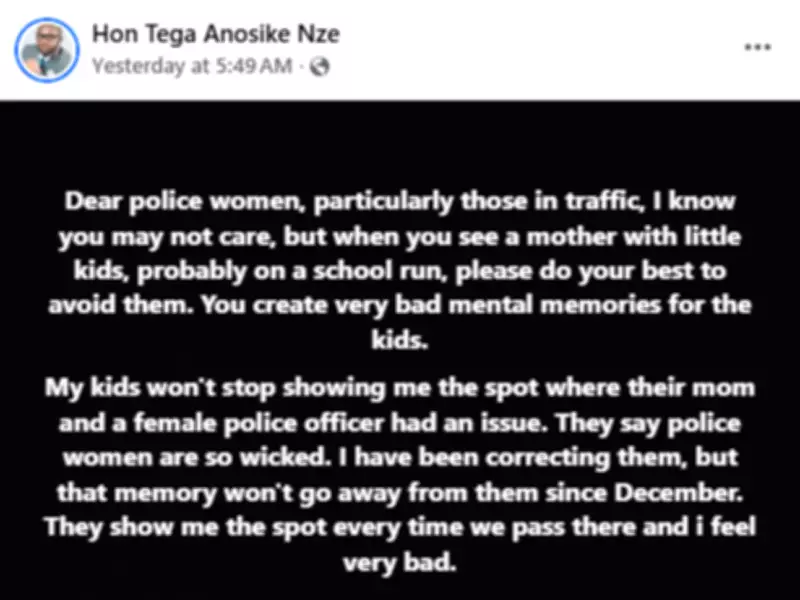
A Nigerian man, Tega Anosike Nze, has publicly expressed concern after his children concluded that policewomen are wicked following an unpleasant encounter. Anosike disclosed this in a detailed Facebook post on Sunday, February 22, 2026, highlighting how the incident has left a lasting impact on his young ones.
Unpleasant Encounter Leaves Lasting Impression
According to Anosike, his children stated this harsh judgment after an 'unpleasant' interaction with a policewoman while they were accompanying their mother. The kids have not been able to shake off the 'bad memories' since the incident occurred in December, with the father noting their persistent reminders every time they pass the location.
"My kids won't stop showing me the spot where their mom and a female police officer had an issue," Anosike wrote. "They say police women are so wicked. I have been correcting them, but that memory won't go away from them since December. They show me the spot every time we pass there and I feel very bad."
Plea to Policewomen to Avoid Mothers with Children
In his heartfelt appeal, Anosike urged female police officers, particularly those managing traffic, to exercise caution around mothers present with children. He emphasized the importance of avoiding such situations to prevent creating traumatic memories for minors.
"Dear police women, particularly those in traffic, I know you may not care, but when you see a mother with little kids, probably on a school run, please do your best to avoid them," he implored. "You create very bad mental memories for the kids."
Broader Implications for Community Relations
This incident sheds light on the broader challenges in police-community relations, especially how interactions with law enforcement can shape children's perceptions from a young age. Anosike's story underscores the need for sensitivity and professionalism in policing duties to foster trust and positive impressions among the public, particularly the youth.
The father's account serves as a reminder of the lasting effects that negative encounters can have on minors, urging a more considerate approach from officers in everyday situations.