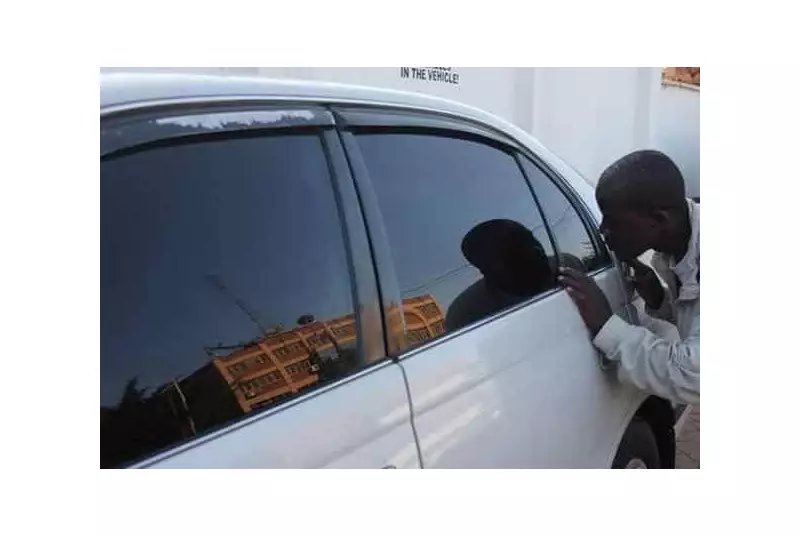
The Nigeria Police Force has issued a firm statement, clarifying that its enforcement of regulations requiring permits for vehicles with tinted glass has not been stopped by any court. The Force maintains that the policy remains fully operational and will continue to be implemented across the country.
Police Address Misinterpretation of Suspension
Force Public Relations Officer, CSP Benjamin Hundeyin, provided this clarification during a media briefing held alongside the presentation of criminal suspects apprehended by the Intelligence Response Team. He addressed what he described as a widespread misunderstanding of a previous announcement.
The Inspector-General of Police, Kayode Egbetokun, had earlier announced a temporary suspension of enforcement. Hundeyin explained that this move was a discretionary act of goodwill, intended to give citizens more time to obtain the necessary permits for their vehicle windows. He stressed that this pause was not mandated by any judicial body but was a voluntary decision by the police leadership to address public concerns.
"The decision was not based on any court order but was a discretionary move to accommodate public concerns," Hundeyin stated, noting that this nuance had been misinterpreted by the public and professional associations like the Nigerian Bar Association (NBA).
Safety Concerns and Legal Standing
The police spokesperson linked the strict enforcement to critical security challenges. He revealed that criminal elements have historically exploited periods of relaxed enforcement to commit serious violent crimes, including kidnappings and armed assaults, using vehicles with darkened windows to conceal their identities and activities.
To underscore the danger, Hundeyin cited a recent tragic incident in Edo State. He reported that a Lexus SUV with fully tinted windows refused to stop at a police checkpoint. A pursuit ensued, during which the vehicle's occupants opened fire on the officers. The attack resulted in the death of a police inspector and injuries to other personnel.
While acknowledging that the legality of the tinted glass permit policy is currently being challenged in court, Hundeyin emphasized that the legal proceedings have been slow. "The position remains that enforcement continues until a court directs otherwise," he declared. He categorically stated that no court has issued an order restraining the Nigeria Police Force or the Inspector-General from implementing the regulation.
Ongoing Debate and Police Resolve
This firm police position sets the stage for a continued confrontation with the Nigerian Bar Association. The NBA has consistently argued that the policy is unconstitutional and should be halted, especially while it is under judicial review. There have been reports that the NBA might initiate contempt of court proceedings against the Inspector-General over the renewed enforcement drive.
In response to this potential legal action, Hundeyin stated that the police legal department is prepared to address any such proceedings if they are formally initiated. He reiterated the core justification for the policy: public safety. The primary objective, according to the Force, is to curb crimes facilitated by vehicles where the occupants are completely hidden from view, thereby aiding criminal operations and hindering law enforcement.
The debate highlights the tension between security operations and legal interpretations, with the police insisting on their mandate to protect lives and property pending a definitive judicial pronouncement on the matter.