President Bola Ahmed Tinubu's recent directive to the Inspector-General of Police to withdraw officers from guarding VIPs for core police duties has exposed a deep and long-standing crisis within the Nigeria Police Force (NPF). The move, intended to bolster frontline policing, collides with a complex political economy of security that past presidential commissions have repeatedly diagnosed but failed to cure.
The Legacy of Expedited Recruitment and Its Consequences
When President Olusegun Obasanjo returned to civilian rule in 1999, he inherited a police force that was poorly equipped, understaffed, and lacked public support. To address a critical personnel shortfall, Obasanjo initiated a massive recruitment drive, aiming to add 200,000 officers between 2000 and 2004. This successfully improved the police-to-population ratio from an estimated 1:876.5 to about 1:400 by 2007.
However, this rapid expansion came at a severe cost. As highlighted by the 2008 Presidential Commission on Police Reform chaired by former IGP Mohammed Dikko Yusuf, the training infrastructure could only handle 14,000 recruits annually. The expedited process, done without adequate investment in training schools, led to a compromise in standards, doctrine, and orientation.
The Yusuf report detailed three devastating consequences. First, the recruitment was carried out in an "unwholesome manner," allowing unsuitable candidates, including suspected criminals and the educationally unqualified, into the force. Second, politicians exploited the process to insert members of their private networks into the police for future political leverage. Third, the force remained chronically underfunded, a problem later echoed by IGP Ibrahim Kpotun Idris in 2017.
The VIP Economy of Policing
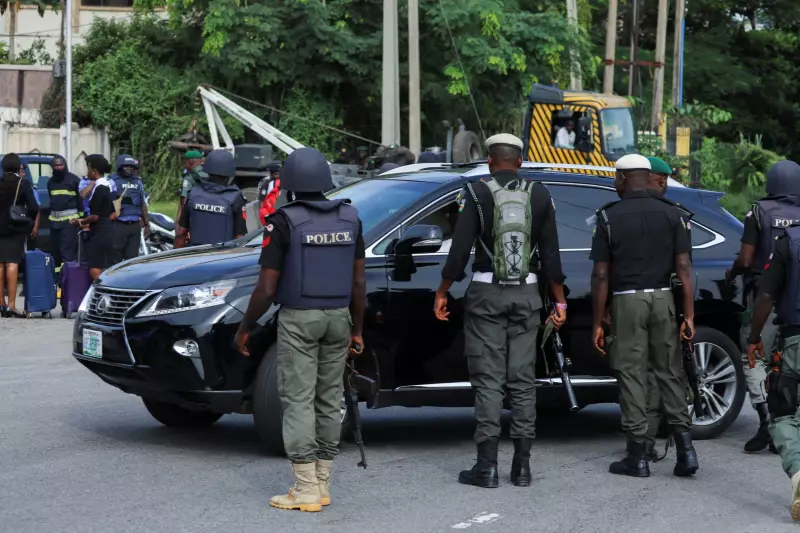
The underfunding created a perverse informal economy. The Yusuf commission found that 27% of police personnel were engaged in private guard duties for VIPs and wealthy individuals. By 2012, the Parry Osayande-led commission put this figure at over one-third. This commercialisation of police assets became a subsistence supplement for poorly paid officers and a revenue stream for their commanders, who secured patronage from powerful benefactors.
This system entrenched a reality where, as the Yusuf report stated, "the rich and powerful behave with impunity because of police protection." The police force itself became reliant on this unofficial market for informal funding and survival.
Tinubu's Directive: A Naïve Solution?
President Tinubu's order, issued in late November 2025, appears not to have accounted for this entrenched structure. Four days later, IGP announced the withdrawal of 11,566 officers in compliance. However, he did not clarify how many had actually complied.
Critics like Olusegun Adeniyi, a former presidential spokesperson, warn that the police officers may simply not obey the directive. Tinubu's suggestion that VIPs should instead seek protection from the Nigeria Security and Civil Defence Corps (NSCDC) merely shifts the commercial market from one agency to another, potentially enriching NSCDC personnel at the expense of police.
The core issue is that a presidential directive cannot fix the political economy of policing. Many officers depend on VIP patronage for survival. Lacking proper training and professional formation, they are unlikely to see their uniform as a bond to face deadly groups like Boko Haram or Ansaru. For them, desertion might be a more rational choice than compliance.
A Leadership Deficit on Security
The situation points to a broader failure of leadership. The presidency combines many roles, but the job of Commander-in-Chief is non-delegable. While Tinubu has commented on insecurity extensively before his election, over 30 months into his tenure, he has failed to address it with the required forcefulness and imagination.
His latest directive seems incomprehensible and untheorised, possibly issued under external pressure rather than a coherent strategy. The ritual of police reform reports—from Danmadami in 2006, to Yusuf in 2008, to Osayande in 2012—has only crystallised the diagnosis without leading to a cure.
For President Tinubu, retooling his approach must begin with finding coherence on police reform. This requires imaginative commitment, time, and leadership that tackles not just the symptom of VIP guards, but the root causes of underfunding, poor training, and the commercialisation of state security assets. The effectiveness of his presidency may well be defined by this challenge.