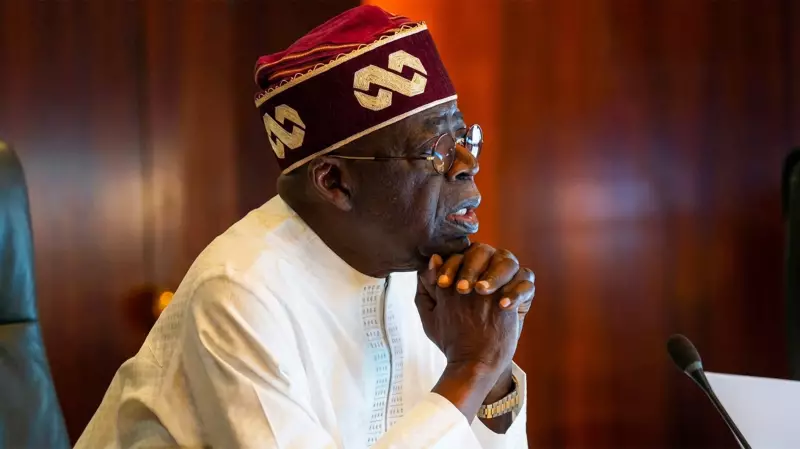
President Bola Ahmed Tinubu declared a state of emergency on security in Nigeria this week, directing the police force to commence immediate recruitment to bolster its numbers and improve service delivery. The presidential order, issued in early December 2025, aims to address the nation's pressing security challenges.
Human Capital Mismanagement: The Core Issue
While the move for new recruitment is seen as a positive step, security analysts argue that the fundamental crisis lies in the mismanagement of Nigeria's abundant human resources. The government is treating various security agencies as separate, non-integrated entities, leading to massive inefficiencies. Professor Rasheed Ojikutu, a retired Professor of Statistics from the University of Lagos, contends that Nigeria possesses enough personnel within existing government payrolls to run an effective security program, especially with the anticipated advent of state policing.
The core argument is that an audit and reorganization of the current security architecture would reveal a failure in human resource management, not a dearth of manpower. This is evident in the proliferation of uniformed and non-uniformed personnel across Nigerian cities, often seen idling at junctions or extorting money from citizens under dubious pretenses.
Duplication, Waste, and the VIP Escort Problem
The article highlights severe duplication of roles. For instance, the Federal Road Safety Corps (FRSC), with about twenty-one thousand staff, performs duties that overlap significantly with the police's traffic division. This separation is labeled a colossal waste of taxpayers' money. Furthermore, the recent recall of police officers attached as personal escorts to VIPs—a directive from President Tinubu—has exposed a critical misallocation. The Inspector General of Police reported that 11,566 officers, representing about 3.11% of the 371,800-strong force, have been returned to mainstream duties.
Shockingly, a significant portion of these recalled officers were from the active "Rank and File" cadre. Records indicate that out of roughly 198,871 officers in this category, about 5.81% were posted to VIPs, diverting them from core law enforcement duties. This misplacement occurs while thousands of able-bodied individuals on government payroll engage in unproductive and often predatory activities on the streets.
The piece notes that the military—the Army, Air Force, and Navy—are often perceived as more disciplined and occupied with their primary duties, though not without occasional excesses. Their forced involvement in domestic policing, a role meant for the police, further illustrates the systemic disarray.
The Path Forward: Synergy, Mergers, and State Police
The solution proposed is not merely more recruitment but a fundamental structural overhaul. The author calls for the immediate merger of the FRSC with the Nigeria Police Force, integrating their functions for better efficiency. All informal security units operating outside the law should either be outlawed or properly trained and absorbed into the formal system.
Finally, the article strongly endorses the urgent establishment of state police through proper legislation. It criticizes the current untenable situation where a state Governor is called the Chief Security Officer but lacks operational control over federal security units within the state. The writer commends President Tinubu's apparent openness to this reform, seeing it as vital for meaningful security consolidation.
In conclusion, while President Tinubu's emergency declaration and recruitment order are acknowledged, the expert opinion emphasizes that optimizing Nigeria's existing human capital through restructuring, synergy, and ending wasteful practices is the more sustainable path to security.