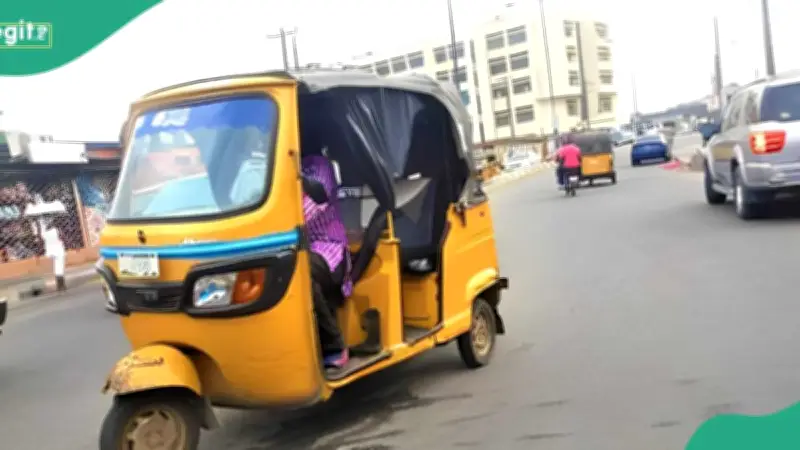
Commercial tricycle operators across several Abuja routes have raised fares by between N100 and N200 after petrol prices at filling stations climbed to between N1,410 and N1,450 per litre. The fare hikes, implemented on Sunday, follow a N85 increase in Dangote Petroleum Refinery's gantry price, which moved from N1,265 to N1,350 per litre, according to a report by the News Agency of Nigeria (NAN).
Global Crude Oil Prices Push Costs Higher
Global crude oil markets have also contributed to the rising costs, with Brent crude trading at about $103.21 per barrel and US West Texas Intermediate (WTI) at around $100 per barrel. The combination of domestic refinery price adjustments and international market trends has forced tricycle operators to pass the burden onto commuters.
Passengers on the Gudu to Lokogoma Junction route now pay N300, up from N200. The Kabusa Junction to Apo Roundabout fare has risen from N300 to N400, while commuters from Dutse Express to Tipper Garage Junction now pay N500 instead of N400. In Nyanya, the journey from Nyanya Junction to City College now costs N500. In Lugbe, the Chika Bridge fare doubled from N100 to N200, and passengers travelling from Kubwa Village Junction to Byazim now pay N400.

Operators Cite Petrol Prices and Spare Parts Costs
Three tricycle operators gave similar accounts of what is driving the changes. Saidu Mohamed, who operates in Kubwa, said petrol prices and the rising cost of spare parts made it impossible to hold fares at previous levels. Haruna Abdullahi said he bought petrol at N1,430 per litre in Dutse, describing the cost as a direct hit on his income. Ibrahim Dauda, who operates in Kabusa and also purchased fuel at N1,430 per litre at an AY Shafa filling station, said the effects of expensive petrol extended beyond transport, with businesses and households also feeling the strain.
The Independent Petroleum Marketers Association of Nigeria (IPMAN) said domestic petrol prices would continue to respond to movements in global crude oil prices, according to Leadership reports.
Commuters Struggle with Rising Transport Costs
Several residents said the increases were making ordinary life harder. Daniel Aaron, a Kubwa commuter, said: "I find it very difficult to move around for my daily bread again because of the increase in transportation." Tony Akinbode said he had cut back on how often he goes out and that traders at the markets were also reporting higher costs linked to fuel prices. He called on the Federal Government to act, as reported by Leadership.
Jimoh Bashir, also in Kubwa, said commuters travelling to offices, schools and markets were being forced to revise their daily budgets, often with little warning from operators.
Government's CNG and Electric Vehicle Plan Under Pressure
Earlier, Legit.ng reported that Nigeria's government target to reduce intra-state transport fares through the adoption of Compressed Natural Gas (CNG) and electric vehicles is under pressure, with fares on several busy routes around Lagos showing no sign of falling ahead of the October 1 deadline. Checks show commuters travelling from Sango-Ota to Oshodi are paying between N1,500 and N1,700, while those on the Atan-Ota to Abule-Egba or Agege corridor pay N1,200 to N1,500. The Sango-Abeokuta trip costs about N2,000, and passengers heading from Ojodu Berger to Ibadan pay roughly N2,500.