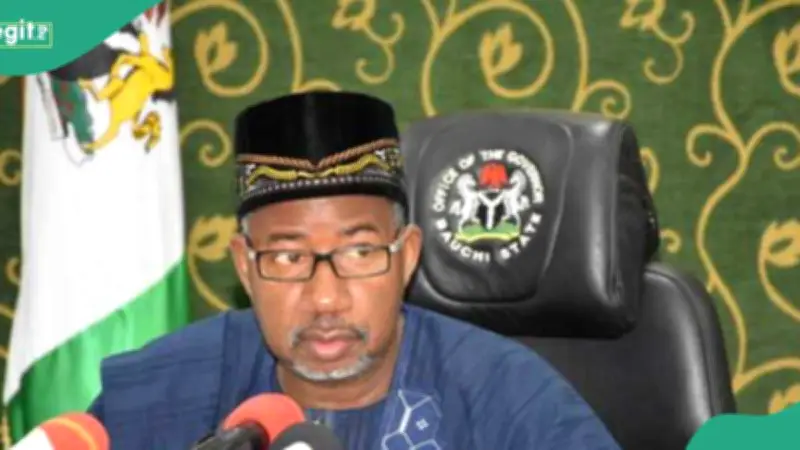
The Bauchi State Government has officially denied a viral social media report alleging that Governor Bala Mohammed approved a fixed dowry of ₦1,500 for divorced women, labeling the story as entirely fabricated and intended to mislead the public.
Commissioner Debunks False Claims
Commissioner for Religious Affairs and Societal Reorientation, Muhammad Binni, addressed journalists in Bauchi on Sunday, July 26, 2026, to set the record straight. He stated that the video, which spread rapidly on Facebook and TikTok, contained two false assertions: that the Bauchi State Government had issued a dowry directive, and that the traditional ruler of Zar (Gum Zar) had ordered residents to comply with the supposed policy.
“The Bauchi State Government has never issued any directive or policy concerning the dowry of divorced or single women. The information circulating on social media is fake and intended to mislead the public,” Binni said. He described both claims as “entirely false, baseless and fabricated.”
Call for Verification
The commissioner urged residents to refrain from sharing the video and to verify the accuracy of any information before posting online. “We call on members of the public to disregard the viral video and refrain from sharing unverified information that is capable of causing unnecessary tension and confusion,” he added.
Binni also defended Governor Bala Mohammed’s record, noting that the administration has consistently honored the religious and cultural traditions of Bauchi’s people since taking office. “Governor Bala Mohammed has always respected the religious beliefs, cultural values and traditions of the people of Bauchi State. The government has not and will not impose policies that contradict these cherished values,” the commissioner emphasized.
Origin of the Viral Video
Investigations traced the original video to a social media user identified as Boroh James Hussaini. Beyond the ₦1,500 dowry figure, the post allegedly claimed that a single woman who had given birth outside marriage would be valued at ₦3,000, while women who had remained unmarried for a long time without children would be given to drivers free of charge.
Binni did not respond to each specific claim individually but reiterated that the government’s position remains clear: no such policy exists or has ever been discussed. He called on the public to protect the peace and reputation of the state by avoiding the spread of falsehoods online.
Background on the Viral Report
The denial comes after a wave of misinformation circulated on social media platforms, prompting concerns among residents. The Bauchi State Government has consistently warned against sharing unverified content that could disrupt public order. This incident highlights the ongoing challenge of combating fake news in Nigeria, where viral claims can quickly gain traction.
Binni’s statement serves as a formal rebuttal, reinforcing the government’s commitment to transparency and cultural respect. He encouraged citizens to seek information from official sources and to report suspicious content to authorities.