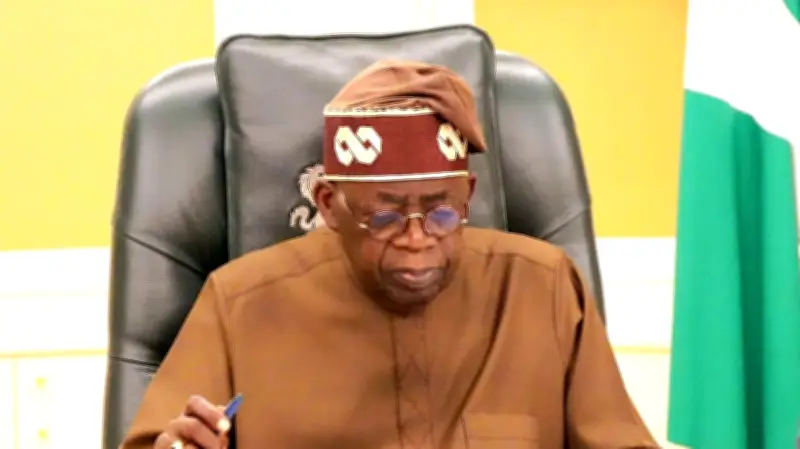
The Independent Media and Policy Initiative (IMPI) has urged President Bola Tinubu to declare a new national security emergency as part of intensified efforts to combat terrorism in Nigeria. The group also recommended that the emergency declaration include clear measures against individuals who deliberately spread misinformation and fake news to inflame tensions within the polity.
Call for Emergency Declaration
In a policy statement signed by its Chairman, Dr Omoniyi Akinsiju, the think tank expressed concern over the growing deliberate mischief and recklessness on social media platforms by unpatriotic Nigerians who publish and share fake news with insidious content. To protect society, IMPI demanded that President Tinubu declare a security emergency with specific provisions to contain the excesses of irresponsible social media publishers, content creators, and bloggers, holding them accountable for the news they publish and share. The group also called for an emergency-enabled law that restrains the reporting of terrorism cases at the risk of summary prison terms.
Ongoing Security Efforts and Recommendations
While acknowledging ongoing efforts to curb insecurity, IMPI urged the administration to continue investing in more sophisticated military platforms and addressing socio-economic factors in remote areas. The group noted that Nigeria's armed forces are contending with increasingly complex asymmetric warfare, warning that terrorism and other forms of organized crime pose a serious threat to national stability. Security personnel must be continuously empowered with advanced systems integrating intelligence, surveillance, reconnaissance, electronic warfare capabilities, protected mobility platforms, and modern command-and-control software.
Technological Upgrades Proposed
IMPI specifically recommended deploying unmanned aerial systems such as the CH-4 and Wing Loong II drones for continuous day-and-night surveillance of insurgent movements across difficult terrains. It also advocated real-time satellite mapping and synthetic aperture radar technologies to detect concealed hideouts. Additionally, the group called for equipping infantry units with advanced thermal imaging scopes for night operations and deploying vehicle-mounted and portable signal jammers to disrupt insurgent communications and prevent remote detonation of improvised explosive devices.
Further technological integration proposed includes interception and tracking systems for monitoring enemy communications and predicting coordinated attacks, alongside AI-powered systems that consolidate live data from drones, radars, and thermal cameras into a unified operational interface. The group also recommended advanced analytics tools to monitor extremist activity online, including detection of recruitment networks and propaganda on the dark web.
Operational Restructuring and Long-Term Solutions
Beyond technology, IMPI stressed the need for operational restructuring within the military, including creating new specialized units and strengthening existing formations to better respond to armed gangs and insurgent groups. However, the group cautioned that military hardware alone cannot resolve Nigeria's security challenges. Long-term success depends on addressing underlying socio-economic drivers of insecurity, improving intelligence gathering, and strengthening the Nigeria Police Force to effectively manage internal civil security responsibilities.