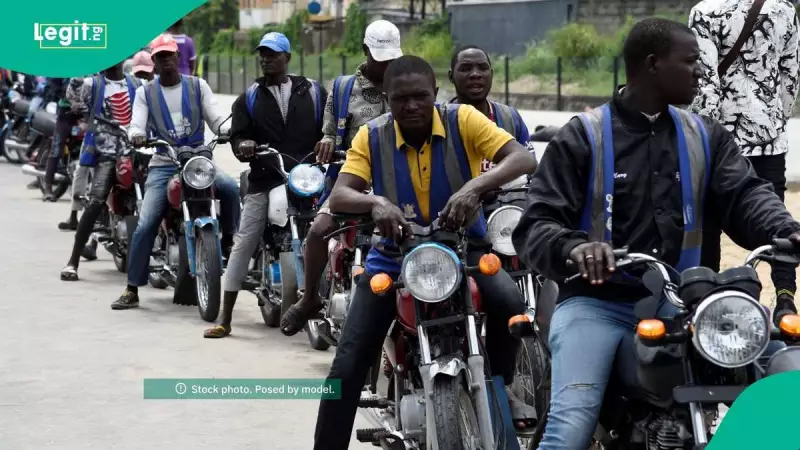
The Kano State Government has taken a decisive step to reinforce a ban on commercial motorcycles, commonly known as 'Okada,' within the metropolitan area. This move, announced on December 2, 2025, comes as a direct response to escalating security concerns and specific intelligence reports indicating that criminal elements, including bandits, are using these motorcycles for their operations.
Government Cites Security Threats, Announces Strict Penalties
Through the State Ministry of Justice, Commissioner Abdulkarim Kabiru Maude reaffirmed the enforcement of the Motorcycling and Related Matters (Regulations) Law 2013 (1434 A.H.). The law explicitly prohibits the carriage of passengers on motorcycles in the state's metropolitan zones. The government described the action as a critical measure to enhance public safety and curb rising criminal activities.
The penalties for violating this ban remain severe. Anyone caught operating an Okada for commercial purposes within the city risks six months' imprisonment, a fine of N10,000, or both. The Kano State Police Command, through its spokesperson SP Abdullahi Haruna Kiyawa, confirmed that security agencies are committed to full enforcement in partnership with the Kano Road and Traffic Agency (KAROTA).
Economic Hardship Fuels Surge of Riders Despite Ban
Paradoxically, the government's reaffirmation of the ban has coincided with a visible and rapid increase in the number of Okada riders on Kano's major roads and inner streets. Investigations reveal that this surge is largely driven by severe economic pressures.
Many of the new riders are individuals who have been displaced from operating tricycles (Keke NAPEP), which have become prohibitively expensive. "Many of us riding okada now were formerly on tricycles, but it is too expensive to afford. The government says no more motorcycles, but we must feed our families," explained Musa Sani, a rider in the Sheka area.
Another rider, Usman Yau from Na'ibawa, highlighted the fierce competition and dwindling profits. "The cost of living is high. Okada is cheaper to buy and maintain than a Keke. With many people joining, the competition is fierce, and we are forced to work longer hours for less money," he stated.
Residents Grapple with Fear and Apprehension
The influx of unfamiliar faces on motorcycles has generated significant anxiety among Kano residents. With banditry attacks reported in outlying areas like Tsanyawa Local Government Area—where assailants on motorcycles recently killed a woman and kidnapped several villagers—the fear has seeped into the city.
Residents now view the growing number of Okada riders with suspicion, worried that criminals may be blending in. "The fear is real. With so many new okada riders, it is difficult to know who is genuine. We hear of bandits around the state, and everyone is apprehensive," shared Halima Abdullahi, a civil servant in Sharada.
The riders themselves are caught between economic survival and security threats. While some, like Ibrahim Mohammed, acknowledge the danger but prioritize earning a living, others feel the direct impact on their business. "With this issue of banditry, after certain hours, people are scared to ride. Some areas are avoided. Our income has dropped because of fear," said rider Babannan Adamu.
The Kano state government's stance presents a complex challenge: balancing urgent security measures against the backdrop of a struggling economy that pushes more citizens into the banned Okada business. As enforcement begins, the coming weeks will reveal whether the crackdown can restore a sense of safety without deepening the economic plight of thousands.